1. Google launches Gemini 4 Hydrogen for coding and agent tasks, and Antigravity adds Orchestrator;
2. Nvidia announces Jensen Huang has stepped down as CEO, with the CFO as interim CEO;
3. Volcano Engine releases the low-cost video model Seedance 2.5 flash;
4. OpenAI releases two Daybreak security tools, and the Codex banked reset is activated;
5. Anthropic launches Claude Meetings, and self-hosted Managed Agents enter private beta;
6. Baidu launches the model marketplace Token Exchange;
7. The Paper reports Zhang Yiming told staff ByteDance can catch up with the frontier in 2029 or 2030 at the earliest.
I. Model releases and open source
1. Google releases Gemini 4 Hydrogen
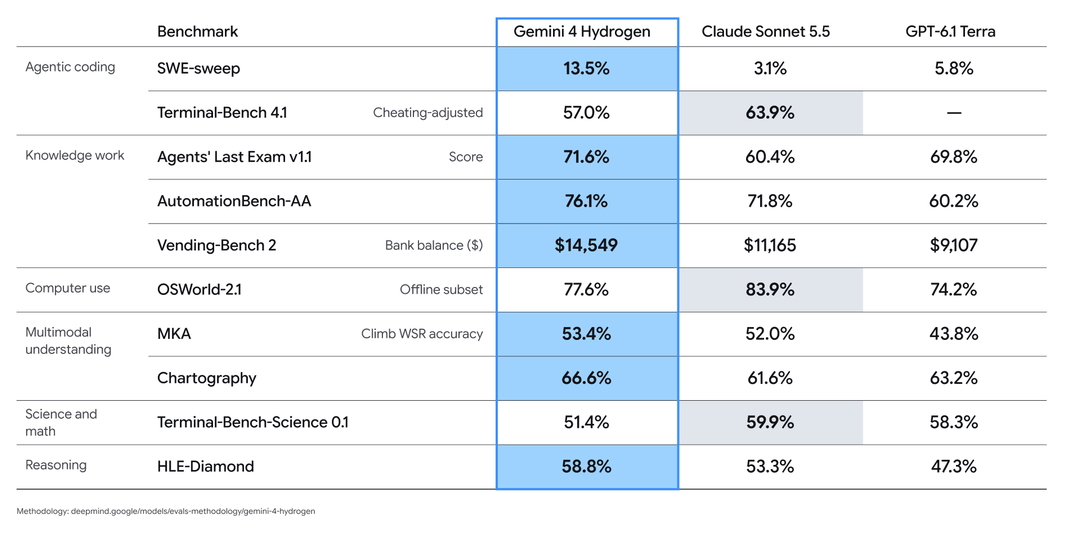
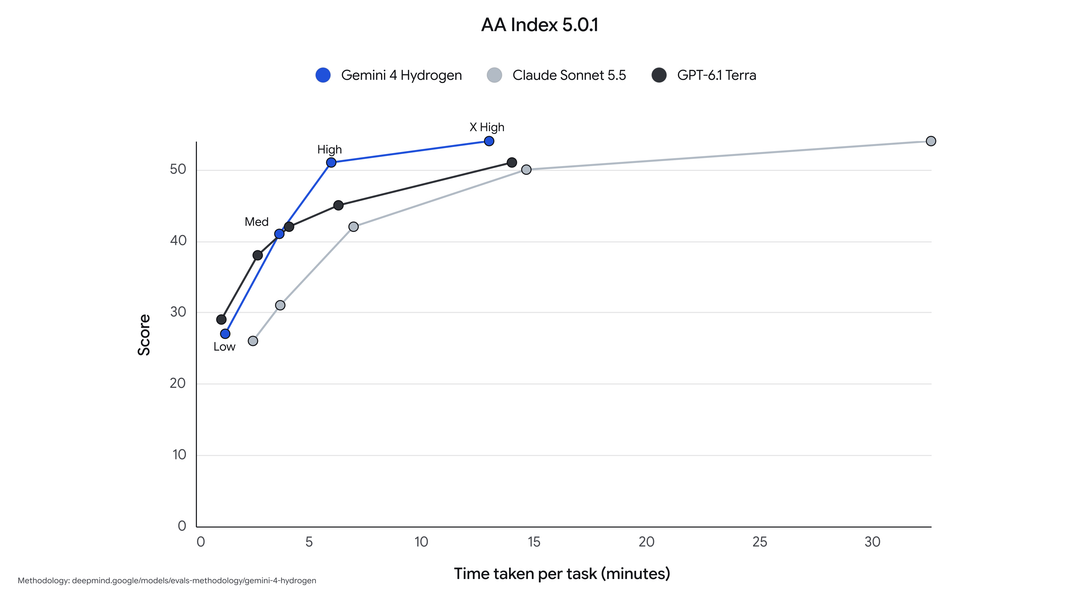
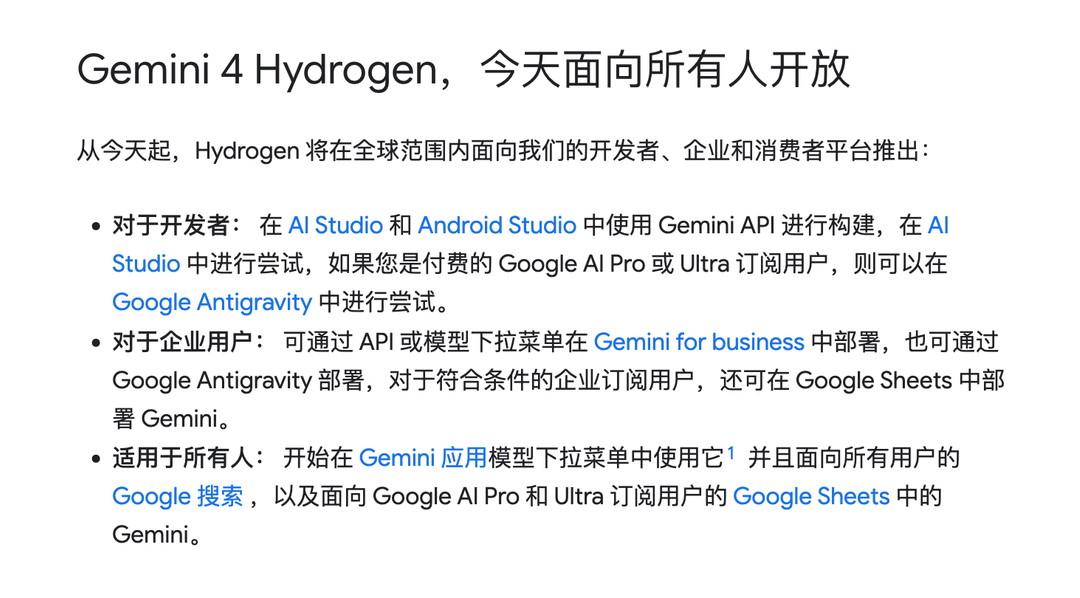
Google has launched Gemini 4 Hydrogen for coding and long-horizon agent tasks. Compared with Gemini 3.8 Flash, Google says it finishes tasks 2.5 times faster at its default high setting and raises its Terminal-Bench 4.1 score from 18.2% to 57%. It offers four thinking levels, low, medium, high (default) and a new xhigh, and is priced flat across its full 1-million-token context at US$1.50 per million input tokens and US$7.50 per million output tokens. According to the model card, it scores 13.5% on SWE-sweep, ahead of Claude Sonnet 5.5 (3.1%) and GPT-6.1 Terra (5.8%), and 57.0% on Terminal-Bench 4.1, below Sonnet 5.5's 63.9%. Hydrogen is available to everyone: all tiers of Google AI Studio, the Gemini API, Gemini for business, the Gemini app and Google Search, with free Gemini app users getting it through auto model selection; paid Google AI Pro and Ultra subscribers can use it in Google Antigravity, and eligible business subscriptions in Google Sheets.
Blogblog.google/innovation-and-ai/models-and-research/gemini-models/introducing-gemini-4-hydrogen/
Model carddeepmind.google/models/model-cards/gemini-4-hydrogen/
Developersblog.google/innovation-and-ai/technology/developers-tools/build-with-gemini-4-hydrogen/
Searchblog.google/products-and-platforms/products/search/gemini-4-hydrogen-search-upgrade/
2. Thinking Machines open-sources Inkling 2 Small
Thinking Machines has released the weights of Inkling 2 Small on Hugging Face under Apache 2.0. It is a multimodal MoE model with 594 billion total and 17 billion active parameters, accepting text and images with a context of up to 1 million tokens. Weights come in NVFP4 and MXFP8 formats; NVFP4 needs at least 500GB of GPU memory (for example 2 B300s or 4 H200s), and MXFP8 at least 800GB. Local inference is supported in SGLang, vLLM, TokenSpeed and Unsloth, and API access is available through third-party providers including NVIDIA, Fireworks and Together.
Postx.com/thinkymachines/status/2120982625582195011
Weightshuggingface.co/thinkingmachines/Inkling-2-Small
3. IBM releases the LLMON markup language with experimental Granite models
IBM has introduced LLMON (LLM-Native Markup Language) along with 3B and 8B preview models based on Granite 4.1. LLMON uses dedicated markup to separate instructions from external data, to mitigate indirect prompt injection. On the OPI benchmark, IBM says the LLMON previews avoid 47% more attacks than the best frontier model it tested and 95% more than the best open-source model, with similar trends on ASB and StruQ. IBM describes it as an experimental preview for exploration and evaluation, not for production. The project repository is Apache-2.0 licensed.
Bloghuggingface.co/blog/ibm-granite/llmon-an-llm-native-markup-language-now-in-granite
Repogithub.com/generative-computing/llmon
4. Volcano Engine releases the Seedance 2.5 flash video model
Volcano Engine has launched Seedance 2.5 flash, which it says comes closest to Seedance 2.5 in quality, beats the previous flagship Seedance 2.0 overall, and generates twice as fast. For 720P text-to-video and image-to-video, it costs about 0.99 yuan per second, about 34% less than Seedance 2.5. A single clip can run up to 30 seconds, each request can take up to 10 images, 5 videos and 5 audio clips, and output is 480P or 720P. It is rolling out to Jimeng, LibTV, Updream, Creao AI, TapNow and other platforms from today, and the API arrives on Volcano Ark on 15 November.
Noticemp.weixin.qq.com/s/lTZS2oV6BuORvK_Shgb-Ag
Docsdocs.volcengine.com/docs/ark/seedance-2-5?lang=zh
II. Developer ecosystem and tooling
1. Google Antigravity adds Orchestrator
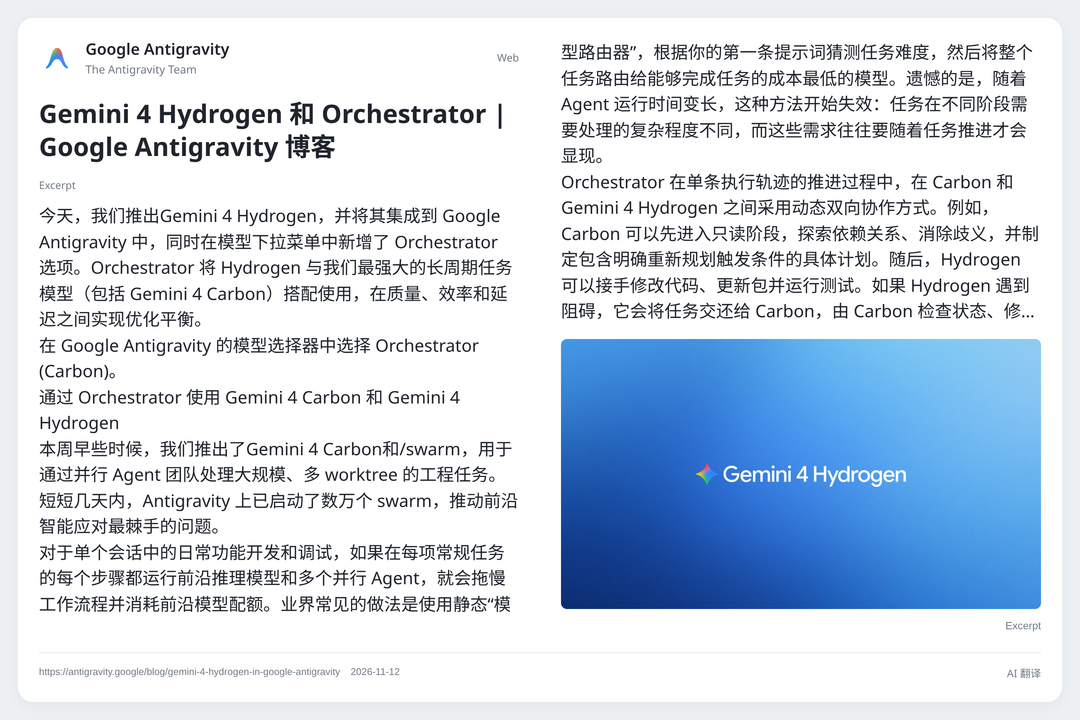
Google Antigravity has added a model option called Orchestrator, which pairs Gemini 4 Hydrogen with its strongest models such as Gemini 4 Carbon within a single session to balance quality, efficiency and latency. On Terminal-Bench 4.1, Google says Orchestrator reached near-Carbon task success rates while using 24% less quota on average and finishing 19% faster. Google AI Ultra subscribers get Orchestrator (Carbon) and Orchestrator (Argon), paid Google AI Pro subscribers get Orchestrator (Argon), and more models and plans will follow; Hydrogen is rolling out to paid Pro and Ultra subscribers, and enterprises can use both through Gemini for business.
Blogantigravity.google/blog/gemini-4-hydrogen-in-google-antigravity
2. OpenAI releases two Daybreak security tools
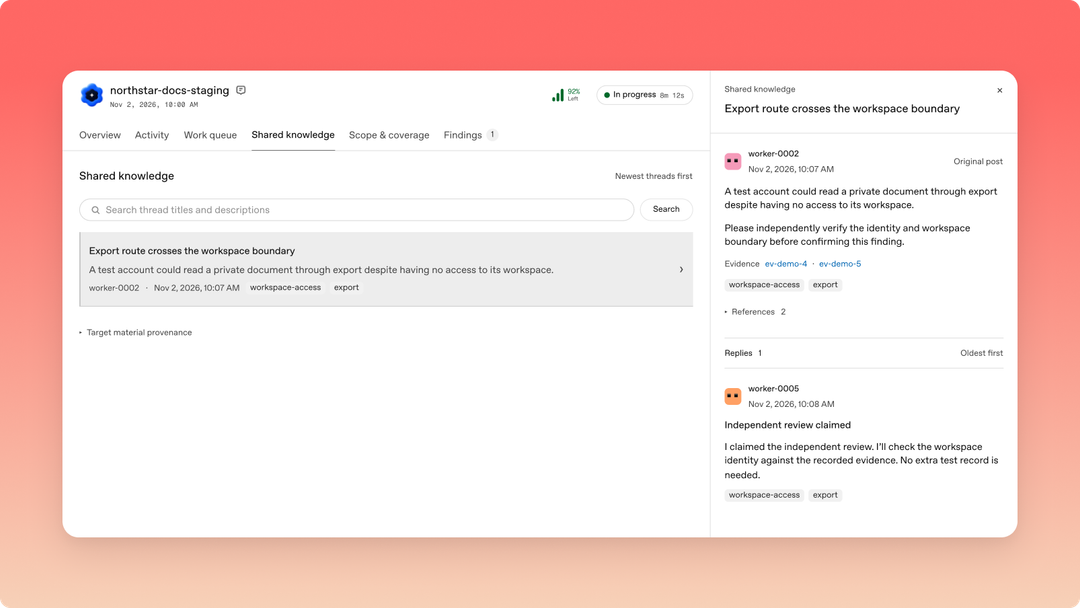
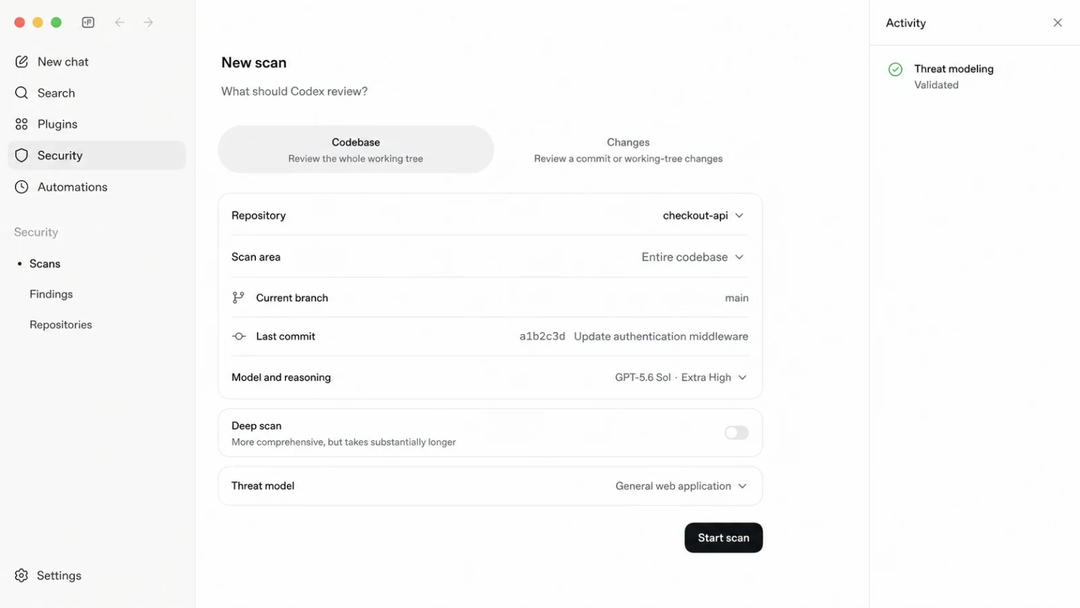
At its Cyber at the Frontier livestream, OpenAI released two Daybreak tools: Daybreak Red Team uses coordinated AI agents to test web apps, validate vulnerabilities and verify fixes, with early access by application; Daybreak Defense Factory uses AI agents to investigate vulnerabilities and prepare patches for human review. Security teams can also apply for Daybreak model access for authorised cybersecurity work.
Eventopenai.com/zh-Hans-CN/cyber-at-the-frontier/
3. Claude API adds per-message effort (beta)
Anthropic has added per-message effort to the Messages API in beta: insert a system message with empty content and a new effort level in output_config.effort to change effort partway through a conversation while keeping the prompt cache. If the message comes right after a user turn, the reply to that turn uses the new level; anywhere else, the new level starts from the next user turn with new input. It requires the mid-conversation-output-config-2026-07-01 beta header and is not yet supported in Managed Agents.
Docsplatform.claude.com/docs/en/build-with-claude/effort-per-message
4. Self-hosted Claude Managed Agents enters private beta
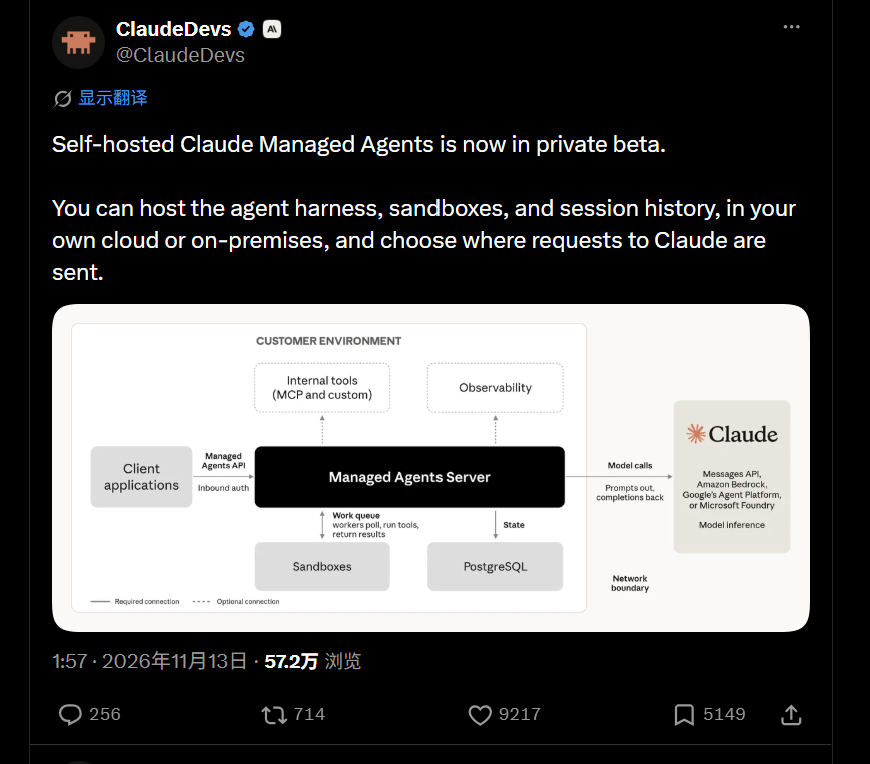
Anthropic's self-hosted Claude Managed Agents is now in private beta. Companies can run the whole service in their own cloud or on-premises, including the agent harness, sandboxes, credentials and session history, with session history stored in their own database; they choose where model requests go, whether directly to Anthropic, through Amazon Bedrock, Google's Agent Platform or Microsoft Foundry, or through their own gateway. Developers keep using the same core APIs as the hosted service.
Articleclaude.com/resources/articles/self-hosted-claude-managed-agents
Postx.com/ClaudeDevs/status/2120938988165091693
5. Google releases the stable A2UI 1.0 generative UI protocol
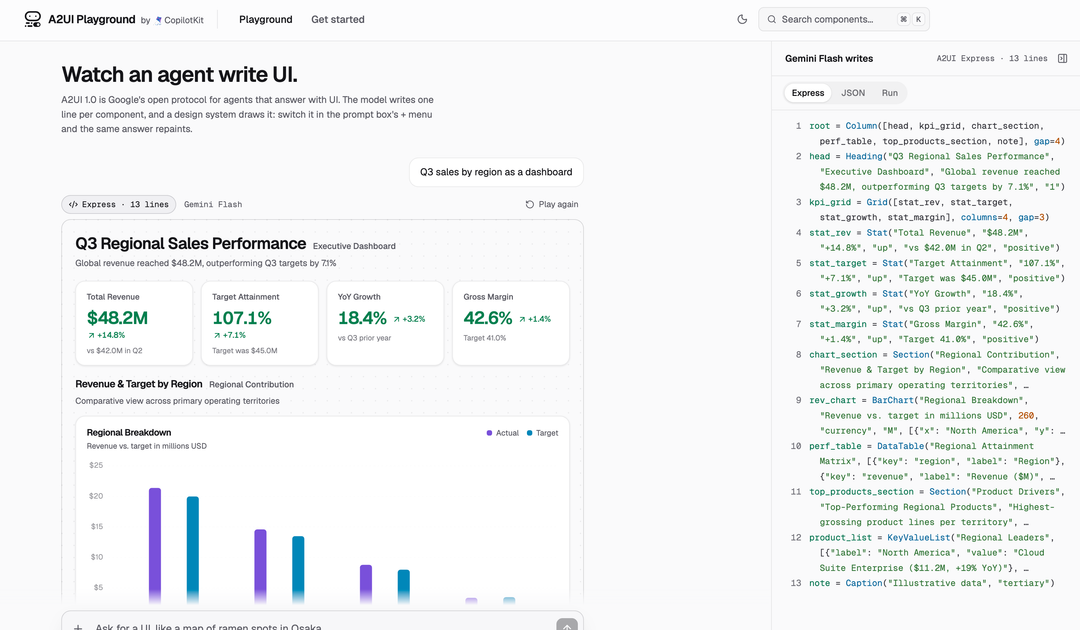
Google has released the stable A2UI 1.0, an open protocol that lets agents answer with interactive screens: the agent describes what to show, and the client renders it natively using only components the developer has registered, such as a form to confirm or a chart. Version 1.0 adds bidirectional function calls (so a flight picker can check availability on the spot), plus accessibility support and extensions for metadata. Open-source renderers cover the web (React, Angular, Lit), Flutter, iOS (SwiftUI) and Android (Jetpack Compose, currently v0.9.1 with 1.0 coming soon), and agent SDKs support Python, TypeScript and Dart.
Blogdevelopers.googleblog.com/a2ui-10-build-delightful-fast-reliable-agentic-experiences
Repogithub.com/a2ui-project/a2ui
III. Products shipping
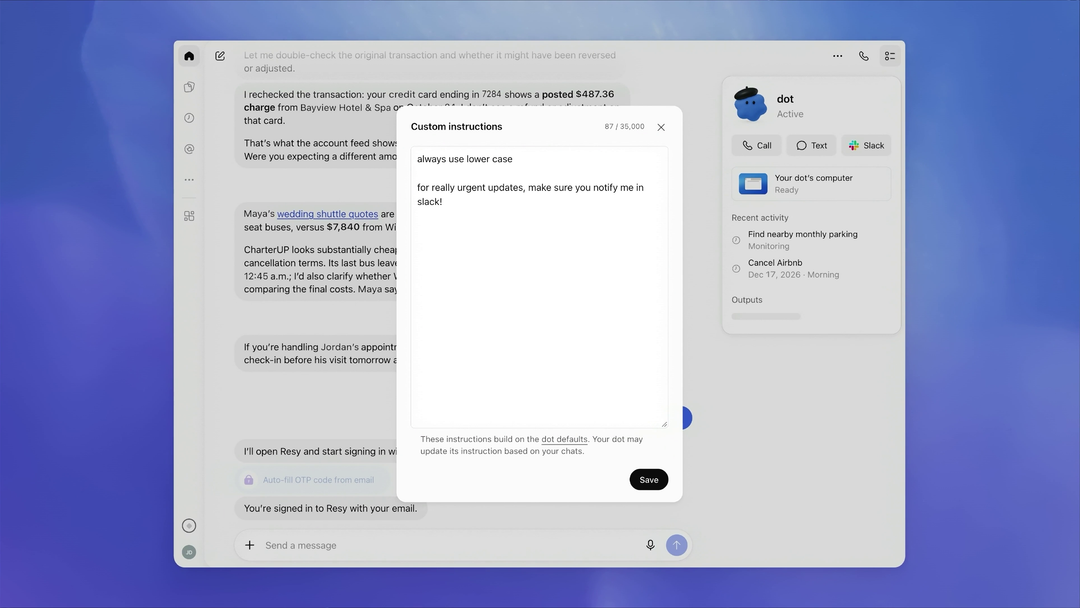
1. ChatGPT dot adds custom instructions and rules
OpenAI has updated ChatGPT dot with faster replies, less jargon and better follow-through, and dots can now follow custom instructions. Tell your dot in the thread how to behave or which actions need your go-ahead, such as "Show me a draft before sending any emails", or set custom instructions and rules under Customize > Behavior on mobile or in the dot's menu on web and desktop. Before an action that could affect your accounts or share information, an automatic review checks it against your instructions, permissions, custom rules and built-in safety requirements to decide whether it can proceed, needs your approval, or includes a step you must do yourself, such as changing a password.
Docslearn.chatgpt.com/docs/dots/controls
Postx.com/ChatGPT/status/2120970988796170275
2. Anthropic launches Claude Meetings (beta)
Claude Meetings is now in beta: Claude joins video calls as a visible participant and starts on work during the meeting. The team can ask it questions out loud or in chat, it builds docs and whiteboards with you while teammates on the call refine them, and it writes the notes and action items. Each meeting gets its own page in claude.ai with the notes, transcript and anything Claude built. Only Google Meet is supported for now, rolling out on Team and Enterprise plans. During the beta, notes, transcripts and in-call answers are free (answers that use connected tools count toward usage), and docs, whiteboards and other artifacts made in a call are free through 10 February 2027.
Articleclaude.com/resources/articles/claude-meetings
Postx.com/claudeai/status/2120973994191094179
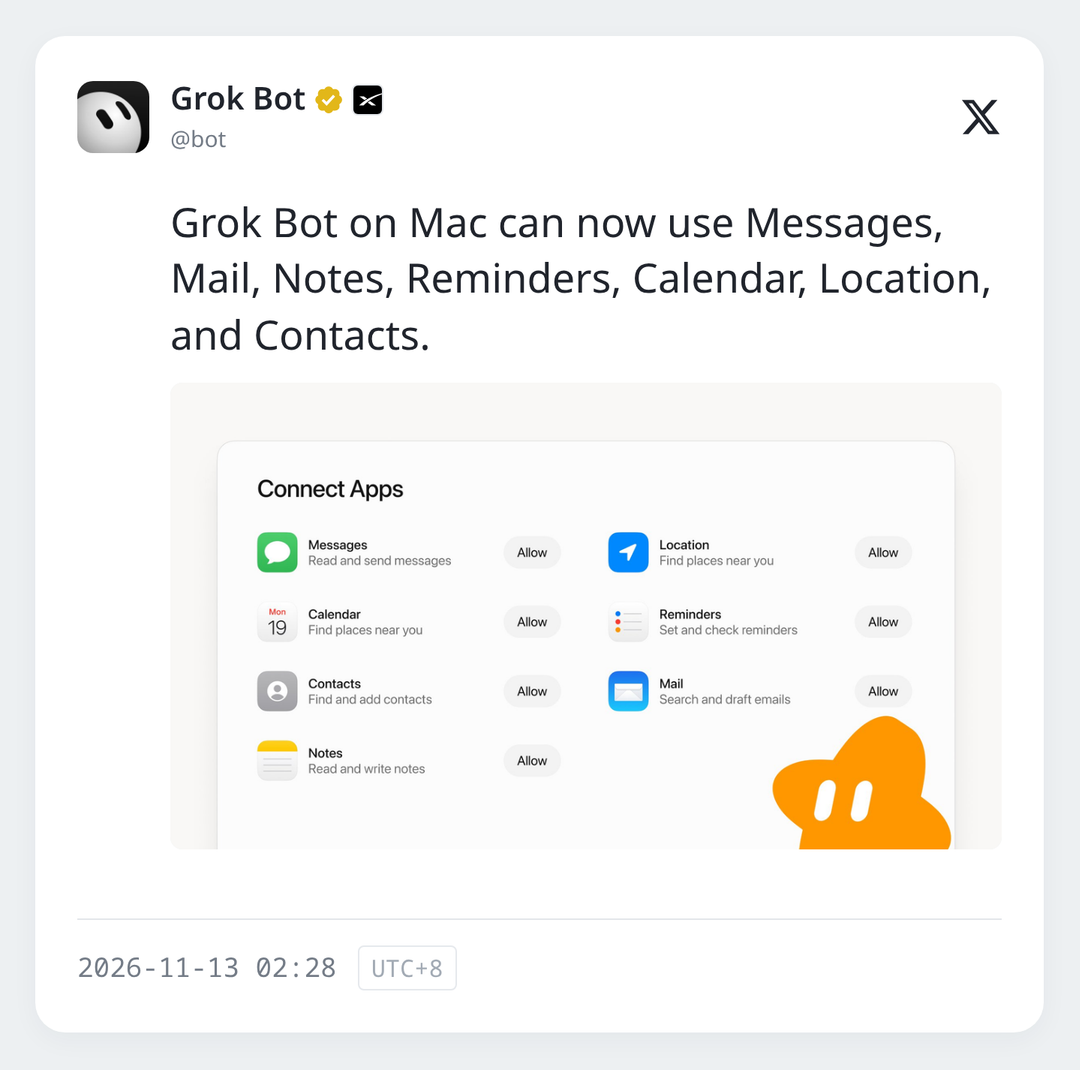
3. Grok Bot on Mac connects to seven built-in apps
Grok Bot on Mac can now use Messages, Mail, Notes, Reminders, Calendar, Location and Contacts. A SpaceXSI employee suggests asking the Bot to read messages from family and update your calendar with important events, or to read messages from potential clients and help a small business manage bookings.
Postx.com/bot/status/2120946968403095906
Staffx.com/poteto/status/2120967515224609057
4. Google's Gemini smart glasses open for pre-order, launching 10 December
Pre-orders are open for Google's Intelligent Eyewear with Gemini, made with Gentle Monster, Warby Parker and Samsung, launching online and in stores on 10 December. They work with Pixel and Samsung phones and iPhones, offering hands-free Gemini help such as real-time translation and descriptions of what you see. Gentle Monster's collection has six designs starting at US$449, sold in the US and South Korea; Warby Parker's has three styles starting at US$395. The frames weigh about 41 grams, last up to nine hours and have a 12-megapixel camera. The glasses currently work only with Google accounts from the US and South Korea.
Blogblog.google/innovation-and-ai/technology/xr-ar/google-intelligent-eyewear-collections-pre-order/
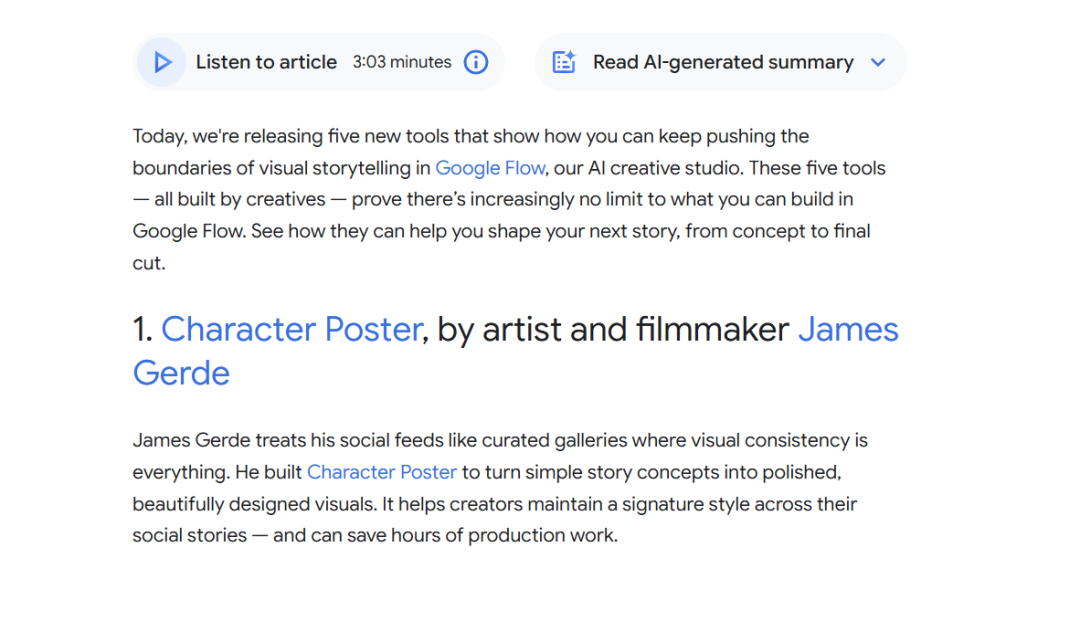
5. Google Flow adds five artist-designed creative tools
Google Labs has added five visual storytelling tools designed by artists to Flow: Character Poster keeps a character's style consistent for posters; Character Arc shows the same character at different stages of a story; Pixel Machine creates retro digital aesthetics; Lucid Glass recreates light passing through glass, with prisms, halos and refractions; and Pocket Studio generates multiple camera angles from a single phone take.
Blogblog.google/innovation-and-ai/models-and-research/google-labs/new-google-flow-tools/
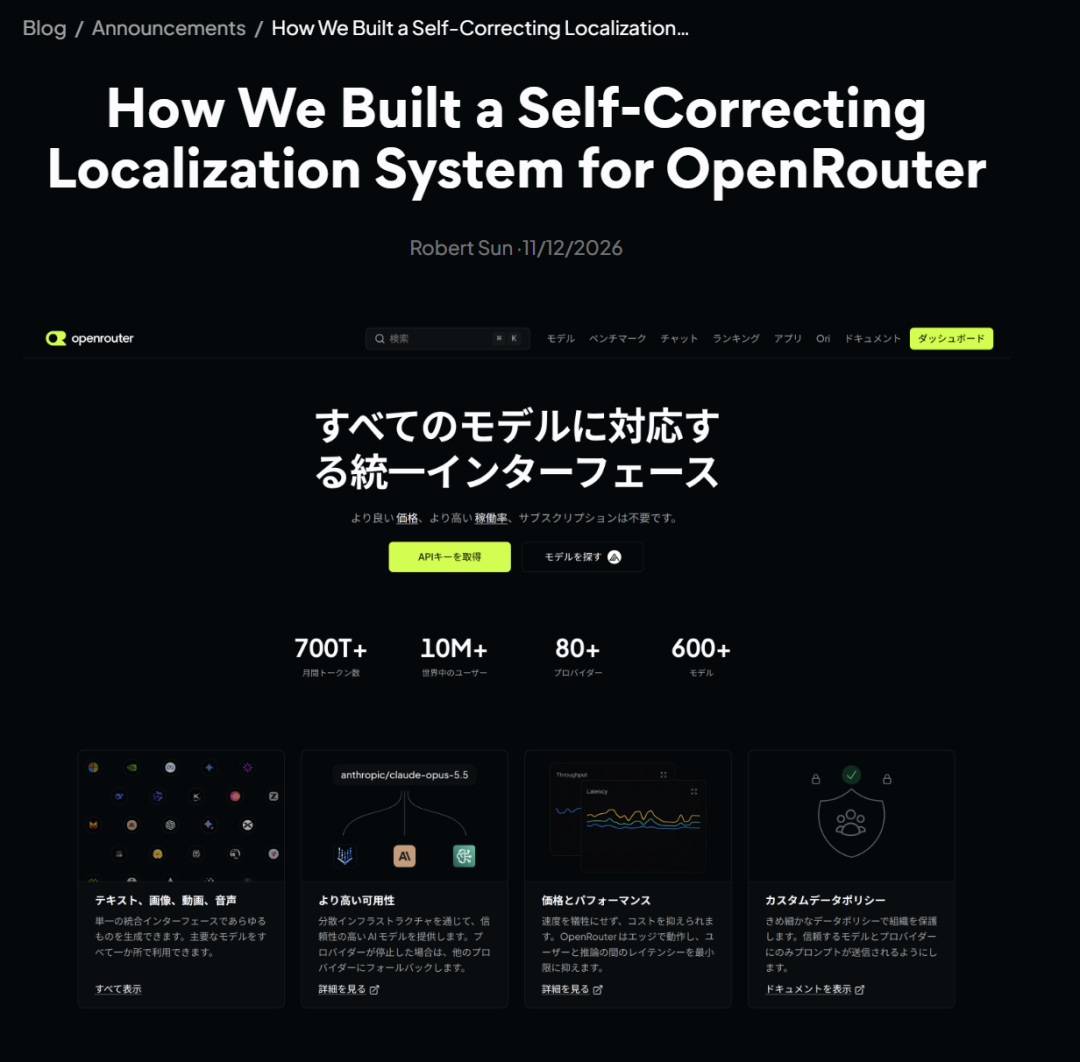
6. OpenRouter adds seven languages (beta)
OpenRouter now supports Simplified Chinese, Spanish, Brazilian Portuguese, German, French, Japanese and Korean alongside English, eight languages in total, with localisation in beta. GPT-6.1 Sol translates, code rejects broken placeholders, plurals, tags and forbidden terms, and a verifier model names each remaining error; mistakes users report become glossary rules. A full retranslation of the site's 16,918 English strings costs about US$460, which OpenRouter says is about 6% of Smartling's machine translation price.
Blogopenrouter.ai/blog/announcements/openrouter-in-8-languages/
7. Doubao Work adds third-party models and limited-time discounts
Alongside its own Doubao 2.1 Lite and Pro, Doubao Work has added third-party models including Kimi K3.1 Pro, GLM 5.3 and DeepSeek V4.1 Flash, with each model's usage multiplier shown on the model picker. For a limited time, participating models use less allowance during set hours on weekdays and holidays, and the multipliers for Doubao 2.1 Lite and DeepSeek V4.1 Flash have been lowered. New users who sign in to the desktop app get a free 30-day subscription.
Noticemp.weixin.qq.com/s/sJ3FeTQoTXWXobzaflIwWQ
8. Baidu launches the model marketplace Token Exchange
Baidu has launched Token Exchange, a marketplace connecting model service providers with customers, who can compare models' pricing and performance side by side and access them in one place. Before listing, Baidu checks provider credentials and compares model fingerprints to catch model swapping and inflated specs; after listing, it runs regular spot checks and ongoing monitoring and keeps a public credit record for each provider. Baidu says that one month in, the platform has more than 100 model resources and averages over 50 million calls and 700 billion tokens a day.
Productcloud.baidu.com/product-s/token_exchange.html?from=cloud_banner
Postx.com/Baidu_Inc/status/2120773996698546653
IV. Technical insight and frontier research
1. Prompt injection defence moves upstream: LLMON separates instructions from data with markup
IBM's LLMON is not a new model but a way to defend against indirect prompt injection through the input format. Past defences relied on hardened prompts, input filtering and output checks; LLMON marks trusted instructions and untrusted external data apart from the start, giving attackers less chance to blur the boundary. It suits high-risk uses such as RAG and agent tool calls, but it is still experimental and no industry standard has formed.
2. Agent orchestration moves to multi-model combinations
Google's Orchestrator pairs a strong model like Carbon with the faster, cheaper Hydrogen in one session; Google's figures show near-Carbon success rates with 24% less quota and 19% faster completion. The idea is to let the expensive model handle the parts that need deep judgment and the cheap, fast model handle the bulk of repetitive execution, an approach companies can borrow directly to cut agent costs.
V. Industry moves
1. Nvidia announces CEO transition: Jensen Huang resigns, CFO Colette Kress is interim CEO
Nvidia's board announced that Jensen Huang has resigned as President, CEO and a member of the board, effective immediately. CFO Colette Kress is serving as interim CEO while remaining CFO until a permanent successor is named, and the board has begun a search considering internal and external candidates. Kress joined Nvidia in September 2013 after nearly 25 years in finance roles at companies including Cisco and Microsoft. The board appointed Harvey C. Jones, former CEO and executive chairman of Synopsys, as its first-ever Chair. Nvidia says operations, customer commitments and the product roadmap will continue without interruption, and third-quarter results will be reported on 17 November as scheduled.
Newsnvidianews.nvidia.com/news/nvidia-announces-ceo-transition
2. OpenAI's Codex banked reset is activated
Codex lead Tibo (@thsottiaux) said the banked reset has been activated and should land in everyone's accounts soon. The day before, he had hinted at a reset.
Postx.com/thsottiaux/status/2120999993079451919
Earlierx.com/thsottiaux/status/2120410006273380750
3. Pranksters posing as Ukraine's intelligence chief get a call with OpenAI security staff
According to The Intercept, the Russian prank duo Vovan and Lexus posed as Rustem Umerov, head of Ukraine's Foreign Intelligence Service, and held a 17-minute video call with three of OpenAI's senior military and national security staff, discussing OpenAI's military support for Ukraine, including the possibility of offensive capabilities, then posted the recording online. An OpenAI spokesperson said the company began investigating the call's authenticity weeks ago, concluded with the relevant authorities that it was a prank, and has taken action to prevent similar incidents.
Reporttheintercept.com/2026/11/11/openai-ukraine-russia-prank-security
4. Tencent denies rumours of 50% layoffs
Responding to claims that Tencent would lay off 50% of staff, Tencent PR director Zhang Jun said they are completely untrue. According to several media reports, the claim came from a metaphor about AI transformation in Tencent's 28th-anniversary livestream that was misread as a layoff plan.
5. The Paper: Zhang Yiming says ByteDance can catch up with the frontier in 2029 or 2030 at the earliest
Citing several people familiar with the matter, The Paper reports that Zhang Yiming told a recent all-hands meeting of ByteDance's AI team that the company can compete with OpenAI and Anthropic, but truly catching up with frontier technology will take "2029 or 2030 at the earliest". He acknowledged that the pretraining datasets for ByteDance's Seed models are still smaller than those of top overseas AI companies, the most pressing issue for now. Separately, foreign media report that the Seed team is pretraining a model with up to 10 trillion parameters.
Reportwww.thepaper.cn/newsDetail_forward_34458935
VI. Outlook and market rumours
No major market rumours confirmed by multiple sources in this issue's 24-hour window.
VII. Claw roundup
1. A leadership change at the compute leader opens a period of uncertainty for AI supply
Nvidia's CEO change is the week's most consequential industry event. As the core supplier of the world's AI compute, a change in leadership could affect its long-term product roadmap, customer relationships and capital spending. The board says operations and the roadmap continue unchanged; the next things to watch are the 17 November results and the choice of a permanent CEO.
2. Agent infrastructure follows two tracks: orchestration and self-hosted runtimes
Google's Orchestrator tackles how models are combined and tasks scheduled, while Anthropic's self-hosted Managed Agents tackles data compliance and private deployment. The first serves cloud teams that want lower costs and more speed; the second serves government, financial and similar customers who need data to stay in their own environment. A2UI fills in the interaction layer, turning agent answers from plain text into native interfaces.
3. Model marketplaces heat up as models become standardised commodities
Baidu's Token Exchange brings a Chinese token marketplace into the spotlight. It essentially turns model capability into a commodity, with unified pricing comparison, access and credit oversight, lowering the cost for smaller companies of choosing and switching models. Over time it will squeeze channel premiums for smaller model vendors, shifting competition to reliability, latency and results in specific scenarios rather than headline parameter counts.
4. Chinese video models near large-scale deployment, with cost as the main weapon
Seedance 2.5 flash brings 720P video down to 0.99 yuan per second at twice the speed, aimed at batch short videos, digital humans and asset production. The edge of Chinese video models has shifted from catching up on quality to price-performance, local compliance and platform integration; the next battlegrounds are consistency in long videos, character fidelity and stability under heavy batch load.
VIII. Trending open source on GitHub
1. generative-computing/llmon
Momentum: newly open-sourced this issue. Summary: IBM's LLMON markup language for mitigating indirect prompt injection, with experimental Granite 4.1 3B and 8B models, Apache-2.0 licensed.
Repogithub.com/generative-computing/llmon
2. a2ui-project/a2ui
Momentum: about 17,000 GitHub stars; 1.0 stable released this issue. Summary: a Google-led open protocol for agent interfaces, in which agents describe screens and clients natively render forms and charts, Apache-2.0 licensed.
Repogithub.com/a2ui-project/a2ui
3. thinkingmachines/Inkling-2-Small
Momentum: weights released this issue. Summary: Thinking Machines' 594B MoE multimodal model with a 1M context, Apache 2.0 licensed.
Repohuggingface.co/thinkingmachines/Inkling-2-Small
4. vllm-project/vllm
Momentum: about 97,000 GitHub stars; the benchmark for high-throughput inference engines. Summary: a high-throughput, memory-efficient inference and serving engine for LLMs, now supporting Inkling 2 Small, Apache-2.0 licensed.
Repogithub.com/vllm-project/vllm
5. open-webui/open-webui
Momentum: about 159,000 GitHub stars; the benchmark web front end for self-hosted deployments. Summary: a user-friendly AI web interface supporting Ollama and OpenAI-compatible APIs.
Repogithub.com/open-webui/open-webui
6. huggingface/transformers
Momentum: about 169,000 GitHub stars. Summary: Hugging Face's core model library, with training and inference implementations for text, vision, audio and other models.