1. Google launches the decision model Gemini Decision 1, built for scoring options and routing;
2. Alibaba says Qwen4 is coming soon, with a Qwen4-Max preview open for testing;
3. DeepMind releases the genome sequence model AlphaGenome 2;
4. Several Chinese labs open-source multimodal agent and speech editing models;
5. OpenAI's third-quarter revenue grows nearly 50% to US$10 billion;
6. Anthropic's IPO roadshow reveals Mythos got Claude running on AMD GPUs in three days;
7. The Wall Street Journal says Nvidia's board is preparing to oust Jensen Huang.
I. Model releases and open source
1. Google launches the Gemini Decision 1 model and Decisions API
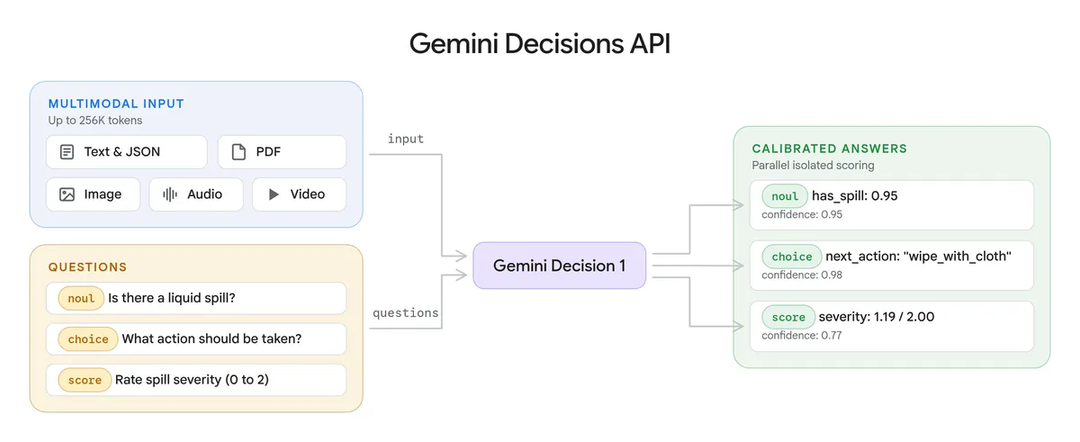
Google has launched Gemini Decision 1, a decision model, along with the Gemini Decisions API, available in Google AI Studio and the Gemini API. Instead of generating text token by token, it scores candidate options in a single forward pass and returns probabilities and confidence scores: one multimodal input (text, images, audio, video or PDF, up to 256K tokens) can answer up to 1,000 yes/no, choice or rubric questions at once, with 150 to 250 ms end-to-end latency. Pricing is US$0.10 per million input tokens with no charge for output; the shared input is billed once per request however many questions you evaluate. AI Studio offers a no-cost tier for prototyping. It suits bounded decisions such as tool selection, policy checks, model routing and context grading.
Blogblog.google/innovation-and-ai/technology/developers-tools/gemini-decisions-api/
Postx.com/GoogleAIStudio/status/2120581284690801060
2. Google DeepMind releases AlphaGenome 2
Google DeepMind has released AlphaGenome 2, its next-generation DNA sequence model, which predicts how genetic variants affect specific human cell types. Trained on more than 100 million single-cell profiles across 68 tissues, it can predict for a chosen cell type or state and generalise to cells and disease states it hasn't seen. It identifies nearly twice as many expression-changing variants as the original: on the TenK10K dataset of 28 immune cell types, it found 30% of causal variants (versus 16%) and 43% of directional gene effects (versus 23%). It can also predict DNA methylation. AlphaGenome 2 and interactive Colab tutorials are available for non-commercial research through the AlphaGenome API, with a private preview for commercial research, and AlphaGenome 2 Skills are coming to Google Antigravity. DeepMind notes the model is for research only and has not been validated or approved for clinical or diagnostic use.
Blogdeepmind.google/blog/alphagenome-2-deciphering-how-cells-read-dna-to-better-understand-disease
Naturenature.com/articles/d41586-026-03673-0
3. Alibaba announces Qwen4, with a Qwen4-Max preview open for testing
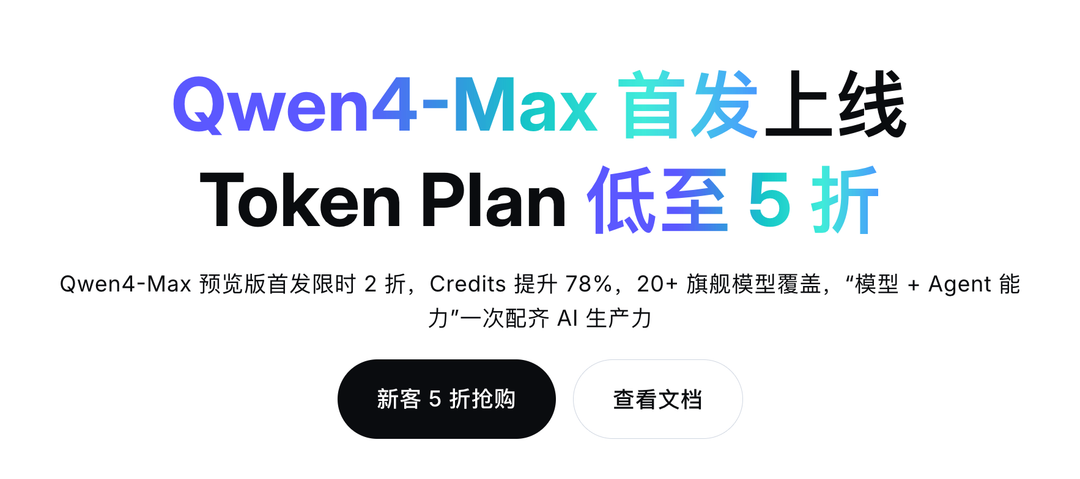
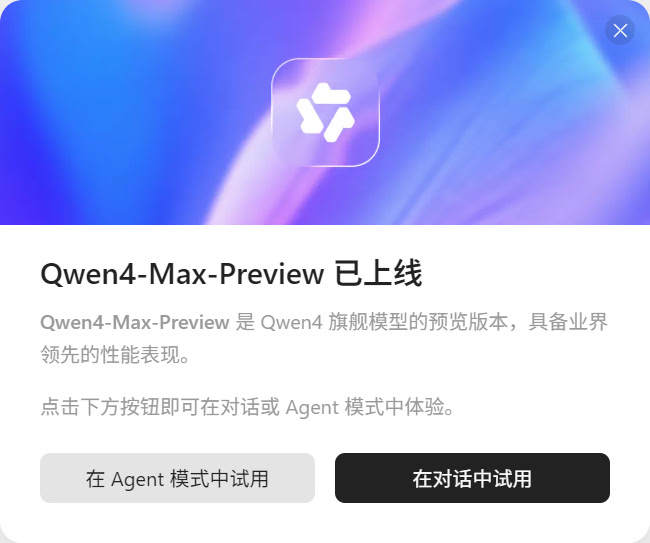
The Qwen team says its next-generation model Qwen4 is coming soon, with gains in world knowledge and perception, coding, office work, front-end design and agent abilities, and much stronger operation of professional software such as EDA tools, CAD, Blender, Figma, SketchUp, Revit, UE5, Unity and Godot. A Qwen4-Max preview has launched first on Alibaba's Token Plan, at up to 90% off for a limited time, and Qwen Office, Qoder, the Qwen app and QwenStudio have added it. On Qoder, the anonymous test model Qoduck has been upgraded to Qwen4-Max-Preview for individual, team and enterprise users of both Qoder and Qoder CN, at 80% off for a limited time, with the billing multiplier cut from 0.5x to 0.1x. The full release is coming soon, and feedback on the preview will be used to improve it.
Productqianwenai.com/benefits/tokenplan
Qwenmp.weixin.qq.com/s/J_zbVHa2R3mmY5KD4v3-bw
Qodermp.weixin.qq.com/s/8MQtCUDz18j_f112iz6YRw
4. Shanghai Innovation Institute open-sources Nex-N2.6
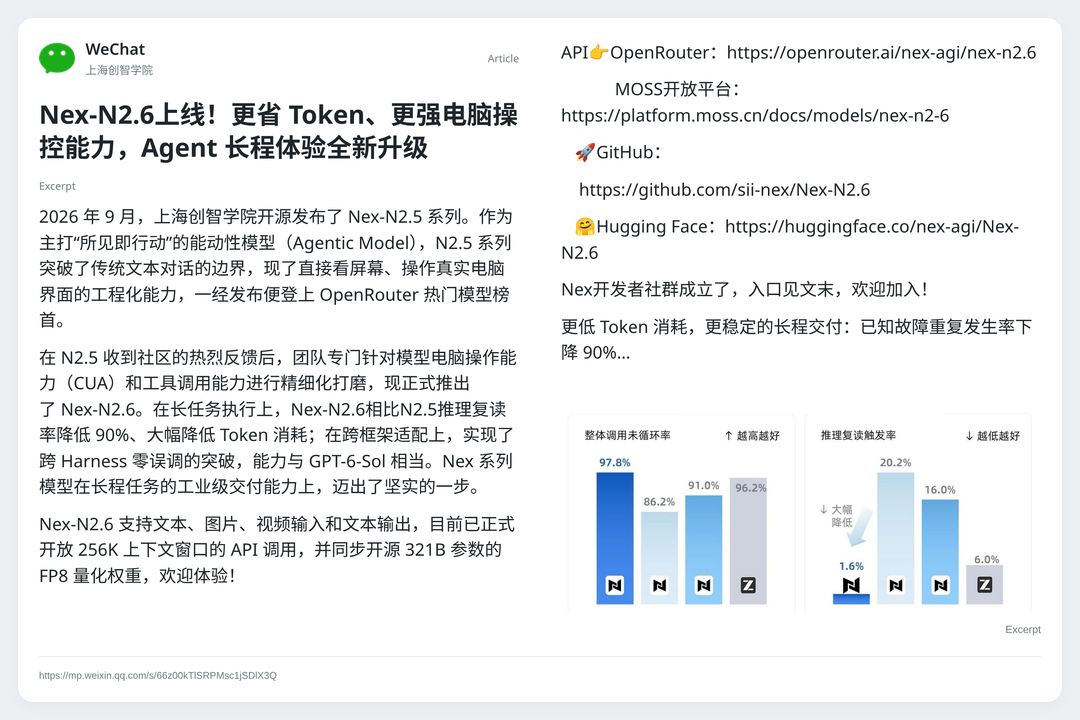
Shanghai Innovation Institute has released and open-sourced Nex-N2.6, a multimodal agent model for long-horizon tasks and computer use, built on GLM-5.3-Flash. It accepts text, images and video, and its 321B-parameter FP8 weights are on Hugging Face and GitHub under the Apache-2.0 licence. Compared with the previous N2.5-Pro, the team says its rate of repetitive reasoning loops fell from 16.0% to 1.6%, with 97.8% of calls not looping; on 956 real contexts across different harnesses, both valid tool-selection rates reached 100%, on par with GPT-6-Sol; and it scores 83.0 on OSWorld and 84.1 on Terminal-Bench 2.1. A 256K-context API is available on OpenRouter and the MOSS platform.
Intromp.weixin.qq.com/s/66z00kTlSRPMsc1jSDlX3Q
Weightshuggingface.co/nex-agi/Nex-N2.6
5. Baidu's ERNIE 5.5 Flash Preview arrives on Qianfan, with weights due by 25 November
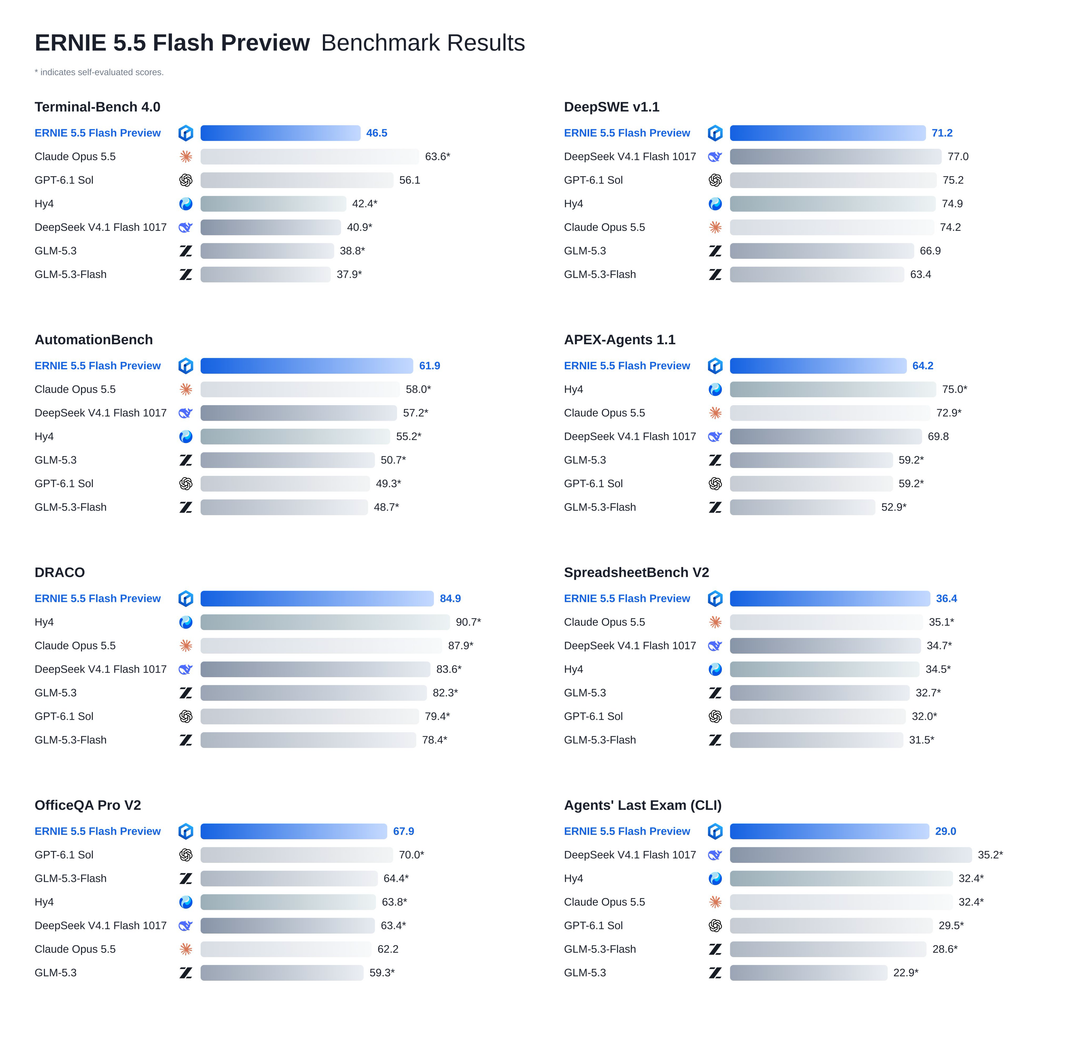
Baidu has released ERNIE 5.5 Flash Preview, the first post-trained version of its previously released Base model, with 280B total and 14B active parameters and a 1M context, aimed at coding, 3D modelling, knowledge work and content creation. Baidu says it posts competitive scores across several benchmarks while decoding very fast. The API is live on the Qianfan platform, and the weights will be open-sourced by 25 November. Baidu notes this is an intermediate post-training checkpoint that may still have gaps from incomplete training.
Researchernie.baidu.com/research
Noticemp.weixin.qq.com/s/Qj_UBDV9wiFXU8Mm8OhVTQ
6. Runway open-sources the robot world action model Praxis-1
Runway has open-sourced its world action model Praxis-1 under Apache 2.0, with the weights and the inference and fine-tuning code all usable commercially, supporting both full fine-tuning and LoRA. Praxis-1 is a 27-billion-parameter mixture-of-experts diffusion transformer that predicts video and robot actions together; it tops NVIDIA's RoboLab-120 leaderboard with a 46.2% success rate, ahead of every open-weight VLA model. It is on GitHub and Hugging Face with native LeRobot support.
Newsrunway.com/news/company-news/praxis-1-is-now-available
Weightshuggingface.co/collections/runwayml/praxis-1
7. Xiaohongshu open-sources the dots.tts.edit V1.1 speech editing model
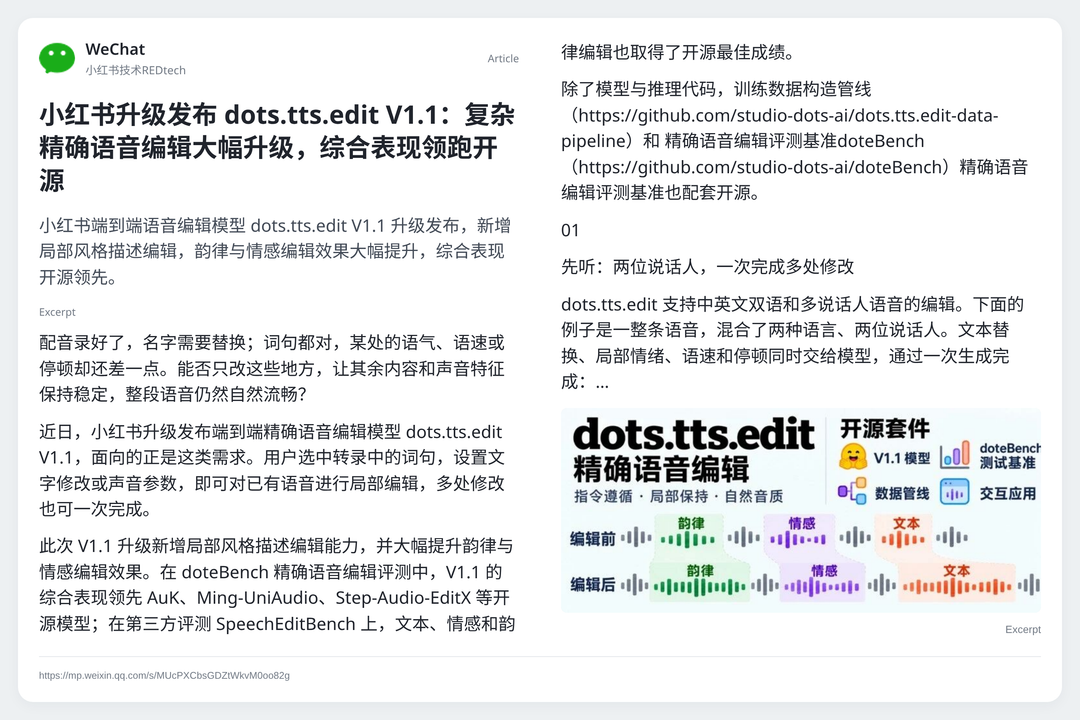
Xiaohongshu has released and open-sourced dots.tts.edit V1.1, a precise speech editing model under the Apache-2.0 licence. Select words in the transcript and set text changes or voice parameters to edit parts of existing audio, with several edits done in one pass; it supports Chinese and English and multiple speakers. V1.1 adds local style-description editing and much better prosody and emotion editing, and the team says it is the best open model on both doteBench and the third-party SpeechEditBench. The training data pipeline and the doteBench benchmark are also open-sourced.
Repogithub.com/studio-dots-ai/dots.tts
Weightshuggingface.co/dots-studio/dots.tts.edit
Intromp.weixin.qq.com/s/MUcPXCbsGDZtWkvM0oo82g
8. DeepL releases the real-time voice model Aure
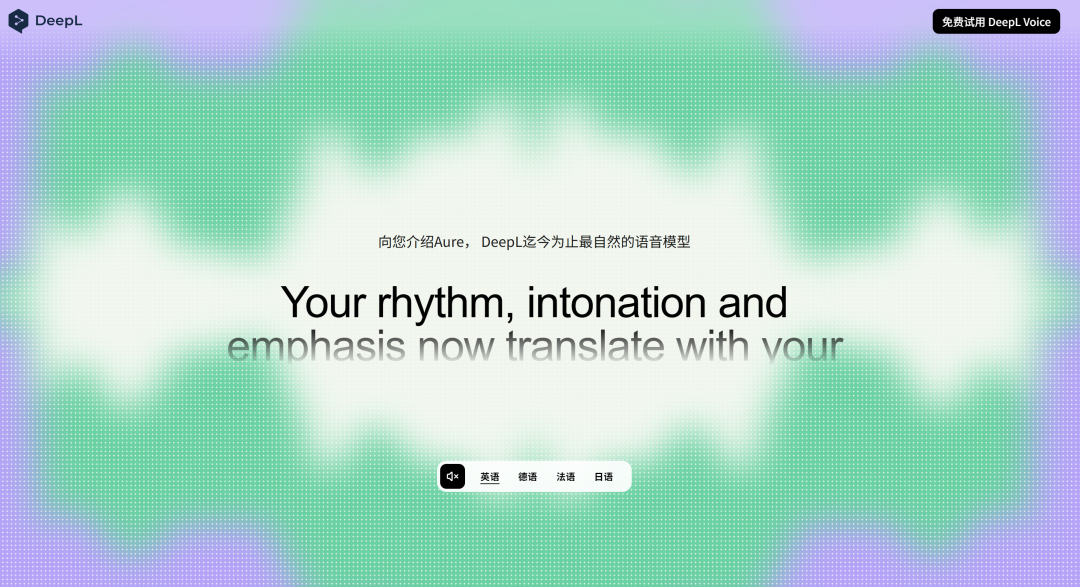
DeepL has launched Aure, a voice model for real-time translation in DeepL Voice. It continuously adapts the translated speech to changes in the speaker's tone, emotion, emphasis and pace, preserving more of their personality and expression. The new capabilities apply automatically, with no extra configuration, across DeepL Voice for Online Meetings, DeepL Voice for In-Person Conversations and the DeepL API for Voice. It initially supports eight languages, English, German, Spanish, French, Italian, Japanese, Portuguese and Korean, while other languages continue to use existing voice models.
Presswww.deepl.com/en/press-release/aure-voice-ai-model
Productwww.deepl.com/zh/products/voice/aure
II. Developer ecosystem and tooling
1. Alibaba releases Qwen Code 1.0 Preview
Qoder and Qwen Code are merging in open source: the harness capabilities refined in Qoder are folded into Qwen Code and released with Qwen Code 1.0 Preview, so developers can embed it in their own products as a foundation for running agents. Tasks are event-driven, so user requests, tool results and system feedback flow into the right task; model services connect through a single entry point, sandbox resources are allocated and reused on demand, and MCP configuration, authorisation and connections are managed centrally. Qwen Code is licensed under Apache-2.0, and 1.0 Preview is released on a separate branch while the existing stable branch stays. From 11 to 24 November, signing in to Qwen Code with a Qoder account gets free Qwen4 credits, valid for 30 days.
Docsqwenlm.github.io/qwen-code-docs/1.x/
Repogithub.com/QwenLM/qwen-code/tree/v1.0.0-preview
Noticemp.weixin.qq.com/s/CXUnh_CP0S4gKV5MYwWWtw
2. Google Antigravity rolls out browser use
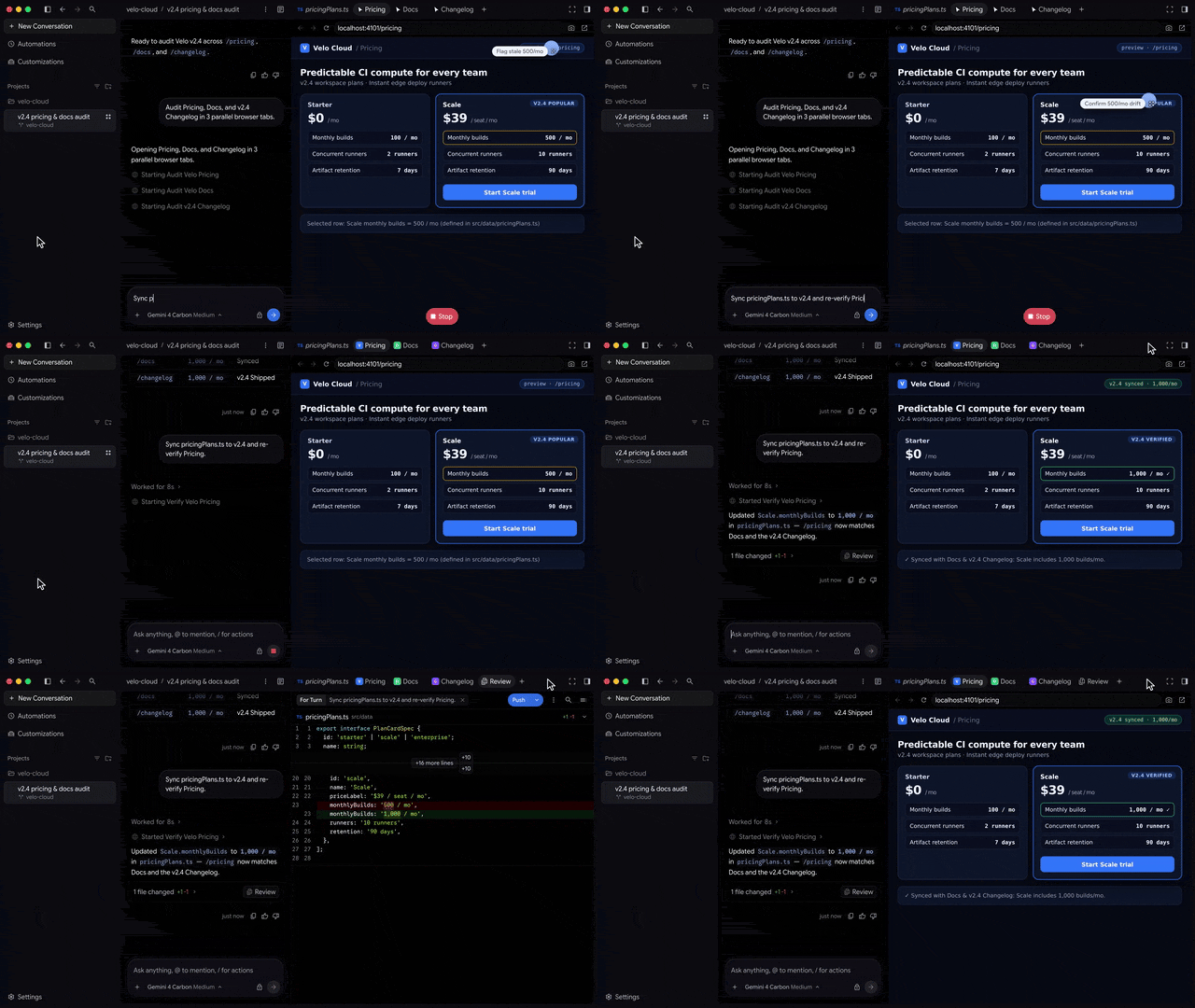
Google Antigravity is rolling out browser use: the agent can open web pages, interact with your running app, inspect console errors and failed network requests, take screenshots and verify visual fixes before finishing a task, and can run several browser tabs at once. You choose which sites to log into, and downloads wait for your approval. Personal accounts (Free, Plus, Google AI Pro and Ultra) on Antigravity App v2.30.0 or later get a built-in browser agent with no extra setup; the CLI and business or enterprise accounts drive local Chrome (version 144 or later) through the Chrome DevTools MCP server, using the /browser command.
Docsantigravity.google/docs/browser
Homepageantigravity.google/
Postx.com/antigravity/status/2120556423474028576
3. Gemini API Managed Agents can connect to self-hosted Linux sandboxes
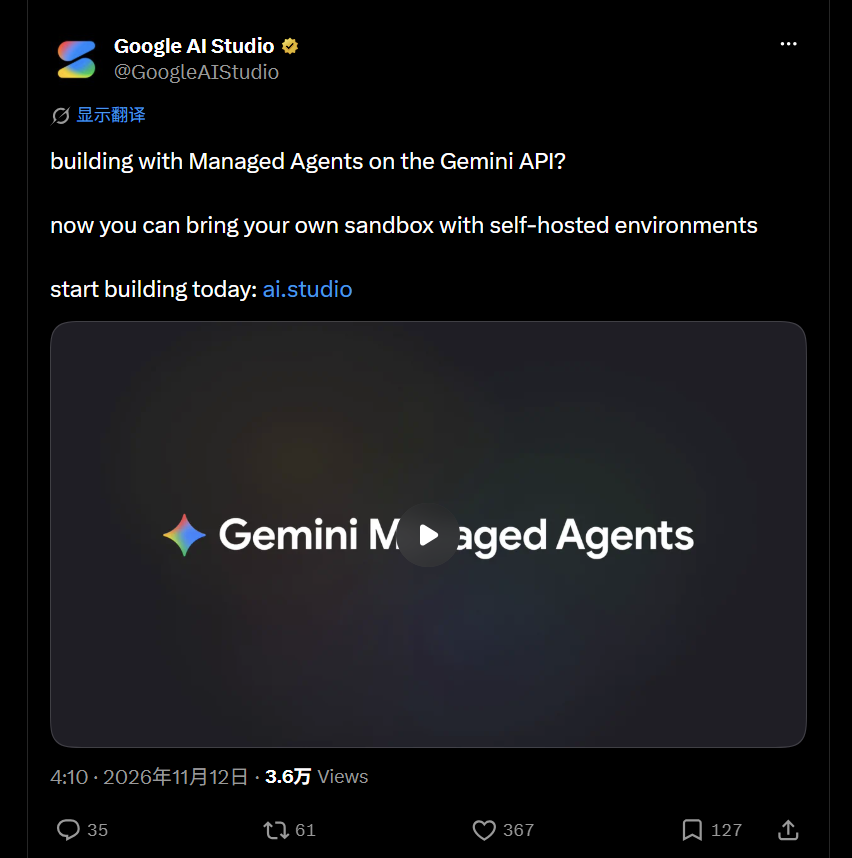
Managed Agents in the Gemini API now support self-hosted environments: developers can connect their own Linux sandbox so the agent runs commands and reads and writes files on their own infrastructure; by default Google hosts the sandbox. A self-hosted sandbox connects over outbound HTTPS with no inbound firewall ports, and can run in Docker or rootless Podman; local mode is recommended only for testing because it runs commands directly on the host.
Postx.com/GoogleAIStudio/status/2120610219235660183
Docsaistudio.google.com/docs/agent-environment
III. Products shipping
1. SpaceXSI Grok Bot 1.0: team sharing and meetings
SpaceXSI released Grok Bot 1.0 on 2 November, focused on making Bots part of the team: Bots can be shared with a team, brought into Slack and Microsoft Teams, and joined to Google Meet, Zoom or Teams calls, where they answer questions in the meeting chat and send a summary and action items afterwards. Bots learn from working with the team, spot work that needs doing and offer to take it on, and follow up on unfinished tasks. Team Bots are on Team and Enterprise plans; meetings are on Team, Enterprise and Ultra plans, and enterprise admins can turn them on in settings.
Docsdocs.x.ai/grok-bot/meetings
2. ChatGPT's desktop app adds Finances (US)
OpenAI has added Finances to the ChatGPT desktop app for Free, Go, Plus and Pro users in the US: find ways to save, understand your spending, make sense of your investments and build custom financial tools. Update the desktop app to get started.
Postx.com/ChatGPT/status/2120604108893896965
3. Gemini arrives on Apple CarPlay
Gemini on Apple CarPlay is rolling out globally from today to all Gemini users on iOS, in every supported Gemini Live language. Update the Gemini app on your iPhone, enable microphone access and tap the Gemini icon on the car display for hands-free conversations, such as managing your calendar, summarising email, brainstorming or practising a presentation; chats sync to your iPhone so you can pick up after you park.
Blogblog.google/innovation-and-ai/products/gemini-app/gemini-on-apple-carplay/
Postx.com/GeminiApp/status/2120626272724484605
4. Google Labs launches the collaborative experiment Tabletop
Google Labs has introduced Tabletop, an experiment for real-time collaboration: add links, files and ideas, then prompt @tabletop or pick a template to generate interactive trip itineraries, dinner polls, expense splitters and tournament brackets; share the invite link in a group chat and everyone can edit at the same time, like a Google Doc. It is rolling out in the US to users 18 and over via a waitlist.
Producttabletop.google/
Blogblog.google/innovation-and-ai/models-and-research/google-labs/tabletop/
5. Tencent opens Yuanbao Search as a standalone site at so.qq.com
Tencent's Yuanbao Search now has a standalone website at so.qq.com, which opens in AI mode by default for asking questions directly, with image upload support.
Websiteso.qq.com/
Noticemp.weixin.qq.com/s/X-9GaUUZmS0VRpLLCGP22A

IV. Technical insight and frontier research
1. Anthropic IPO roadshow: Mythos got Claude running on AMD GPUs in three days
Anthropic's IPO roadshow video says Claude is now trained and served across all four major chip families: AWS Trainium, Google TPUs, NVIDIA GPUs and AMD GPUs. As an example, Anthropic started working with AMD GPUs for the first time this year; bringing on a new chip platform used to take dozens of engineers months, but this time Mythos got Claude running on AMD in just three days with basically no human intervention, and Claude ported or wrote almost all of the kernels. The video also says cancer, Alzheimer's, heart disease and mental illness could be relics of the past in less than a decade.
Roadshowipo.anthropic.com/us/#roadshow-video
Captionsipo.anthropic.com/video/us/roadshow/captions.vtt
Analysissimonwillison.net/2026/Nov/11/anthropic-ipo-roadshow
2. OpenAI alignment research: chain-of-thought monitorability across the model lifecycle
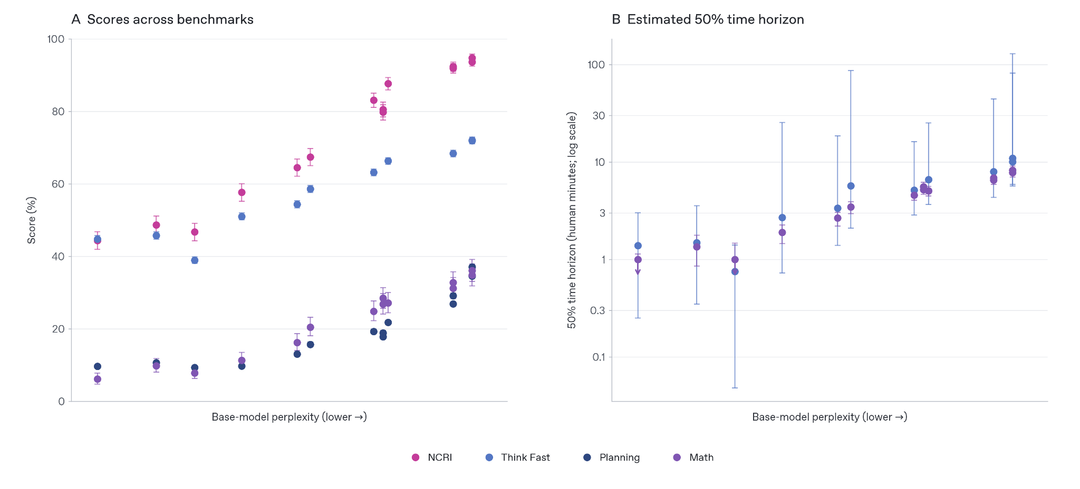
OpenAI has published research on how pretraining, architecture, reinforcement learning and model-generated data affect chain-of-thought (CoT) monitorability. It uses no-CoT capability and CoT controllability as proxies for a model's ability to evade monitoring. Key findings: as base models improve, no-CoT capability rises, with a weaker rise in controllability; CoT controllability increases during RL even without process supervision; and controllability can be distilled through SFT, so training on rollouts from a more controllable teacher yields a more controllable student.
Paperalignment.openai.com/cot-monitorability-model-lifecycle
V. Industry moves
1. OpenAI's third-quarter revenue reaches US$10 billion, up nearly 50%
According to Yahoo Finance, OpenAI CFO Sarah Friar said third-quarter revenue rose nearly 50% quarter on quarter to US$10 billion, an annual run rate of roughly US$50 billion, faster than the 18% growth in the second quarter. Several outlets report that enterprise revenue doubled and the operating loss widened to US$10.9 billion this quarter. The Information reported that GPT-5.6, Astra and new image models drove a jump in API sales last quarter. Separately, the Financial Times reported in late October that OpenAI cut the target for its latest funding round by US$10 billion, now seeking US$20 billion at a US$1.25 trillion valuation.
Postx.com/theinformation/status/2120645264885039600
VI. Outlook and market rumours
1. OpenAI's Codex lead hints at another usage reset
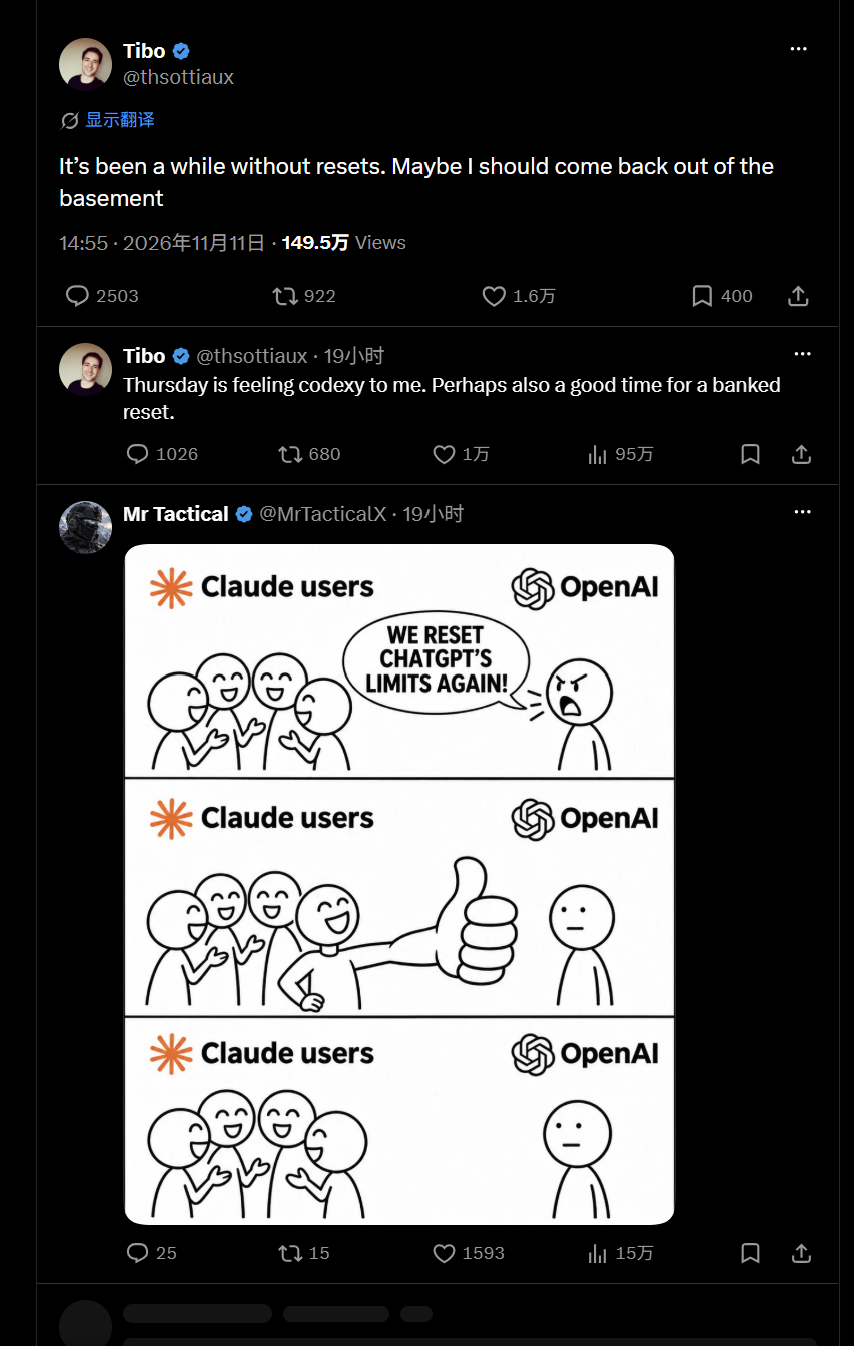
OpenAI Codex lead Tibo (@thsottiaux) posted on X, "It's been a while without resets. Maybe I should come back out of the basement," which users read as a hint at another usage reset. The post gives no timing or details, and OpenAI has made no announcement.
Postx.com/thsottiaux/status/2120410006273380750
2. The Wall Street Journal: Nvidia's board is preparing to oust Jensen Huang
The Wall Street Journal reports that Nvidia's board is preparing to oust founder and CEO Jensen Huang, and Reuters, Bloomberg and others have followed. The trigger is a report that he had a relationship with an executive who reports to him, another affair coming after he admitted infidelity and the board opened an independent investigation into a foreign intelligence effort targeting him. According to Yahoo Finance and others, the board could vote as soon as that evening, and Nvidia shares fell about 8% on the news. This remains a media report; Nvidia's official announcements should be treated as authoritative.
VII. Claw roundup
1. Specialised models become a new track, with decision models first to ship
Gemini Decision 1 is a typical purpose-built model: rather than general generation, it focuses on scoring discrete options, routing and risk decisions, at very low cost and predictable latency. It signals that big labs are moving from a single "do-everything base model" to a base model plus specialised smaller models, which has direct value for agent orchestration, multi-model routing and automated review pipelines, and will cut inference costs for high-volume simple decisions.
2. Agent infrastructure keeps standardising: sandboxes, browser MCP and orchestration cores mature together
This week Google opened self-hosted sandboxes, Antigravity rolled out browser use, and Alibaba open-sourced the Qwen Code orchestration core. Together they show agent production infrastructure converging: task orchestration, isolated tool sandboxes and browser MCP are becoming standard modules, so developers can reuse platform capabilities instead of building an agent runtime from scratch and focus on their use case. Security boundaries are getting clearer too, with orchestration in the cloud and high-risk commands in the user's own sandbox.
3. Chinese agent models tackle long-horizon loops and benchmark against top overseas models
Nex-N2.6 cuts repetitive agent reasoning to a very low rate and posts high scores on OSWorld and Terminal-Bench, showing that the main weaknesses of Chinese multimodal computer-use agents, loops that get stuck and repeated useless calls, are being targeted; Baidu and Alibaba have also launched new models. The Chinese agent stack is moving from "it runs" to "it's reliable", and the key to commercial success will be stability in real business scenarios rather than leaderboard scores.
VIII. Trending open source on GitHub
1. QwenLM/qwen-code
Momentum: about 29,000 GitHub stars; 1.0 Preview released this issue. Summary: an open-source AI coding agent for the terminal; 1.0 Preview folds in Qoder's harness capabilities, Apache-2.0 licensed.
Repogithub.com/QwenLM/qwen-code/tree/v1.0.0-preview
2. studio-dots-ai/dots.tts
Momentum: about 1,400 GitHub stars; dots.tts.edit V1.1 released this issue. Summary: Xiaohongshu's open speech synthesis and precise speech editing model, supporting Chinese and English, Apache-2.0 licensed.
Repogithub.com/studio-dots-ai/dots.tts
3. nex-agi/Nex-N2.6
Momentum: a new open agent model this issue. Summary: Shanghai Innovation Institute's 321B multimodal computer-use agent model with low repetition rates, Apache-2.0 licensed.
Repohuggingface.co/nex-agi/Nex-N2.6
4. runwayml/praxis-1
Momentum: a newly open-sourced robot world action model this issue. Summary: Runway Praxis-1, 27B parameters, predicting video and actions together, Apache 2.0 licensed for commercial use.
Repohuggingface.co/collections/runwayml/praxis-1
5. vllm-project/vllm
Momentum: about 97,000 GitHub stars; the benchmark for high-throughput inference engines. Summary: a high-throughput, memory-efficient inference and serving engine for LLMs, Apache-2.0 licensed.