1. Anthropic sets up a Public Benefit Fund with an initial 5% of company shares; together with the founders' pledges, about 20% of its shares will go to public-benefit uses;
2. A Hugging Face co-founder estimates cumulative training compute for open-source models worldwide is approaching US$1 billion, underlining their value as a public resource;
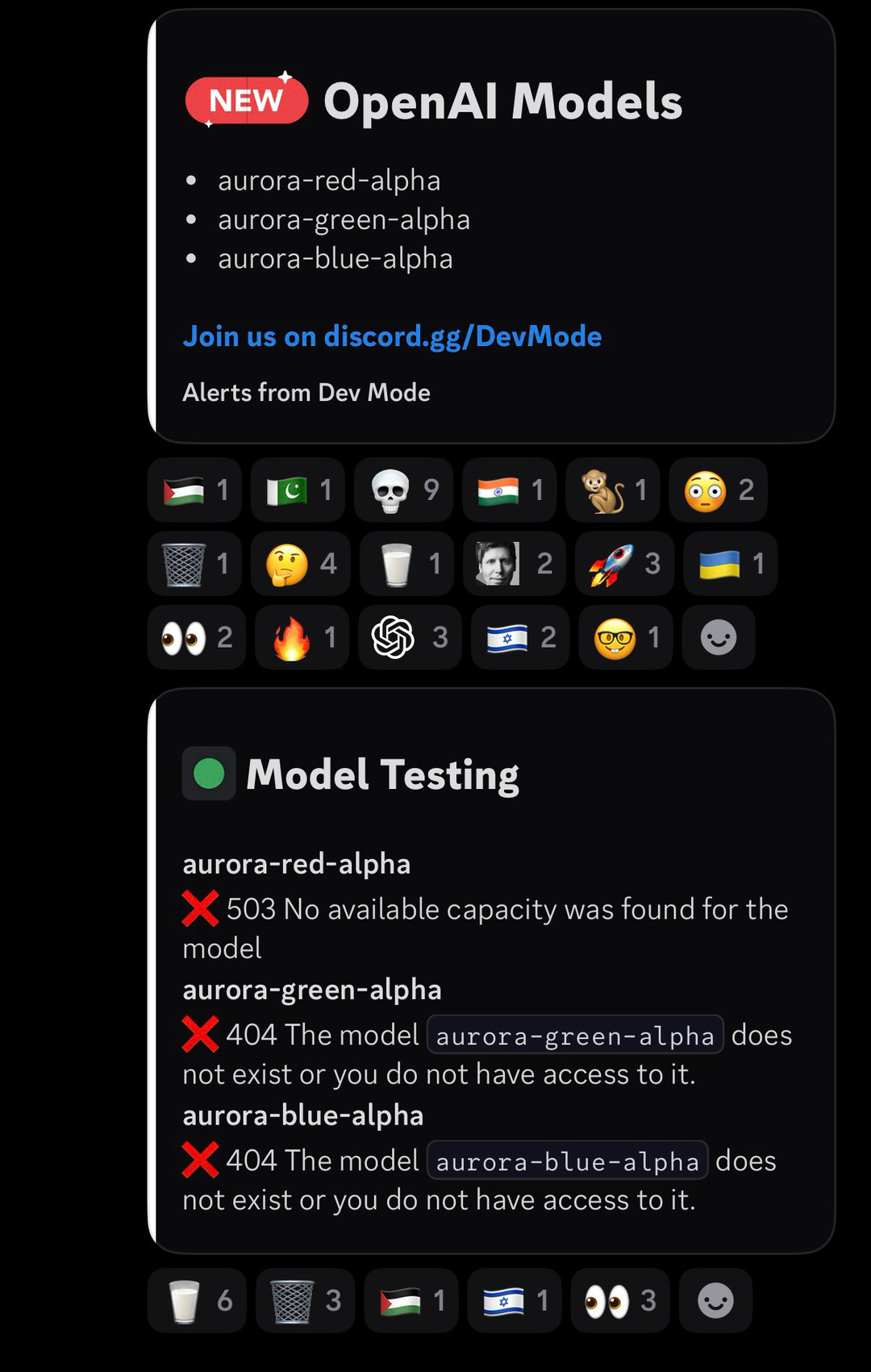
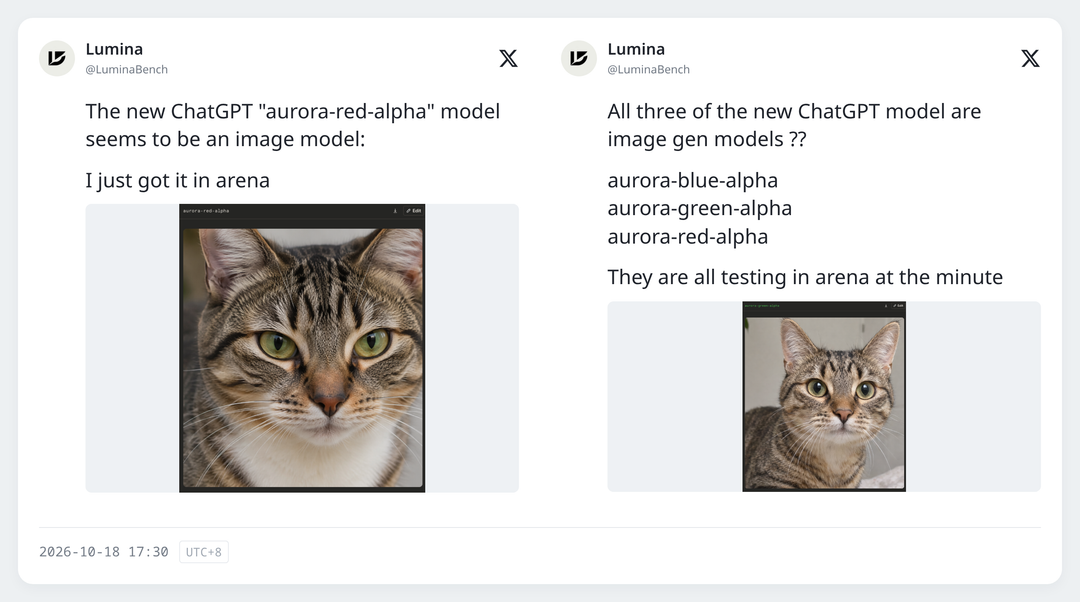
3. Three new Aurora model IDs appear in the OpenAI API, apparently image generation models in testing;
4. Anthropic is reportedly working with legal institutions on norms for AI negotiation agents, mapping the compliance boundaries of adversarial scenarios early.
I. Model releases and open source
No new large models were formally released, no major version updates shipped and no significant open-source projects landed in this 24-hour window; model testing news is covered under "Outlook and market rumours".
II. Developer ecosystem and tooling
No major news this time on core developer tool releases or ecosystem changes.
III. Products shipping
No major product launches or service upgrades this time.
IV. Technical insight and frontier research
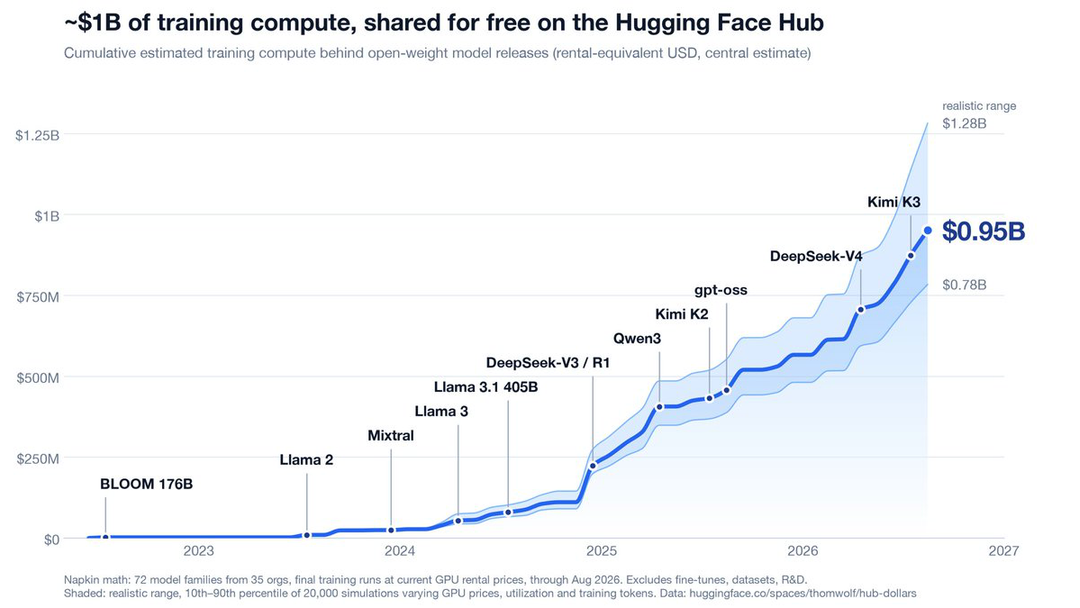
Cumulative training compute for open-source models estimated at nearly US$1 billion
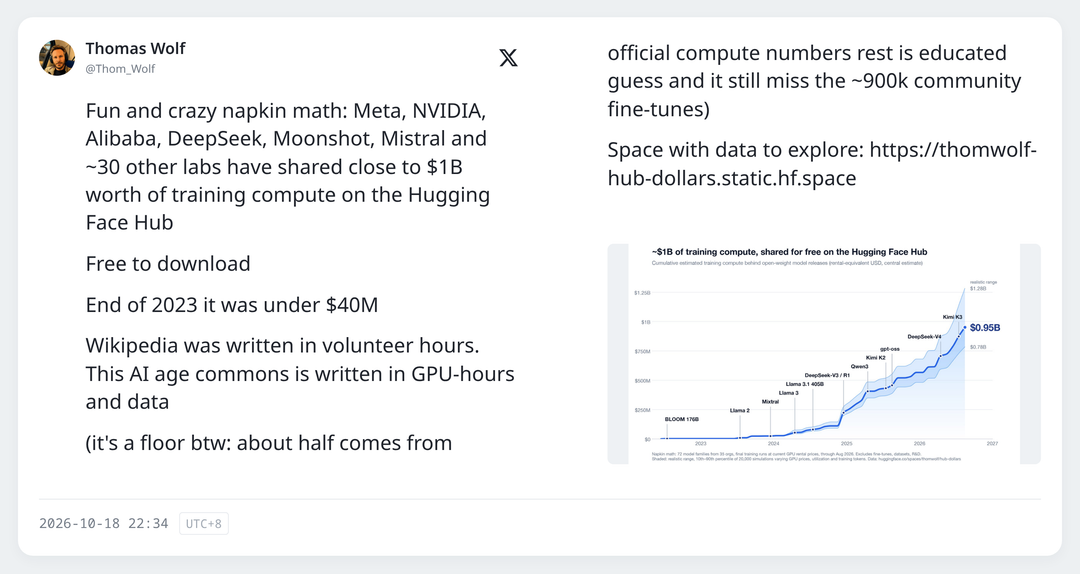
Hugging Face co-founder Thomas Wolf has published an estimate: the models open-sourced on the Hugging Face Hub by about 35 organisations — including Meta, NVIDIA, Alibaba, DeepSeek, Moonshot AI and Mistral — represent close to US$1 billion of training compute at current GPU rental prices, up from less than US$4 million at the end of 2023. The estimate covers 72 model families with a central value of about US$950 million. It is a lower bound that does not include about 900,000 community fine-tunes, failed training runs, R&D team costs or dataset costs. Wolf compares it to Wikipedia: the encyclopedia was written with volunteers' time, while the public knowledge resources of the AI era are built from GPU hours and data.
Post: https://x.com/Thom_Wolf/status/211828314851598745 Estimate: https://thomwolf-hub-dollars.static.hf.space
V. Industry moves
Anthropic sets up a Public Benefit Fund with an initial 5% of company shares
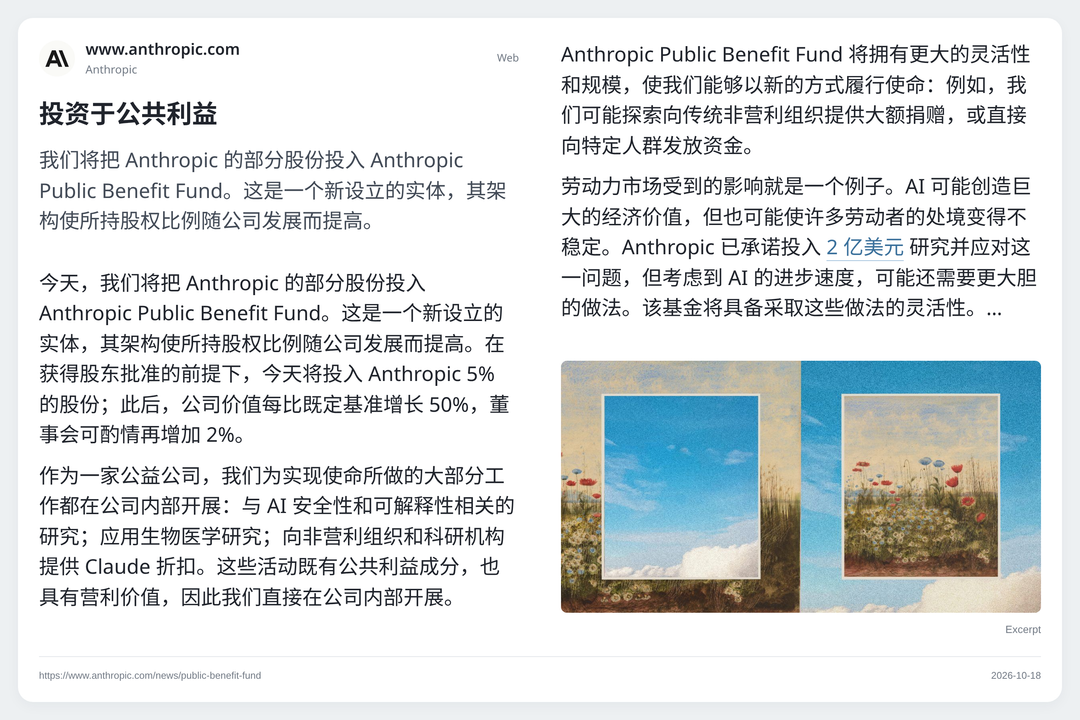
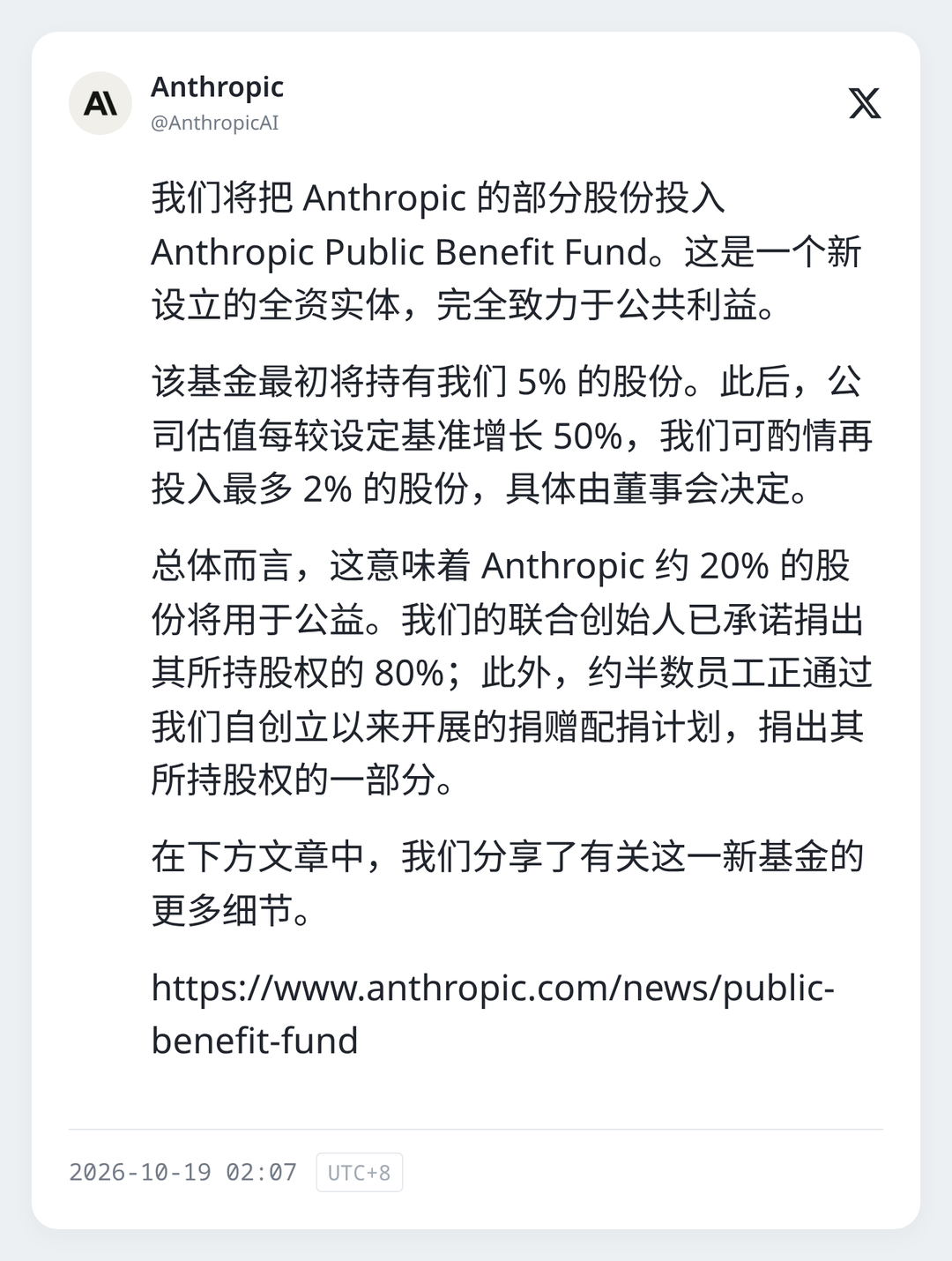
Anthropic has announced the Anthropic Public Benefit Fund, a wholly owned entity whose holding will grow with the company. The fund starts with 5% of the company's shares, subject to shareholder approval; each time the company's valuation rises 50% above a set baseline, the board may add a further 2%. Combined with the co-founders' pledge at founding to give away 80% of their equity, and a company matching programme for equity donations in which about half of employees take part, about 20% of the company's shares will ultimately go to public-benefit uses. The fund will be used in three ways: large grants to traditional non-profits, direct distribution of resources to specific groups of people, and responding to AI's impact on the labour market, an area where Anthropic has already committed US$200 million. The fund is a wholly owned LLC, and its shares will not be used for lobbying or political donations in the US or abroad. Its governance, operating rules and valuation milestones will be published over the coming months.
Announcement: https://www.anthropic.com/news/public-benefit-fund Post: https://x.com/AnthropicAI/status/211881963657412903
VI. Outlook and market rumours
1. Three new model IDs appear in the OpenAI API, apparently image generation models in testing
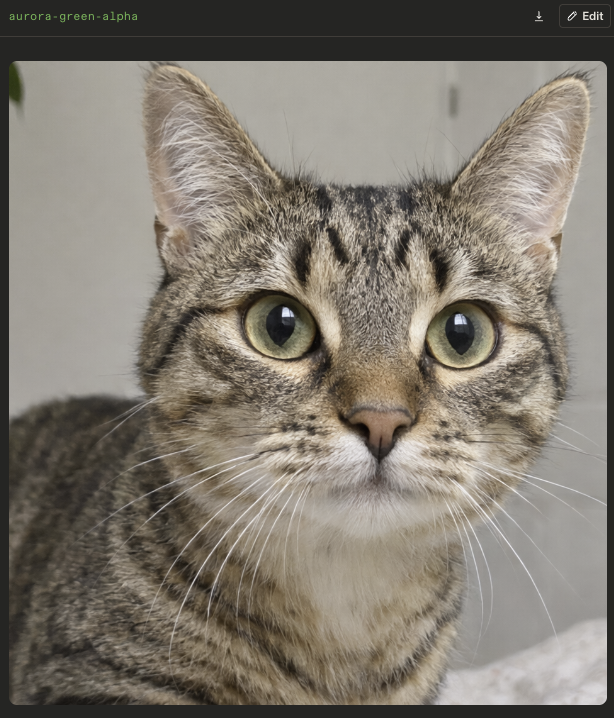
Several developers report that three new model identifiers — aurora-red-alpha, aurora-green-alpha and aurora-blue-alpha — briefly appeared in the OpenAI API before being removed. TestingCatalog confirmed the references have been deleted from the API. Community tester Lumina Bench says it encountered aurora-red-alpha on Arena and that all three are image generation models in testing; shared screenshots show the red and green versions generating cat images from prompts, while no tester has yet encountered the blue version. At the time of writing, OpenAI has not confirmed the models' positioning, parameters or release plans.
Community: https://x.com/testingcatalog/status/211724606927028578 Community: https://x.com/LuminaBench/status/211751820980678939
2. Anthropic reportedly consulting law firms on norms for AI negotiation agents
The Financial Times, citing people familiar with the matter, reports that Anthropic is consulting law firms and other legal institutions on behavioural norms for AI agents that negotiate on users' behalf, exploring how to represent a client's interests while keeping outcomes fair. The discussions cover how much human feedback should be involved during an agent's negotiation, how wary it should be of other AI counterparts, and whether users should sign an authorisation document confirming what is delegated and where the boundaries lie. At the time of writing, the research is still ongoing and no final norms have been set.
VII. Claw roundup
1. AI companies institutionalise social responsibility, with equity-based giving as a new model
Anthropic's share-based public benefit fund, on top of the founders' pledge of 80% of their equity, shows AI companies' social responsibility moving from occasional one-off donations to institutional, equity-level long-term arrangements. As the AI industry's influence and wealth grow rapidly, how to distribute the gains from the technology, bear its social costs and respond to labour market disruption is becoming a central question for the industry. The fund creates a stable long-term mechanism for giving and ties the company's growth to social returns, offering a new governance reference for the industry.
2. The public value of open source stands out, with compute spending forming an invisible social asset
Billion-dollar-scale training compute and an open-model ecosystem that is entirely free to use confirm the enormous public value of open-source AI. These public resources, built up from compute, data and developers' time, are becoming infrastructure for the whole AI industry, supporting commercial innovation and broad access to the technology. As the economic and social value of open source becomes clearer, it also challenges traditional value distribution and business models, pushing the industry to look for more sustainable paths.
VIII. Trending open source on GitHub
1. anthropics/claude-quickstarts
Momentum: a core reference project for Claude developers. Summary: Anthropic's official quickstart collection, with agent example code for many use cases across multiple SDK languages and toolsets, kept up to date with the latest model capabilities and best practices.
Repository: https://github.com/anthropics/claude-quickstarts
2. deepseek-ai/deepseek-harness
Momentum: a leading Chinese agent framework. Summary: DeepSeek's official open-source, fully plugin-based agent framework with multi-model support, tool calling and workflow orchestration. It is highly customisable for enterprise agent development and self-hosted deployment.
Repository: https://github.com/deepseek-ai/deepseek-harness
3. h2oai/h2o-llm
Momentum: a popular production inference framework. Summary: a high-performance open-source LLM inference framework supporting multi-model deployment with low latency and high throughput, suited to large-scale production deployment with a complete toolchain.
Repository: https://github.com/h2oai/h2o-llm
4. open-webui/open-webui
Momentum: the go-to front end for self-hosting. Summary: a full-featured open-source AI interface with multi-model support, plugins, RAG and multi-user management, deployable locally or in the cloud — the mainstream front end for self-hosted AI services.
Repository: https://github.com/open-webui/open-webui
5. Vect0rAuth/Phoenix
Momentum: rising attention for an agent permission tool. Summary: a fine-grained authentication and permission management tool for AI agents that helps companies control which resources agents can access, suited to secure production deployments.
Repository: https://github.com/Vect0rAuth/Phoenix