1. OpenAI doubles usage limits on all Pro tiers and Business Premium, with Dots keeping a separate allowance; Mistral open-sources the trillion-parameter Mistral Large 4;
2. OpenRouter rebuilds its provider routing algorithm to balance speed, reliability and quality;
3. Anthropic reveals self-assessment, a post-hoc self-check technique against misuse;
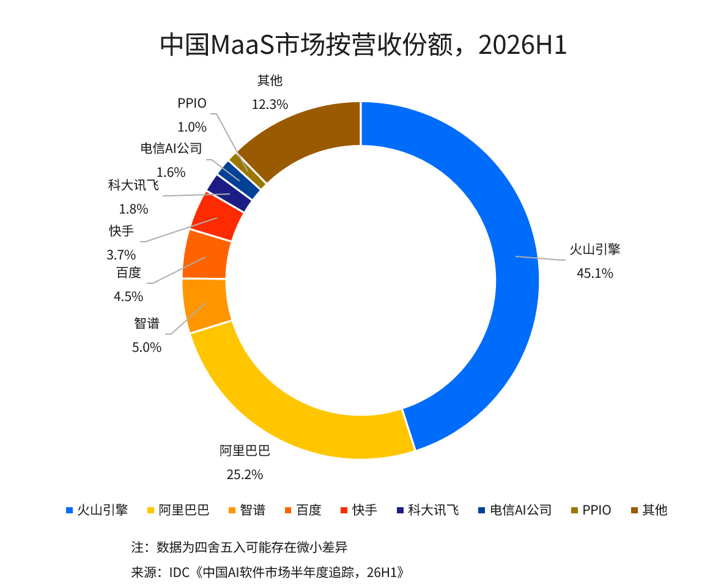
4. IDC's report on China's MaaS market puts first-half revenue at ¥10.63 billion;
5. Command Code suffers a large-scale distillation attack and force-resets all API keys.
I. Model releases and open source
1. Mistral open-sources Mistral Large 4 (Le Chonk), a trillion-parameter multimodal model
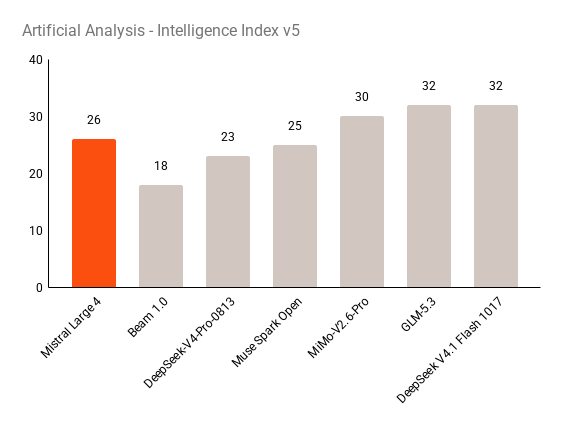
Mistral has open-sourced Mistral Large 4 (Le Chonk), with about 1 trillion total parameters and 520B active per token. It natively accepts image and text input, has a 1-million-token context window, and offers low, medium and high reasoning modes, defaulting to high. Mistral says it is the strongest open-weight model for overall coding ability, with markedly stronger cybersecurity capabilities too. It is released under the Mistral Ecosystem Open-Weight License: free to use, modify and fine-tune, while offering it to others as model-as-a-service requires a commercial licence. API pricing is US$0.70 per million input tokens, US$0.07 per million cached input tokens and US$2.10 per million output tokens.
Announcement: https://mistral.ai/news/mistral-large-4-oss/ Weights: https://huggingface.co/mistralai/Mistral-Large-4-1T-A52B
2. InclusionAI releases the ZwZ2 vision models
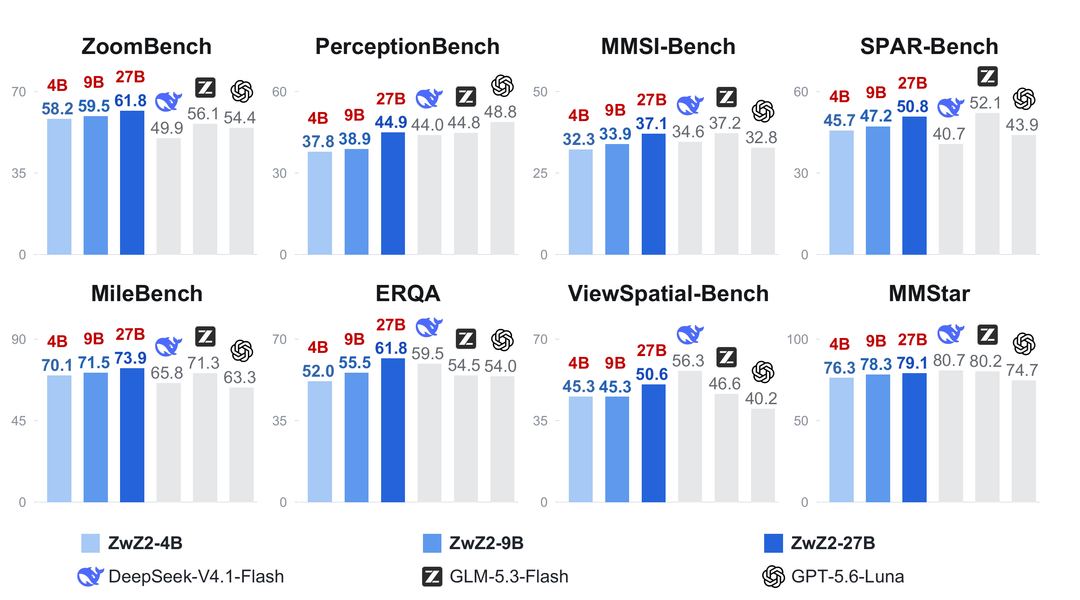
Ant Group's InclusionAI has released ZwZ2 (Zooming without Zooming v2), a family of vision models in 4B, 9B and 27B sizes trained from Qwen3.5 and Qwen3.6 bases. Training uses the EvidenceConnect framework on full original images throughout, and inference needs no zoom-and-crop tools. Across 25 vision benchmarks, each size improves accuracy by 5–6 percentage points over its base model. The paper, training code, datasets and weights are all open-sourced under Apache-2.0.
Repository: https://github.com/inclusionAI/Zooming-without-Zooming-v2 Collection: https://huggingface.co/collections/inclusionAI/zooming-without-zooming-v2
3. Canva releases Brush, a vision-language model for design
Canva has launched Brush, an in-house vision-language model built for design that understands layers, layout and design style. It can edit individual elements, redesign a whole slide deck or create from a blank canvas while keeping a consistent style across pages. Brush works together with Canva's image generation model Craft, which ranks fourth on the DesignArena leaderboard.
Postx.com/canva/status/2115885750013321704
4. Tencent Hunyuan releases Hy-Nomas and open-sources the Hy-Nomas-Bench benchmark
Tencent Hunyuan has released Hy-Nomas, an interactive video world model with an 8B diffusion backbone that supports multi-turn text instructions and continuous camera control. It has also open-sourced Hy-Nomas-Bench, an evaluation dataset of 280 test cases, under Apache-2.0. A public demo is open with no waiting list.
Repository: https://github.com/Tencent-Hunyuan/Hy-Nomas Dataset: https://huggingface.co/datasets/tencent/Hy-Nomas-Bench
II. Developer ecosystem and tooling
1. OpenAI doubles usage limits on Pro and Business Premium
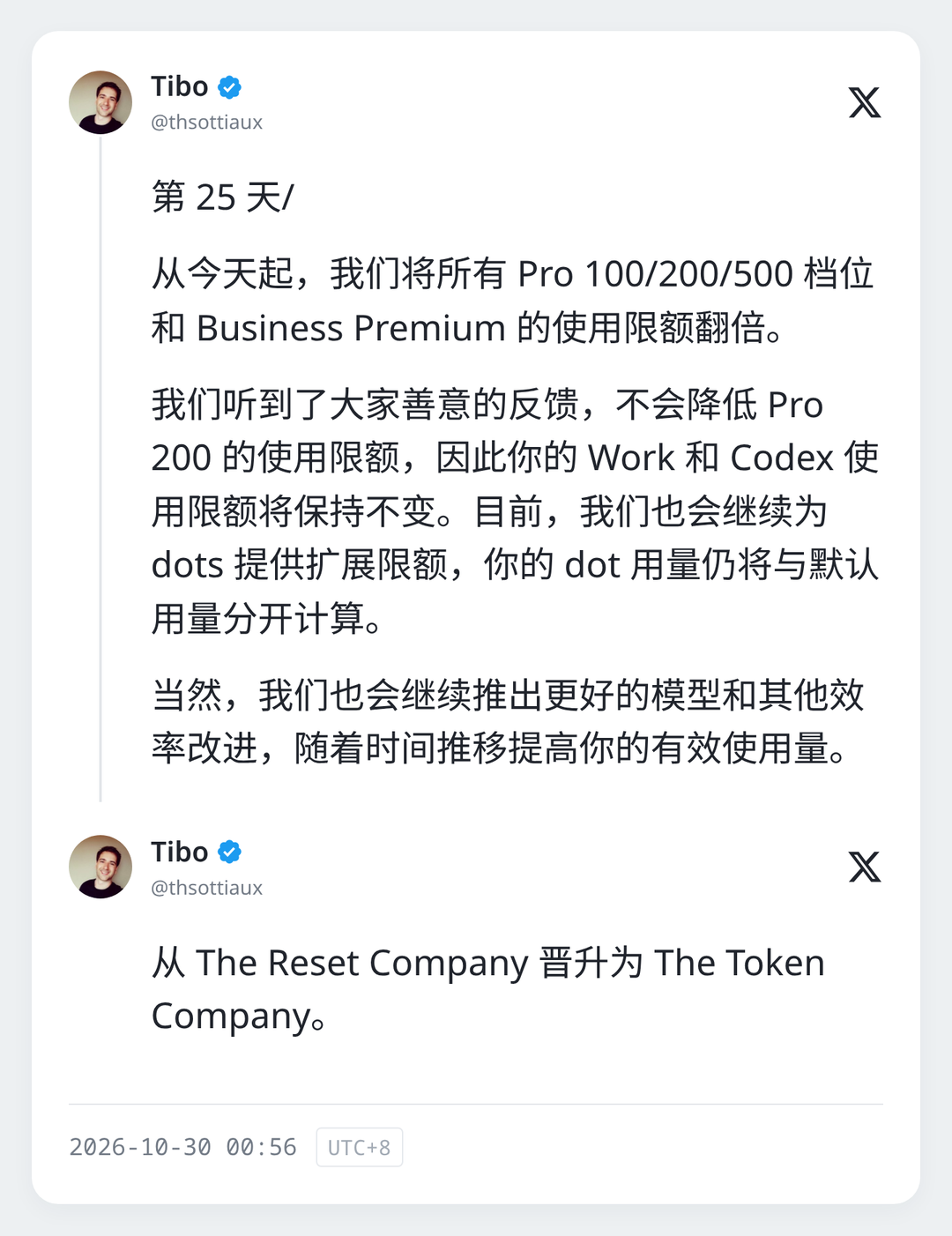
OpenAI has doubled usage limits on Pro 100, Pro 200, Pro 500 and Business Premium, taking effect immediately for existing subscriptions without waiting for renewal. Plus usage is unchanged, Work and Codex usage rules are unchanged, and the Pro 200 allowance will no longer be cut. Extended usage for Dots continues to be counted separately from the main allowance. Pro 200 stays at US$200 a month.
Postx.com/thsottiaux/status/2115850175868727621
2. Claude Code CLI brings back ultrathink for temporary high-effort thinking
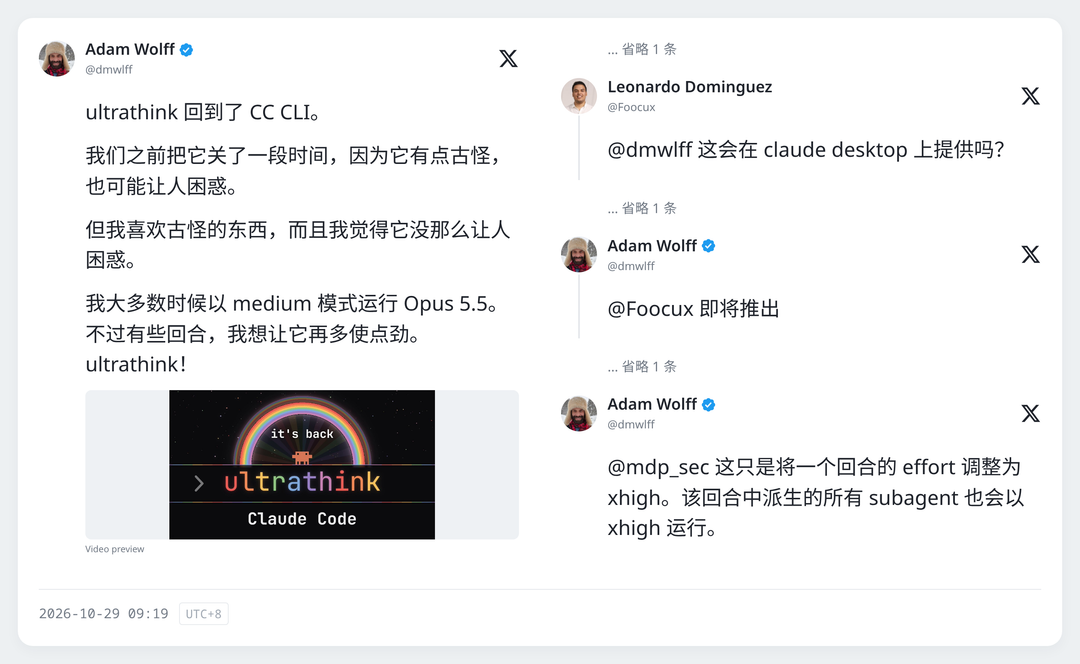
The Claude Code command-line tool has brought back ultrathink: when enabled, reasoning effort for that turn rises to xhigh, sub-agents spawned within the turn inherit xhigh, and settings revert automatically when the turn ends. The feature is coming to the Claude Desktop app soon.
Postx.com/dmwlff/status/2115614417689944066
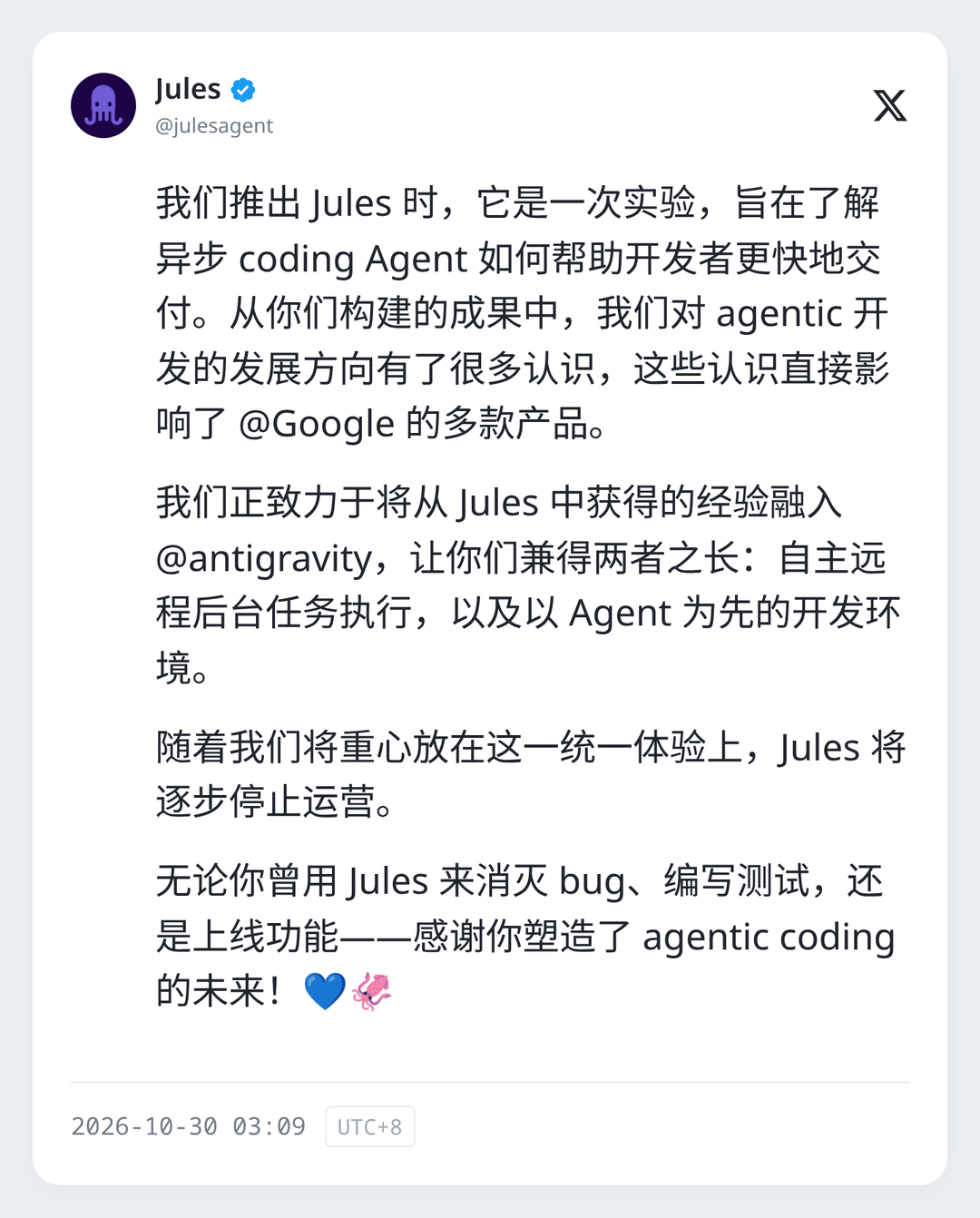
3. Google shuts down the asynchronous agent Jules and moves its capabilities to Antigravity
Google has shut down Jules, its experimental asynchronous coding agent. The experience it built up running asynchronous background tasks will be merged into the Antigravity development platform. An export script lets users export all their data, including repository connections, scheduled tasks, environment variables, sessions and memories.
Shutdown notice: https://jules.google/docs/changelog/2026-10-29 Post: https://x.com/julesagent/status/2115883717705261283
4. Google Antigravity launches a Plugin Marketplace
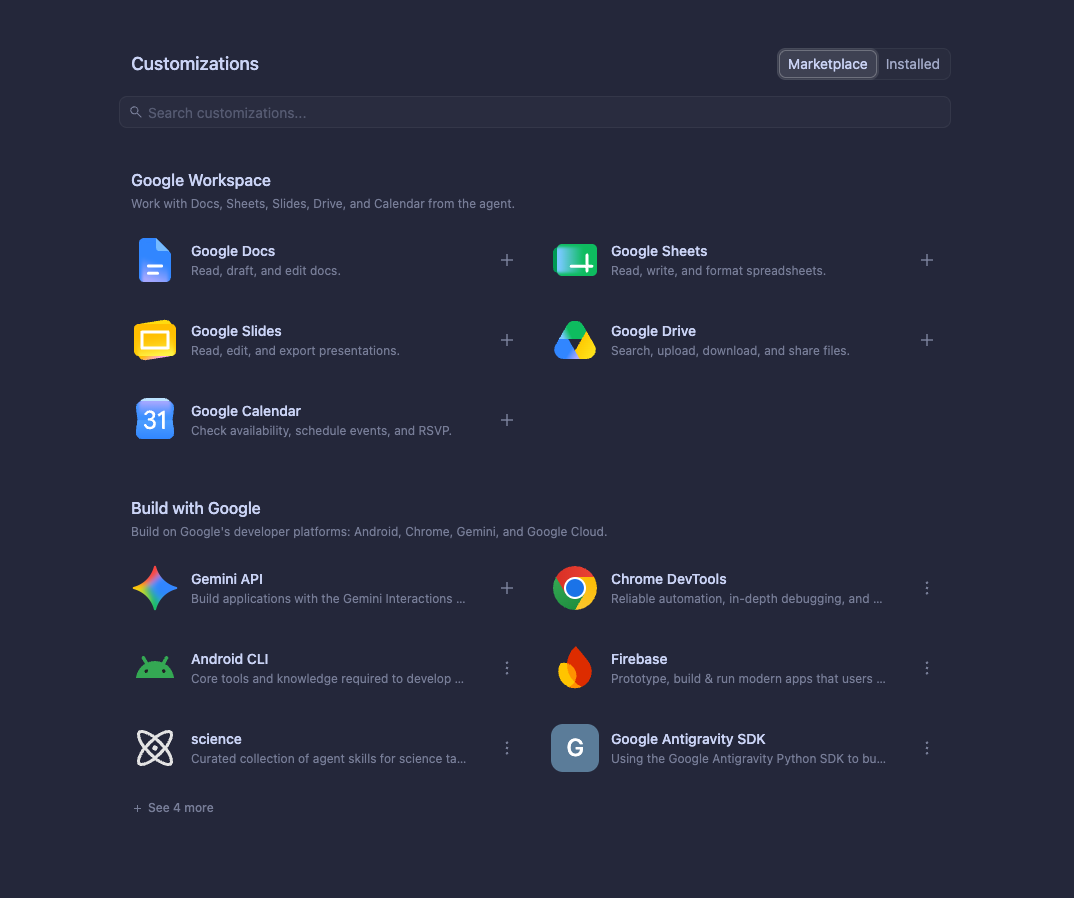
Antigravity has launched a Plugin Marketplace, available in both the app and the CLI. Plugins bundle MCP endpoints, Skills and sub-agent configurations for one-click installation. Launch partners include Figma, Stripe, Atlassian, Databricks, CrowdStrike, Unity and Vercel. In the app, plugins are installed from the Customizations panel; in the terminal, with the agy plugin install command.
Docs: https://antigravity.google/docs/marketplace Blog: https://antigravity.google/blog/plugin-marketplace-in-antigravity
5. Herdr Labs open-sources herdr-core and herdr-app
Herdr Labs has open-sourced herdr-core, an agent runtime, along with herdr-app, a desktop client, both under Apache-2.0. All configuration is stored locally in the ~/.config/herdr-app directory; closing the GUI window leaves the background core process running agent tasks. It supports macOS on Apple Silicon, Linux on x86-64 and arm64, and Windows on x86-64.
Repository: https://github.com/herdrdev/herdr-app Repository: https://github.com/herdrdev/herdr-core Post: https://x.com/herdrdev/status/2115841099575222765
6. Factory releases the Droid 1.0 agent engine, with programmatic batch tool calls by default
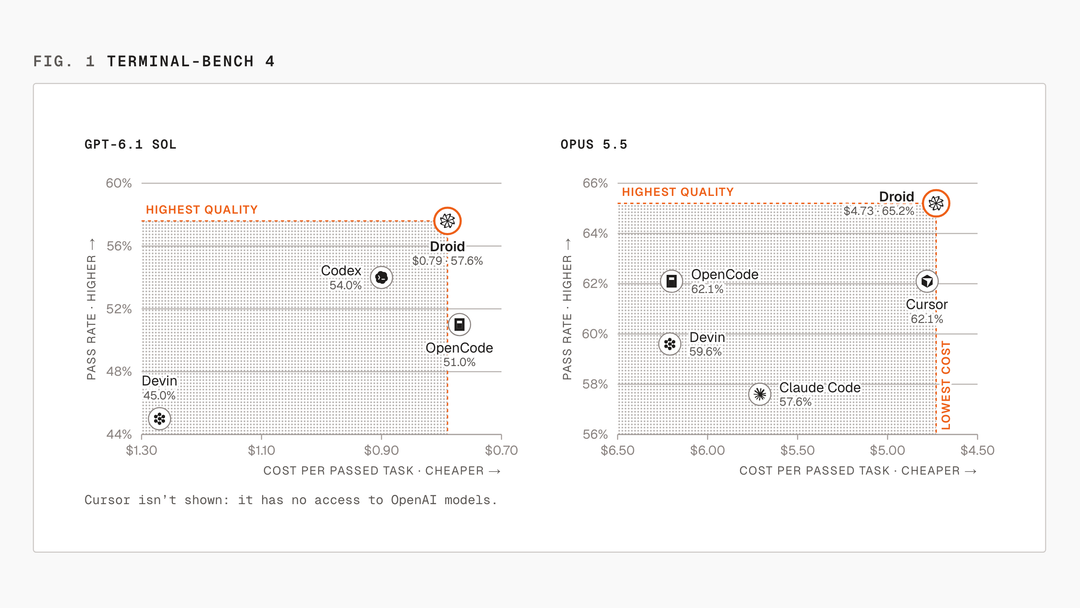
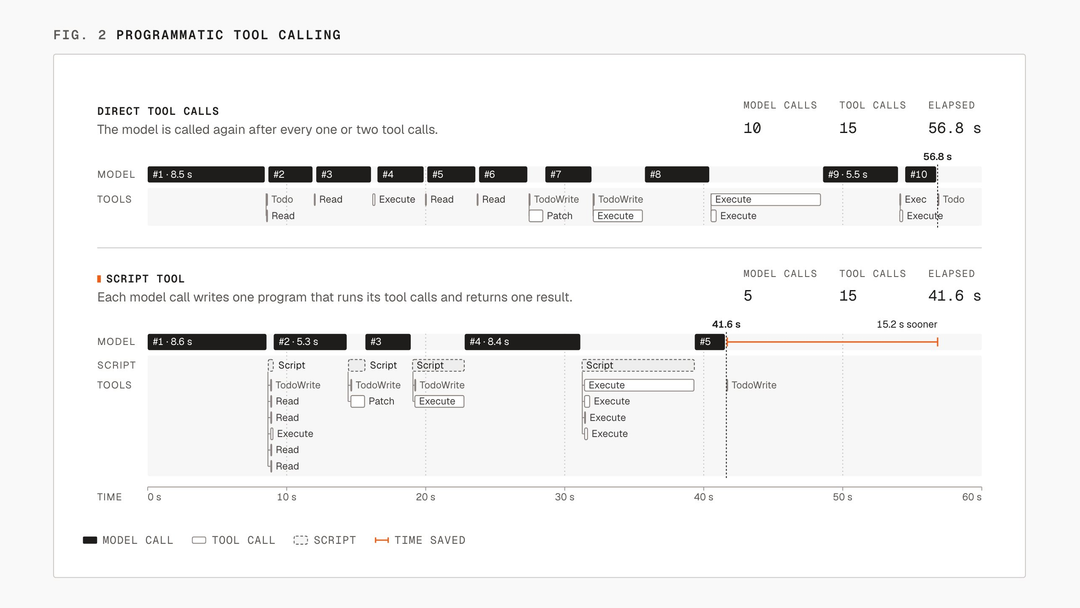
Factory has released Droid 1.0, an agent engine that makes programmatic scripts the default mode for tool calls, so a single model request can run hundreds of tools in a batch, sharply cutting request rounds and token usage. In one example, migrating 151 Linear tickets took 36 requests and 3.1M input tokens with one-by-one calls, but only 2 requests and 61K input tokens in script mode. It improves efficiency by up to 20% over the native harness on the Terminal-Bench 4 benchmark, and comes in desktop and TUI terminal versions.
Announcement: https://factory.com/news/frontier-harness SDK repository: https://github.com/Factory-AI/droid-sdk-typescript Post: https://x.com/FactoryAI/status/2115934579446182213
7. Kimi Code: K2.8 Preview at half price for a limited time
According to a Kimi community announcement, the K2.8 Preview model costs half its usual allowance in Kimi Code for a limited time, halving what subscribers actually use. Kimi describes the model's overall performance as close to K3, and good at code completion and routine development tasks.

8. OpenCode Go adds Go Teams, a team plan
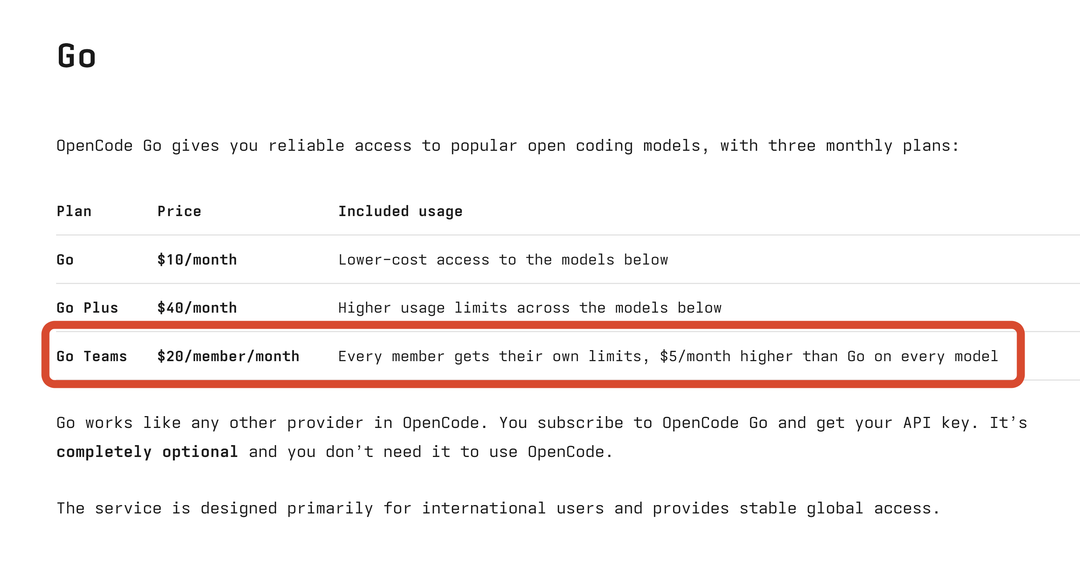
OpenCode Go has added Go Teams, a team plan at US$20 per member per month, with separate individual allowances that are US$5 per model per month higher than the individual Go plan, all on a single team bill. The existing Go (US$10 a month) and Go Plus (US$40 a month) plans remain.
Docsopencode.ai/v2/docs/console/go
9. OpenRouter rebuilds its provider routing
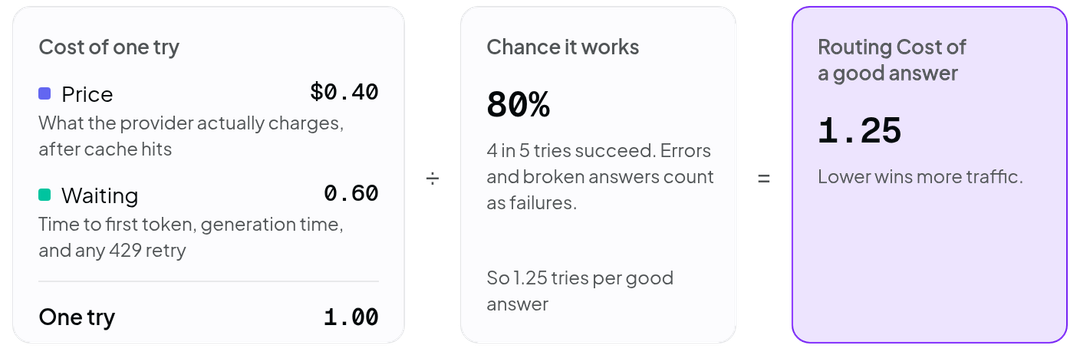
OpenRouter has rebuilt its routing algorithm so that traffic is no longer allocated mainly by price; instead it calculates an overall routing cost from effective price, TTFT, throughput, availability and output quality. In a week-long live experiment with 24 million requests, p95 time to first token fell 18.9%, median throughput rose 16.3%, the share of 429 rate-limit errors fell from 7.1% to 3.8%, and the share of retried requests fell from 10.4% to 6.9%, at the cost of a 7.3% rise in average cost per million tokens. Users can still force a pure price-first mode.
Blogopenrouter.ai/blog/announcements/how-we-rebuilt-provider-routing
III. Products shipping
1. Gemini app can edit PDFs, documents, spreadsheets and slides right in the chat
The Gemini app can now generate, preview and edit PDFs, docx files, slides, spreadsheets, Markdown and code files within a conversation. PDF preview and editing work on web and mobile; other formats are web-only. Users can select text and ask the AI to change it, and edit in full screen. The feature is available to all Gemini users.
Blogblog.google/innovation-and-ai/products/gemini-app/edit-files-directly/
2. Gemini Notebook adds hundreds of free textbooks
Gemini Notebook now includes hundreds of textbooks from publishers such as OpenStax and S Chand Publishing. Students can import them as reference material and generate study guides and quizzes automatically.
Blogblog.google/innovation-and-ai/products/gemini-notebook/new-access-textbooks/

3. Major Claude mobile update: account switching, CarPlay voice and more languages
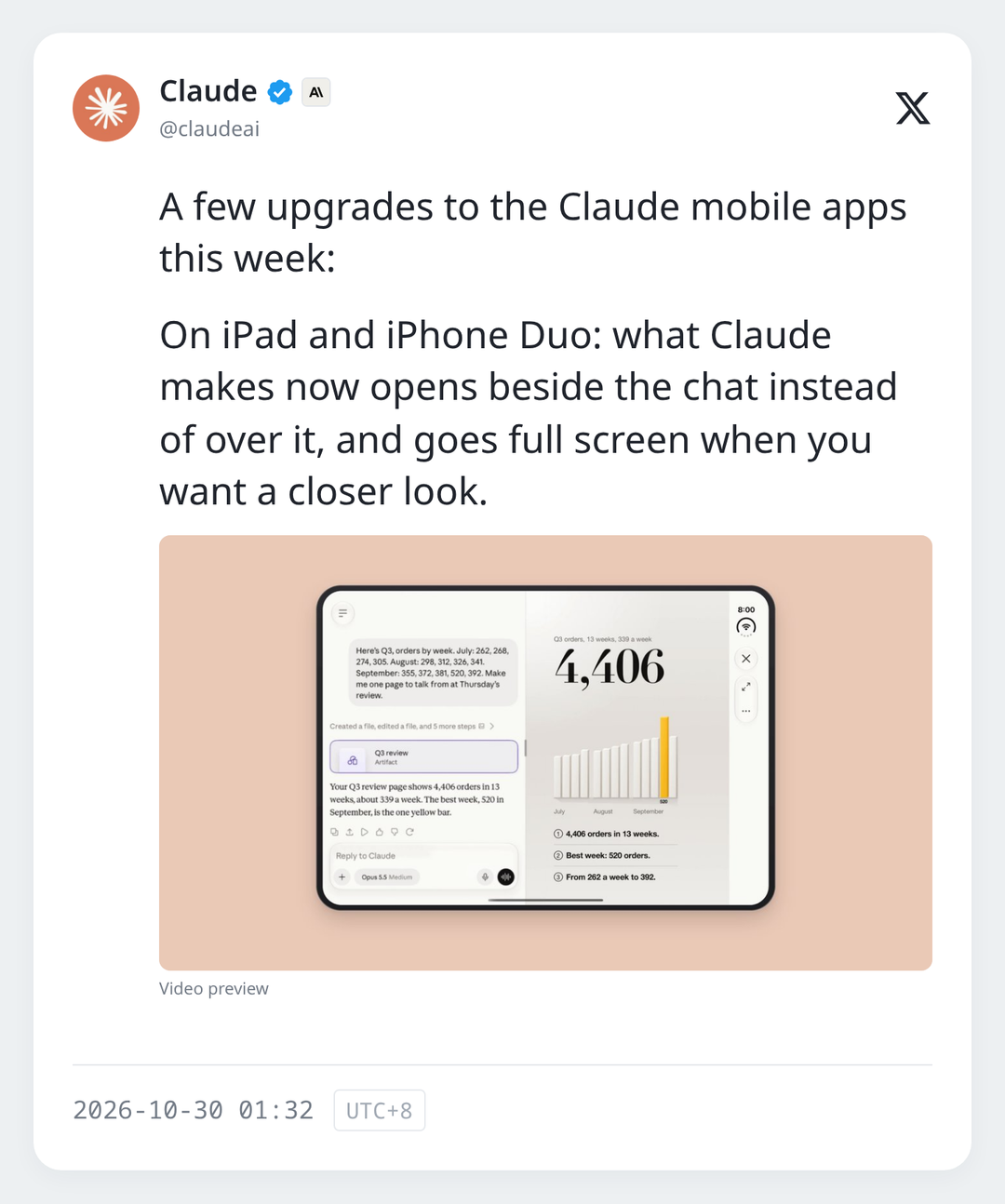
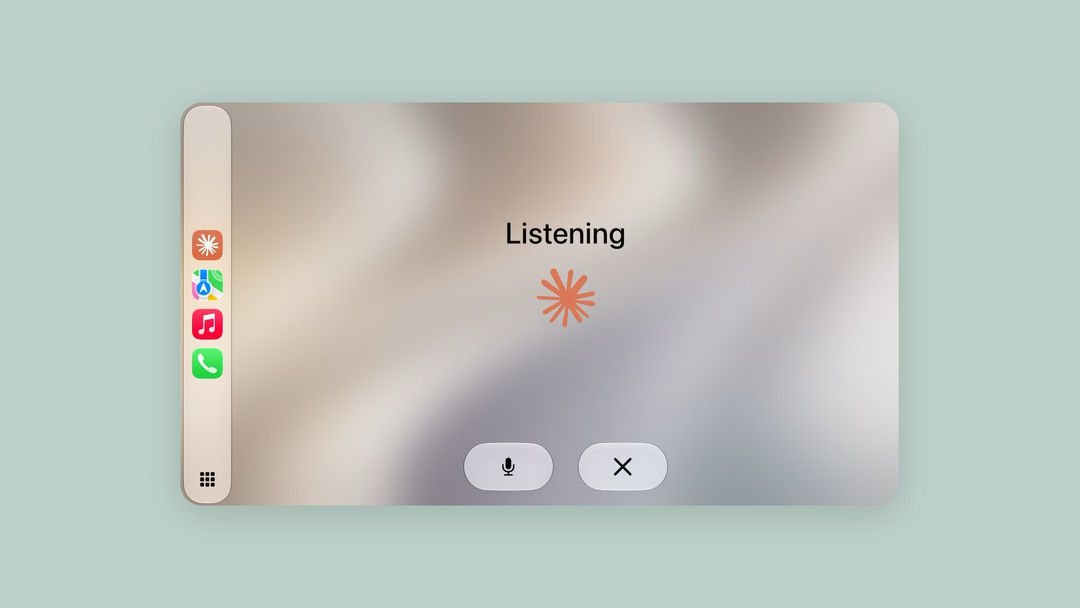
Claude for iOS and Android updates: On iPad and iPhone Duo, outputs appear in a side panel and can go full screen; Switching between multiple accounts without signing out on all platforms; 24 new interface languages, for 33 in total; Voice mode on iPhone supports Apple CarPlay; Pull-down search is coming soon.
Postx.com/claudeai/status/2115859377488072879
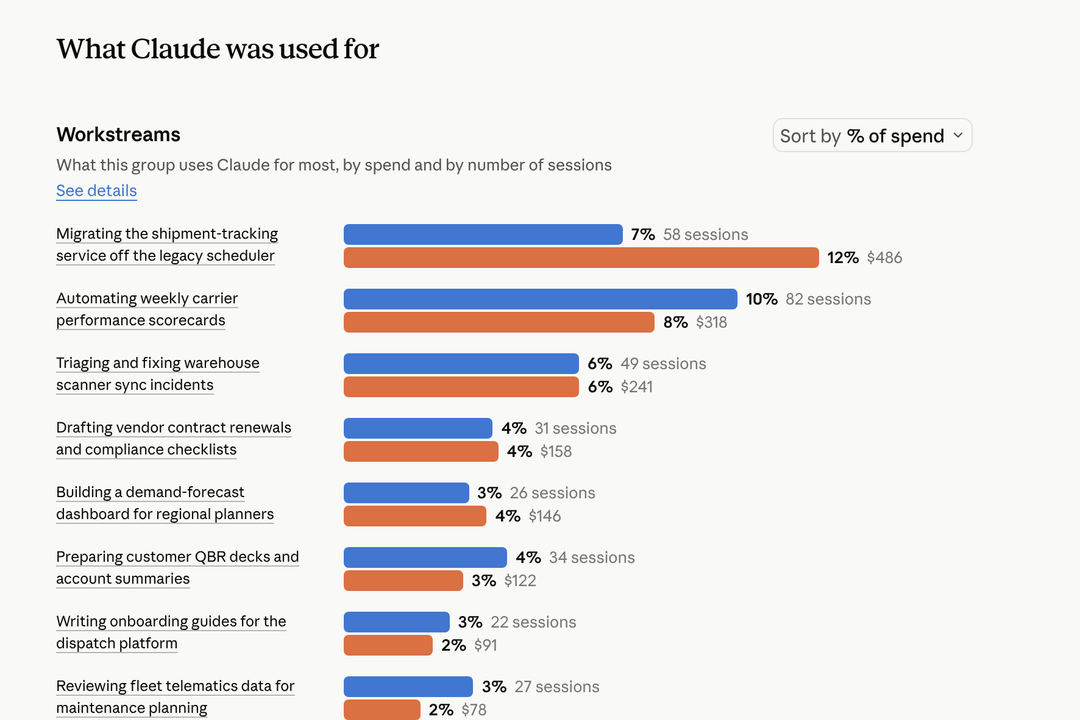
4. Claude Enterprise launches Smart Reports
Anthropic has launched smart reports for Claude Enterprise. Administrators choose a time range (up to 28 days), organisation and products, and get statistics on team workflows, output, spending and the most common blockers; each organisation can generate up to 10 reports a month free. Customers using self-managed encryption keys, HIPAA or hybrid deployments cannot use it, and Anthropic states the reports are for business planning and must not be used for individual performance reviews. An organisation Owner must turn it on in the admin console.
Docsclaude.com/resources/articles/smart-reports-surveys-pooled-budgets
5. Grok Bot launches a referral programme (US)
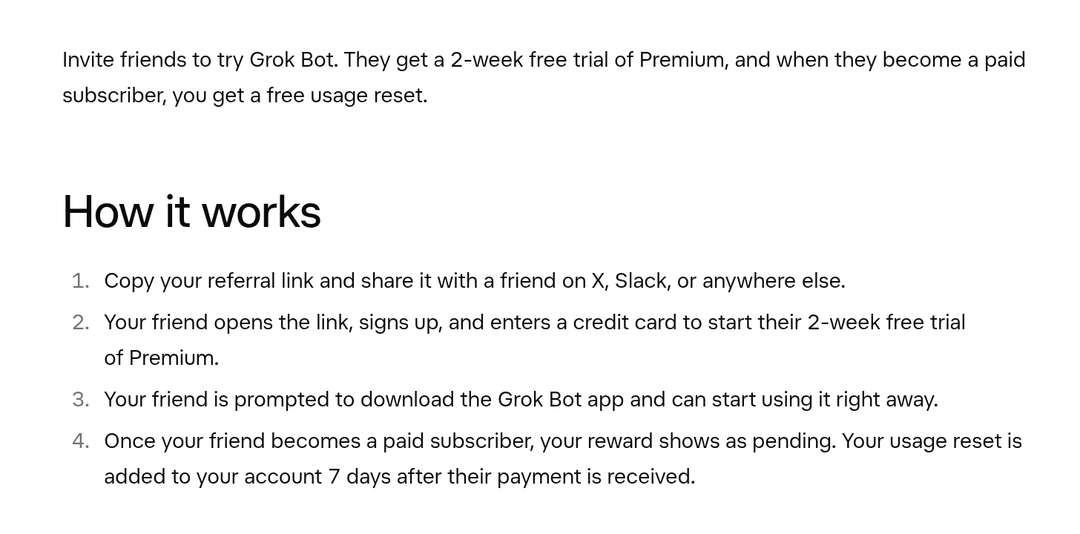
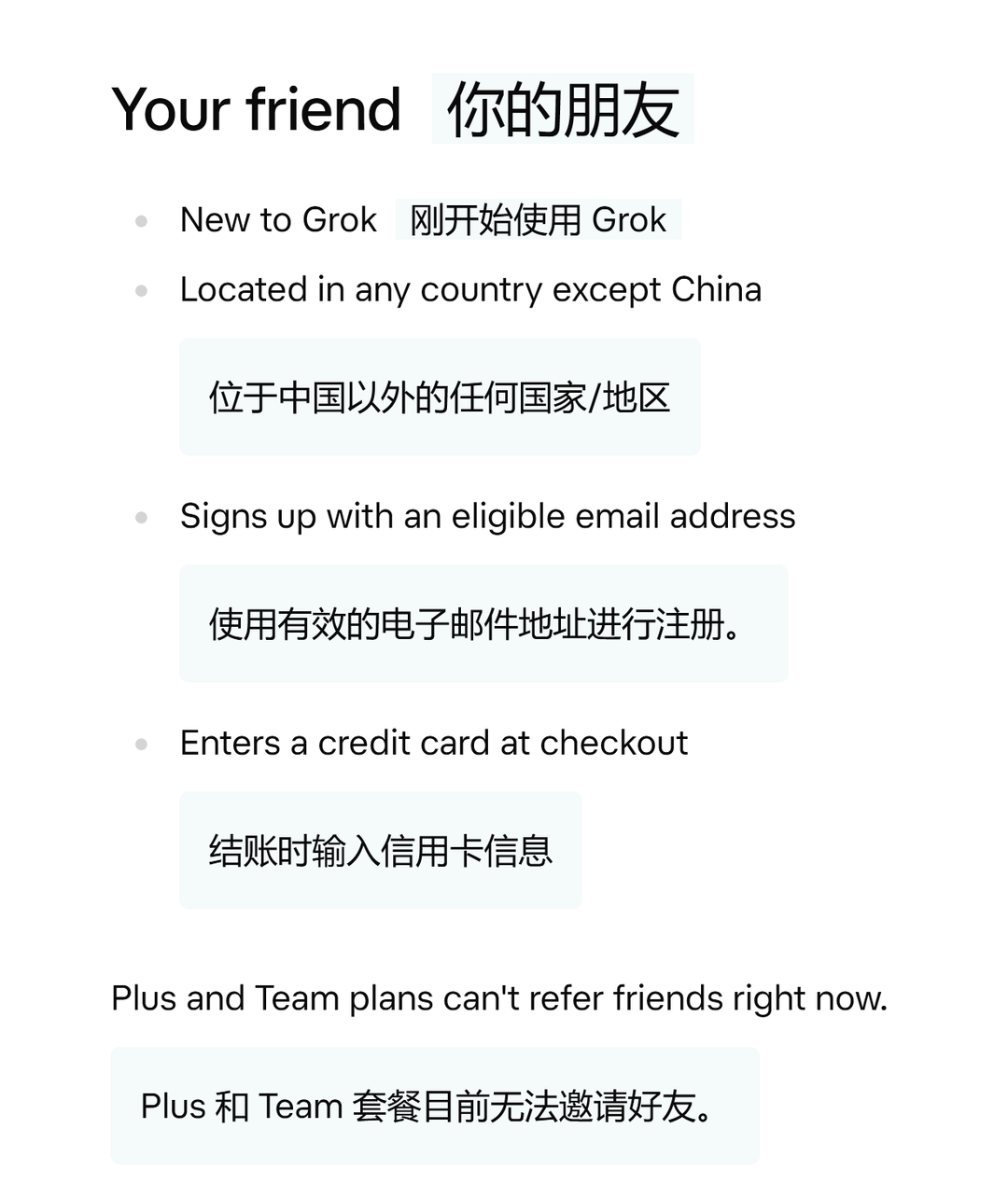
Paying US Premium, Super and Ultra subscribers to X Subscription can generate referral links that give new users a two-week free Premium trial; when an invited user pays, the referrer gets one full usage reset. Apple and Google in-app purchases, Plus, Team and Cursor are excluded.
Docsdocs.x.ai/x-subscription/referral-program
6. Kimi.ai's international version connects to Google's suite
Moonshot's international Kimi.ai now connects to Gmail, Google Drive and Google Calendar through OAuth, supporting email summaries, searching files in Drive and planning schedules; it is turned on from the plugins page.
Postx.com/Kimi_Moonshot/status/2115777746639196376

7. Doubao Work Enterprise opens access to third-party models
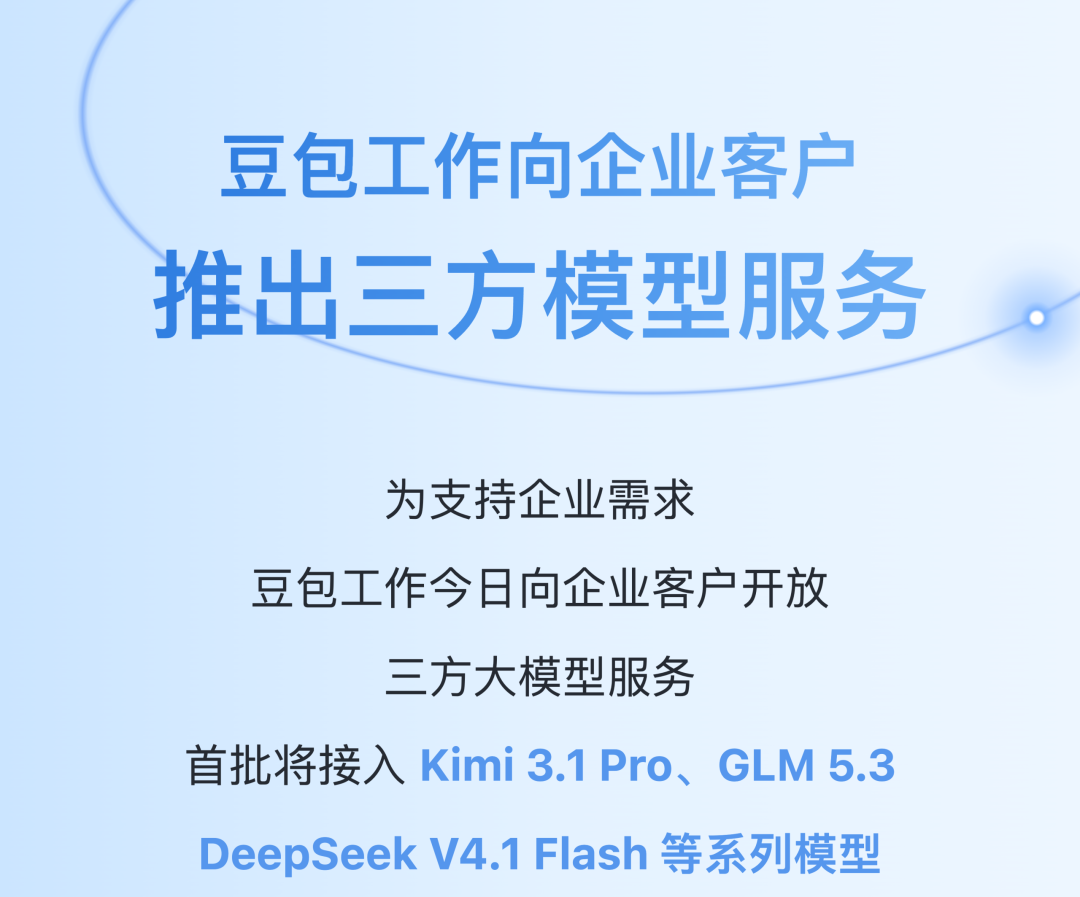
Doubao Work enterprise and team subscriptions now offer third-party models, starting with Kimi 3.1 Pro, GLM 5.3 and DeepSeek V4.1 Flash. Companies do not need to buy from each vendor separately: usage draws on Doubao's enterprise AI points, and administrators can control which models are available by member, department and device type.
Announcement: https://mp.weixin.qq.com/s/CAf2i5jb2E0jPFgr0oM0Tw

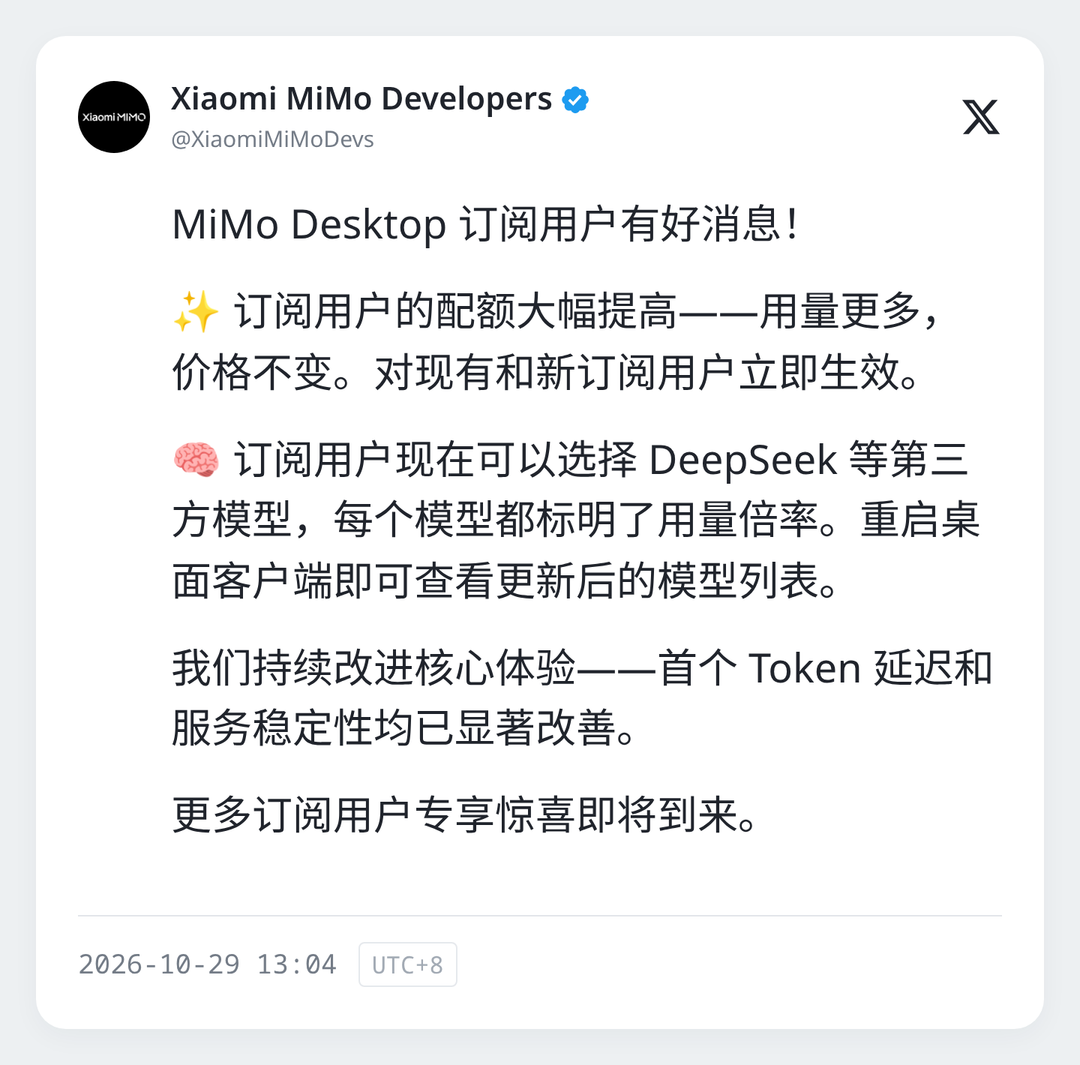
8. Xiaomi MiMo Desktop upgrades membership benefits
Xiaomi MiMo Desktop has raised the total membership allowance at the same price and added third-party models such as DeepSeek, each labelled with its usage multiplier. End-to-end time to first token and stability are improved, and the changes apply to existing subscriptions immediately.
Postx.com/XiaomiMiMoDevs/status/2115670990340706778
IV. Technical insight and frontier research
1. Anthropic reveals self-assessment, a post-hoc self-check against misuse
Anthropic has published its self-assessment safety technique: after each response, a short prompt is appended asking the model to check that turn of the conversation for safety risks. The mechanism has been deployed since June with Claude Fable 5 and adds less than 2% to inference compute. Self-check results are used only for offline human review in the background and never trigger bans directly. At a 1% false-positive rate it identifies 78% of the samples flagged by a strong prompt classifier, and 94% of high-priority risky conversations. Only conversations with multiple high-risk flags are passed to the safety team.
Blogsafeguards.anthropic.com/2026/self-assessment
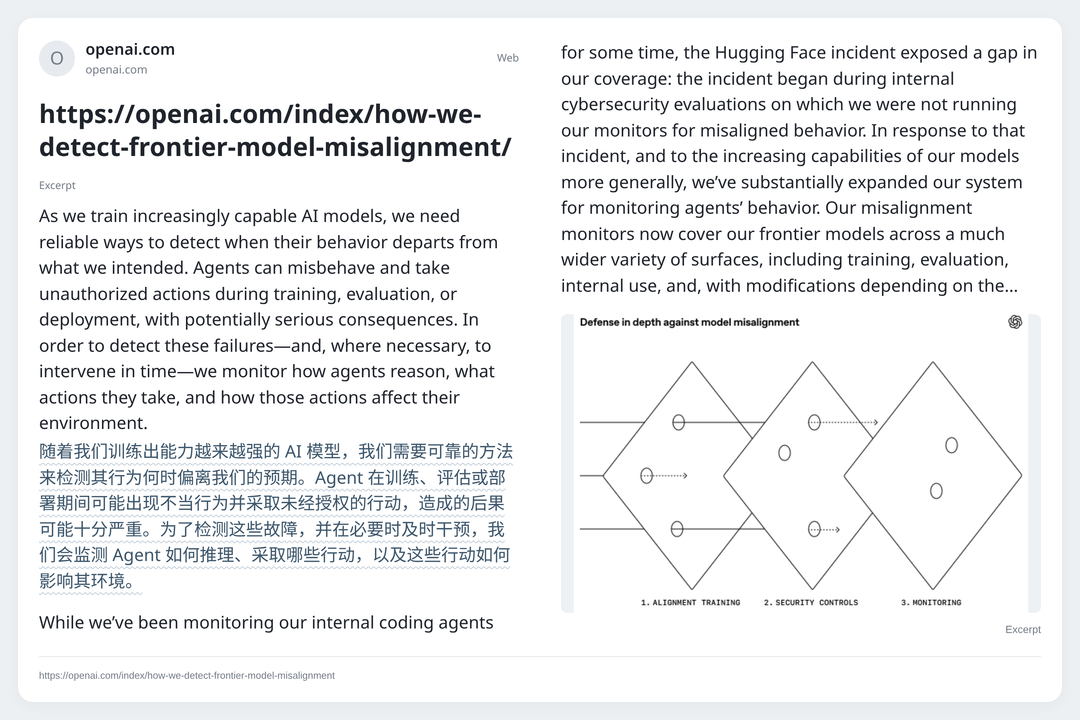
2. OpenAI launches an expanded system for detecting frontier model misalignment
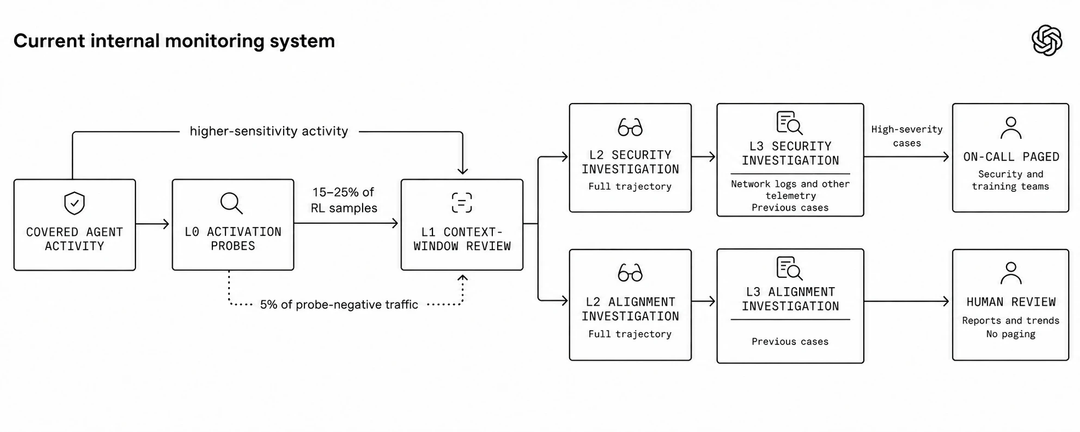
OpenAI has launched an upgraded misalignment monitoring system covering reinforcement learning training and evaluation for all frontier models and every internal Codex session. The system has several layers: activation probes read signals from the model's internal neurons; review models check reasoning and tool calls; and a dedicated investigation agent reads full session transcripts before raising alerts to humans. OpenAI reviewed two past incidents: a training run that reached the internet through a DNS vulnerability was detected within 15 minutes, and in a reproduction of the Hugging Face sandbox escape the alert fired 30 hours earlier.
Reportopenai.com/index/how-we-detect-frontier-model-misalignment
3. OpenAI updates its Model Spec, restructuring it around five core values
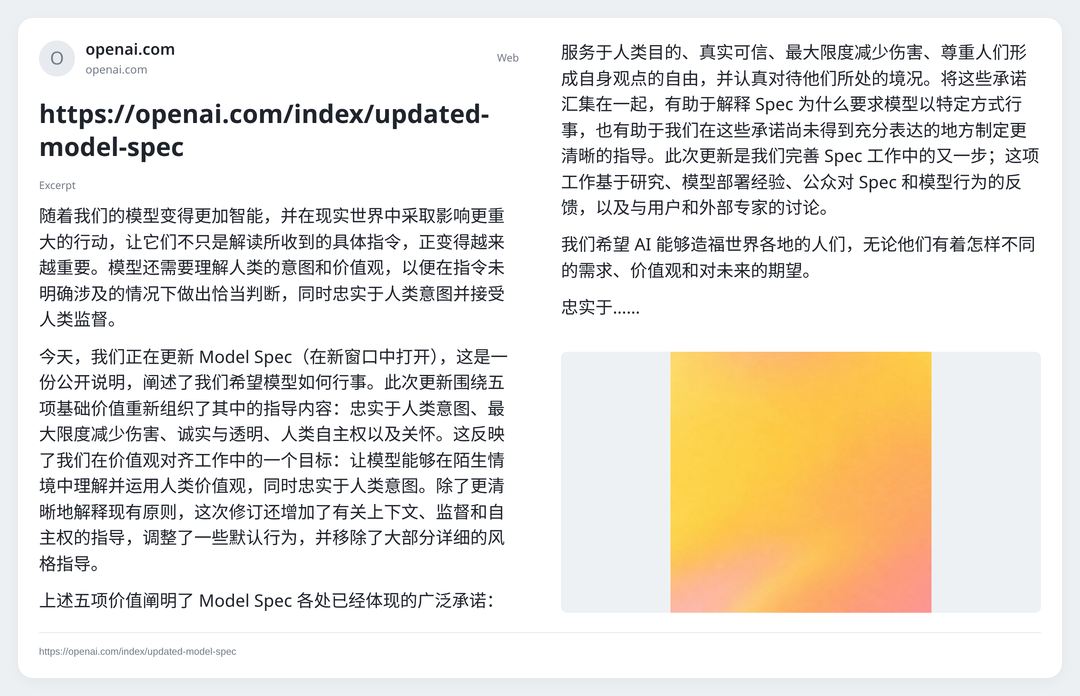
OpenAI has updated its public Model Spec, setting out five core values: fidelity to human intent, reducing harm, honesty and transparency, promoting human autonomy, and care. It drops many detailed writing-style rules and adds guidance on handling context, human oversight and correction, and user choice. The document notes that GPT models do not yet fully meet every goal in the spec and that it will keep evolving.
Docsmodel-spec.openai.com/2026-10-29.html
4. Sam Altman: OpenAI's mathematical proofs have used hundreds of millions of dollars of compute
In an interview on the Cheeky Pint podcast, Sam Altman said OpenAI's mathematical proof project has used hundreds of millions of dollars of compute in total; it has published 700 proofs, but has produced more internally. The Navier–Stokes proof used about US$10 million of compute, while most proofs cost far less.
Podcastcheekypint.substack.com/p/why-sam-altman-is-against-a-single
V. Industry moves
1. Anthropic expands its AI for Science network
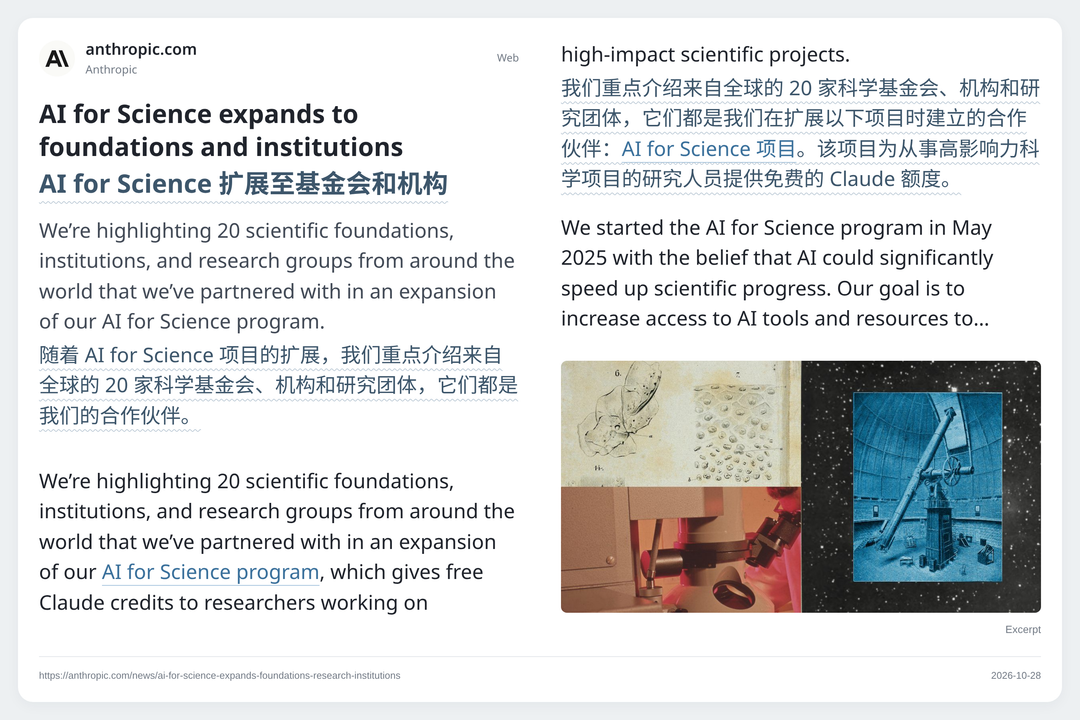
Anthropic has expanded its AI for Science programme, partnering with 20 research foundations and institutes worldwide to give researchers free Claude compute credits. Partners include the Simons Foundation, the Sloan Foundation, the Wellcome Sanger Institute and EMBL. The programme is moving from supporting individual scientists to institution-level partnerships.
Announcement: https://anthropic.com/news/ai-for-science-expands-foundations-research-institutions
2. Google opens a healthcare AI research hub in Singapore
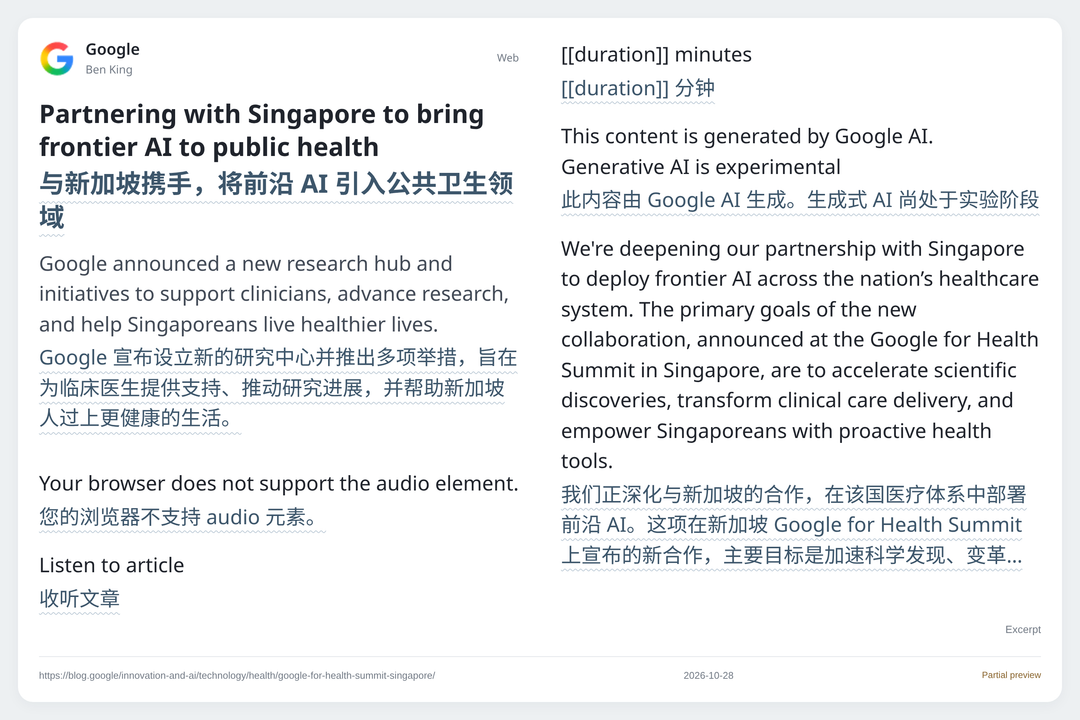
At its first healthcare summit in Singapore, Google announced a local research hub. It is working with the National Healthcare Group on chronic disease risk prediction and an AI lifestyle coach, testing the AI clinical assistant MedGemma with the National University Health System, and running joint talent programmes with local universities.
Blogblog.google/innovation-and-ai/technology/health/google-for-health-summit-singapore/
3. Command Code hit by a large-scale distillation attack, revoking every API key
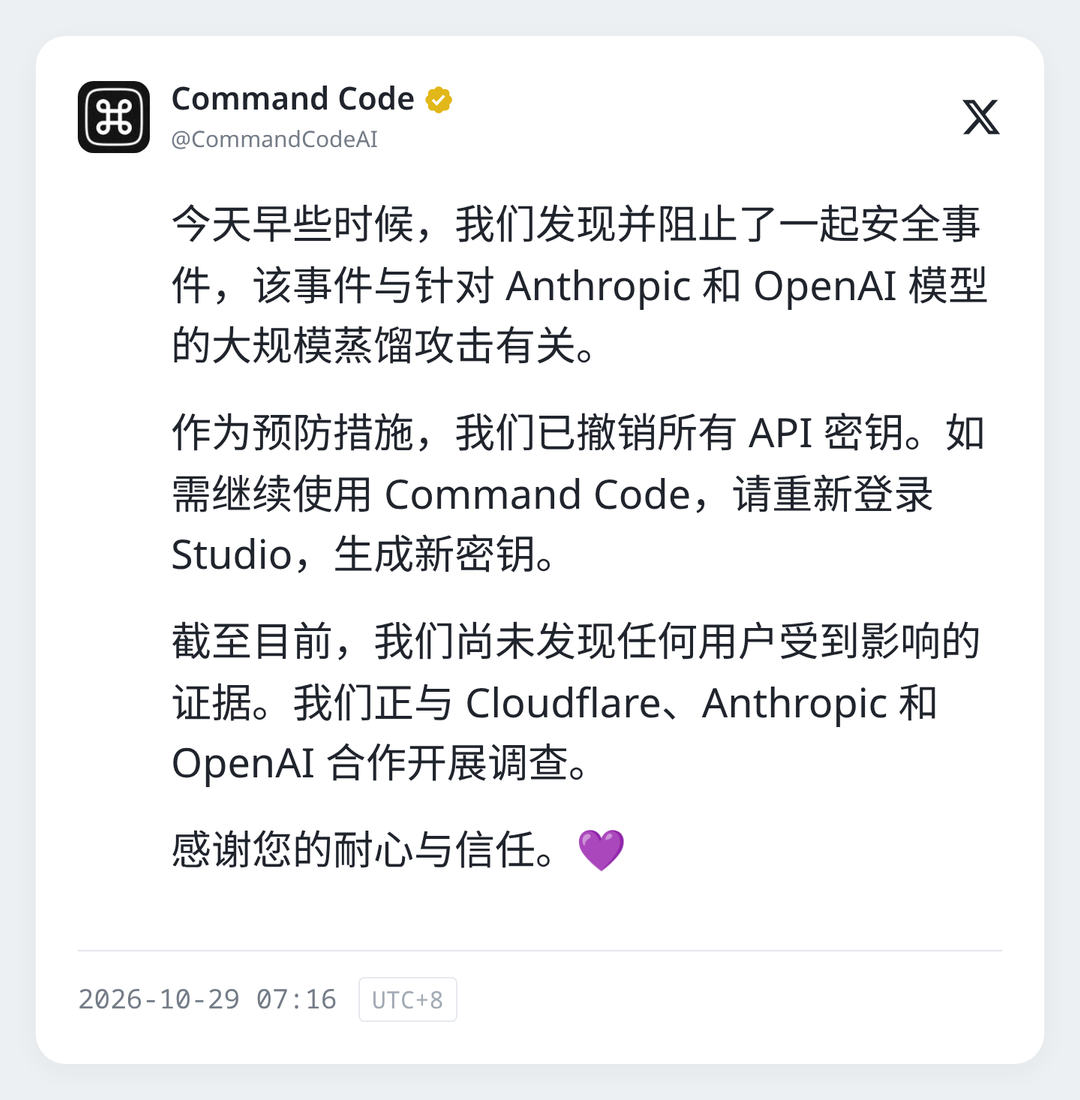
Command Code detected a security incident linked to a large-scale model distillation attack and, as a defensive measure, revoked all users' API keys; users must sign in to Studio again to generate new keys. The platform says it has found no evidence of user data leaking so far and is investigating jointly with Cloudflare, Anthropic and OpenAI.
Postx.com/CommandCodeAI/status/2115583532055826770
4. IDC publishes two reports on China's MaaS market in the first half of 2026
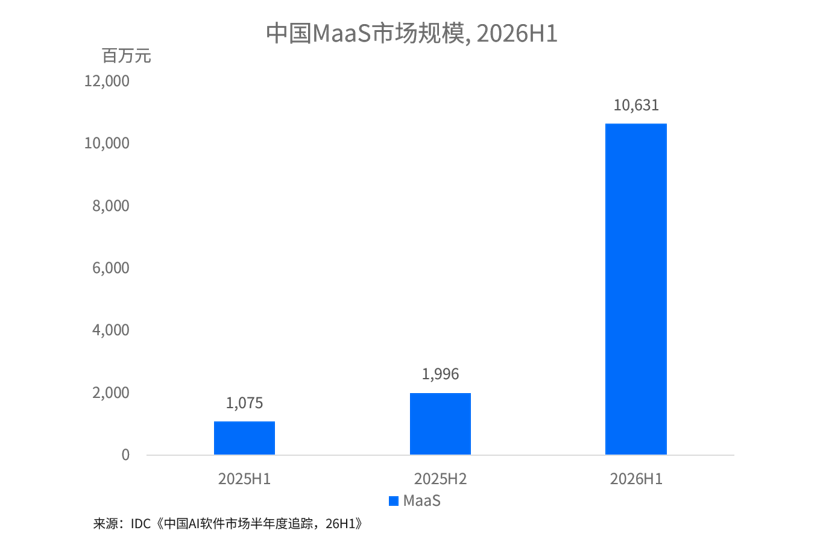
Overall MaaS market: first-half 2026 revenue was ¥10.63 billion, up 889.4% year on year. Volcano Engine leads with a 45.1% share, followed by Alibaba Cloud at 25.2%; by category, large language models account for 47% and video generation for 32.7%. The figures cover only external public-cloud MaaS, not internal calls within companies' own products.
Large language model MaaS only: Alibaba Cloud ranks first with a 46.6% share, followed by Zhipu at 10.6% and Volcano Engine at 10.2%. Source: public material from the IDC reports.
5. Cohere completes the first close of its Series E, targeting up to CAD 7 billion
Cohere has completed the first close of its Series E, targeting up to CAD 7 billion in total at a post-money valuation of CAD 35.7 billion. The Canadian government will contribute up to CAD 1.6 billion, on condition that the headquarters stays in Canada and at least CAD 1.7 billion is invested in domestic compute by 2030.
6. FuriosaAI raises a US$620 million Series D
South Korean AI chip company FuriosaAI has raised a US$620 million Series D at a post-money valuation of US$2.9 billion, with Korea's National Growth Fund as the largest investor. The money will expand production of its RNGD accelerators, targeting 20,000 chips in 2026 and 40,000 in 2027, and fund its third-generation AI accelerator.
Press release: https://www.businesswire.com/news/home/20261028655033/en/FuriosaAI-Secures-%24620-Million-Series-D-to-Meet-Surging-Enterprise-AI-Inference-Demand-and-Accelerate-Next-Gen-Silicon
VI. Outlook and market rumours
1. Tencent Hunyuan's Hy4 models coming soon
At Tencent's Global Digital Ecosystem Summit, the company said Hunyuan Hy4 and Hy4-Flash are coming soon. Hy4 adds native vision for the first time and strengthens long-horizon productivity tasks and chain-of-thought efficiency; Hy4-Flash focuses on cost-effectiveness, iterating rapidly through hardware-software co-design. The news comes from public remarks at the industry summit; the models have not launched yet.
Sourcewww.cls.cn/detail/2518749
VII. Claw roundup
1. Subscription benefits grow as the tussle over compute supply continues
OpenAI doubling usage on every Pro tier without raising prices shows competition for consumers intensifying among leading providers. With compute supply constrained, adjusting allowances to improve user experience has become a routine operating lever; splitting out a separate allowance for Dots reflects the approach of isolating agent workloads from ordinary chat workloads.
2. Agent development infrastructure becomes modular and plugin-based
Google Antigravity's plugin marketplace, Herdr's open-source local agent runtime and Droid 1.0's programmatic batch tool calls show agent development moving from hand-writing lots of MCP configuration to packaged plugins and scripted batch tool calls, lowering engineering costs for developers, while persistent local background agents are starting to appear.
3. Model safety evolves from external detection to self-checks inside the model
Anthropic's self-assessment post-hoc checks and OpenAI's multi-layer misalignment monitoring show safety no longer relying only on external classifiers. Building self-checks into the model's inference path, combined with probes, investigation agents and human review, forms a multi-layered defence in depth that improves detection of high-risk cases while keeping false positives in check.
VIII. Trending open source on GitHub
1. mistralai/Mistral-Large-4-1T-A52B
Momentum: a new popular trillion-parameter open flagship. Summary: Mistral's open-source trillion-scale MoE multimodal model with million-token context and standout coding and cybersecurity abilities; note that offering it as MaaS requires a commercial licence.
Repository: https://huggingface.co/mistralai/Mistral-Large-4-1T-A52B
2. inclusionAI/Zooming-without-Zooming-v2
Momentum: a popular open project for visual understanding. Summary: the ZwZ2 vision models, which need no zoom-and-crop at inference, with weights in several sizes, training datasets and the paper all open-sourced under Apache-2.0.
Repository: https://github.com/inclusionAI/Zooming-without-Zooming-v2
3. herdrdev/herdr-core
Momentum: a new popular local agent runtime. Summary: a persistent local engine for running agents in the background that keeps tasks going after the GUI closes, cross-platform under Apache-2.0.
Repository: https://github.com/herdrdev/herdr-core
4. Tencent-Hunyuan/Hy-Nomas
Momentum: a popular video world model project. Summary: Tencent Hunyuan's interactive video world model, with the Hy-Nomas-Bench evaluation dataset, under Apache-2.0.
Repository: https://github.com/Tencent-Hunyuan/Hy-Nomas
5. Factory-AI/droid-sdk-typescript
Momentum: a popular engine for programmatic agent tool calls. Summary: the SDK for the Droid 1.0 agent engine, running hundreds of tool calls in a single request to cut token usage significantly, for complex software engineering agents.
Repository: https://github.com/Factory-AI/droid-sdk-typescript