1. Google opens its flagship Gemini 4 Argon model worldwide, with limited-time promotional API pricing;
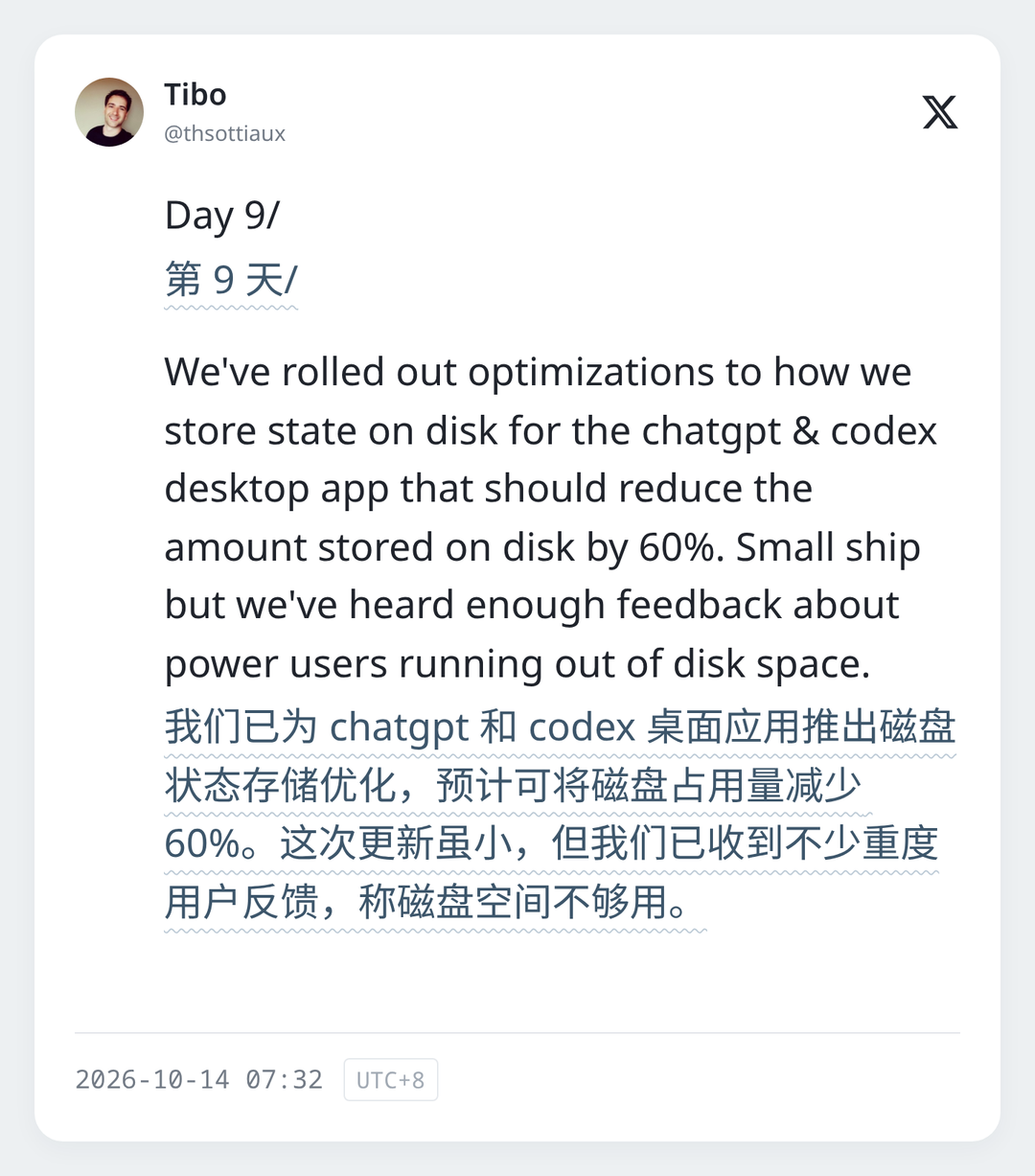
2. OpenAI changes how the ChatGPT desktop app stores data, expected to cut disk usage by 60%;
3. The stealth coding model Cat Jam arrives free on OpenCode with zero data retention;
4. Fish Audio releases the Drama 3 voice model with open weights and word-level control of tone;
5. Anthropic replaces Git with Scion, an in-house version control system built for large-scale AI code commits;
6. Character.ai files for Chapter 11 bankruptcy protection and plans to sell its assets;
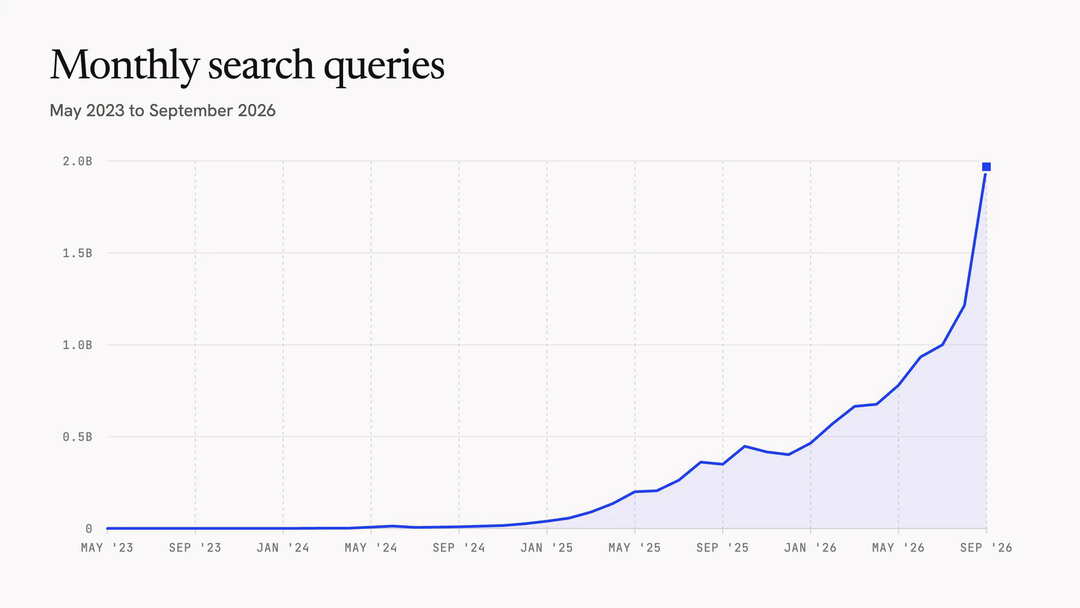
7. Exa's annualised revenue passes US$100 million, up nearly a thousandfold in three years.
I. Model releases and open source
1. Google opens the flagship Gemini 4 Argon model worldwide
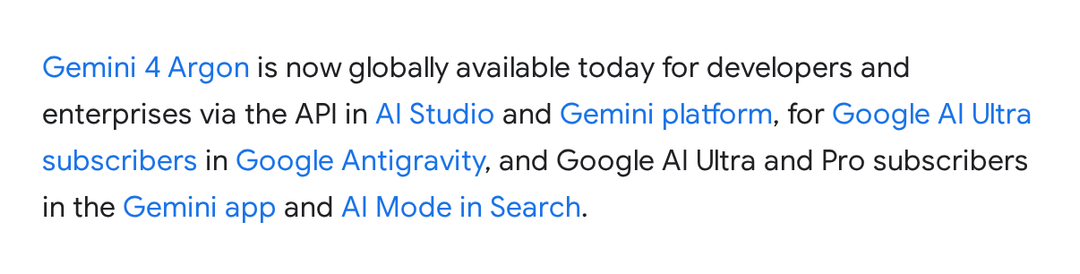
Google has opened its next-generation flagship model, Gemini 4 Argon, to users worldwide.
Access by plan: Google AI Pro subscribers can use it in the Gemini app and AI Mode in Search; Ultra subscribers get higher limits plus the Antigravity desktop app, the CLI and trial access in AI Studio.
Developers need the paid tier of the Gemini API to call it; the free tier and Pro plan do not include the model for now. Enterprise customers can connect through the API, and eligible Gemini Enterprise subscriptions can also use Antigravity.
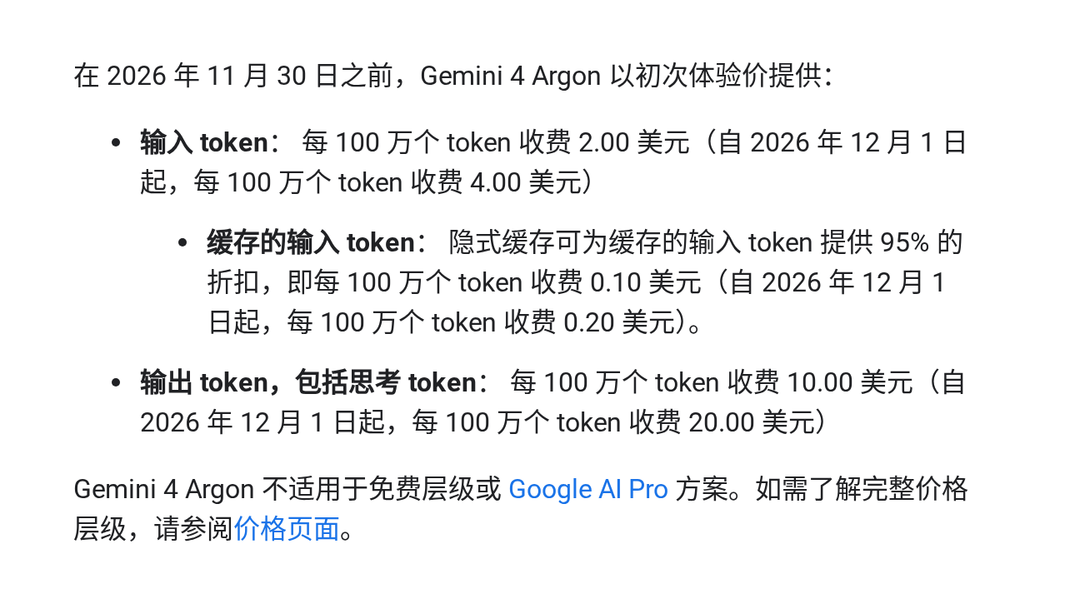
The current promotional API price is US$2 per million input tokens and US$10 per million output tokens; prices double from 1 December 2026.
The macOS Gemini app also now includes the Antigravity coding interface.
Blog: https://deepmind.google/blog/introducing-gemini-4-argon/ Pricing: https://ai.google.dev/gemini-api/docs/pricing Antigravity: https://antigravity.google/blog/gemini-4-argon-in-google-antigravity Release notes: https://gemini.google/release-notes/
2. The stealth coding model Cat Jam arrives free on OpenCode
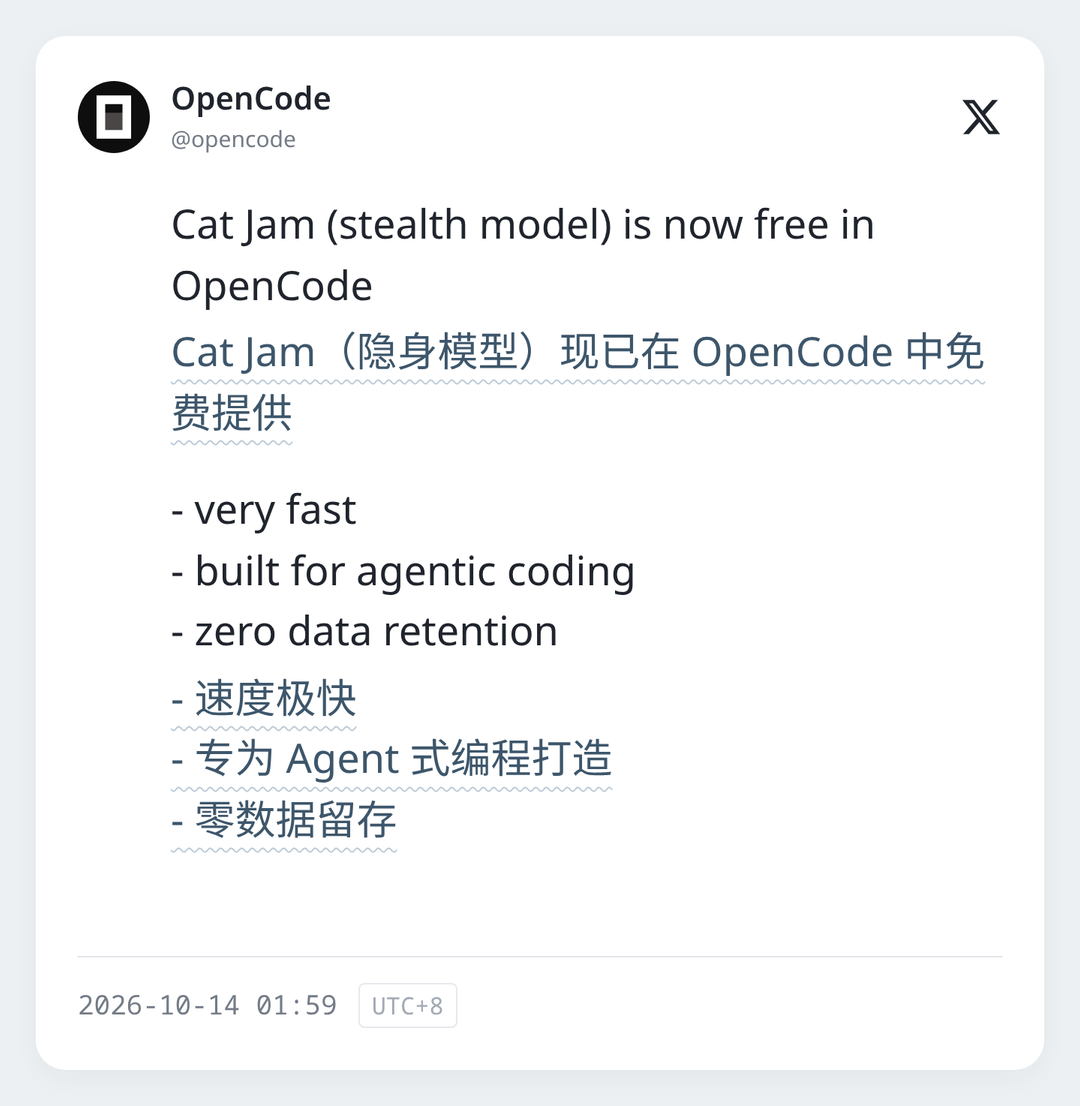
OpenCode has made the anonymous coding model Cat Jam available for free. Built for agentic coding and notably fast, it comes with a zero data retention commitment, and users can use it free on the OpenCode platform now.
Postx.com/opencode/status/2110068008945381853
3. Fish Audio releases the Drama 3 voice model with open weights
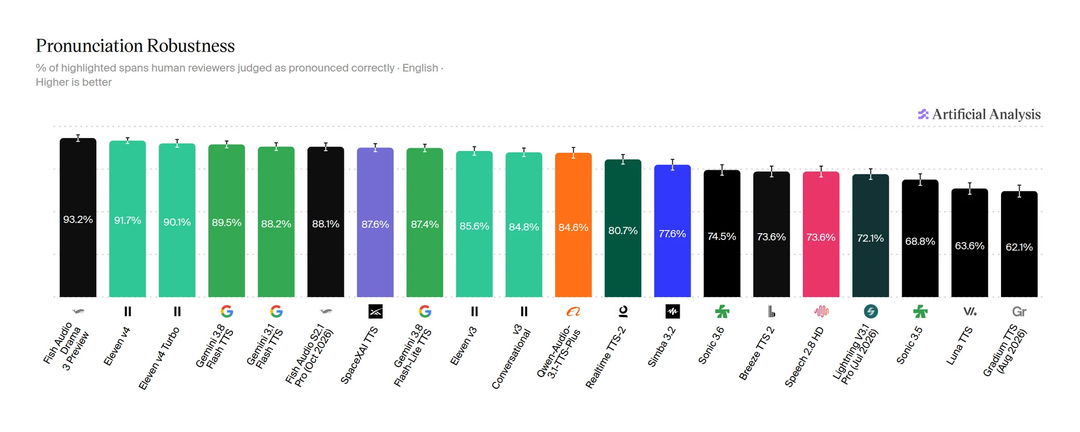
Fish Audio has released Drama 3, an open-weight text-to-speech model whose emotion, pacing and timbre can be controlled in natural language, with expressions such as whispering or emphasis targeted precisely at individual words. It supports 83 languages and is available on the web, iOS and Android apps and through the API. Self-hosting is governed by the Fish Audio Community License v1.0: free for research and non-commercial use, and free for commercial use when the user and affiliates earn under US$500,000 a year; offering TTS, voice cloning or inference services or APIs to others requires a separate licence. Limited-time offer: until 12 November the API price falls from US$50 to US$10 per million characters, and new Plus, Pro or Max subscribers get 50% off their first month or year.
Blog: https://fish.audio/blog/fish-audio-drama-3/ Docs: https://docs.fish.audio/features/text-to-speech/drama-3 Weights: https://huggingface.co/fishaudio/drama-3 Report: https://github.com/fishaudio/fish-speech/blob/main/docs/assets/Fish_Audio_Drama_3_Technical_Report.pdf

II. Developer ecosystem and tooling
1. OpenAI reduces the ChatGPT desktop app's storage footprint
Codex lead Tibo confirmed that the ChatGPT desktop app now stores its local state data differently on disk, expected to reduce the app's disk footprint by 60%, in response to long-standing user complaints about running out of disk space.
Postx.com/thsottiaux/status/2110151780478927344
2. Command Code offers limited-time extra credit on its GOAT plan
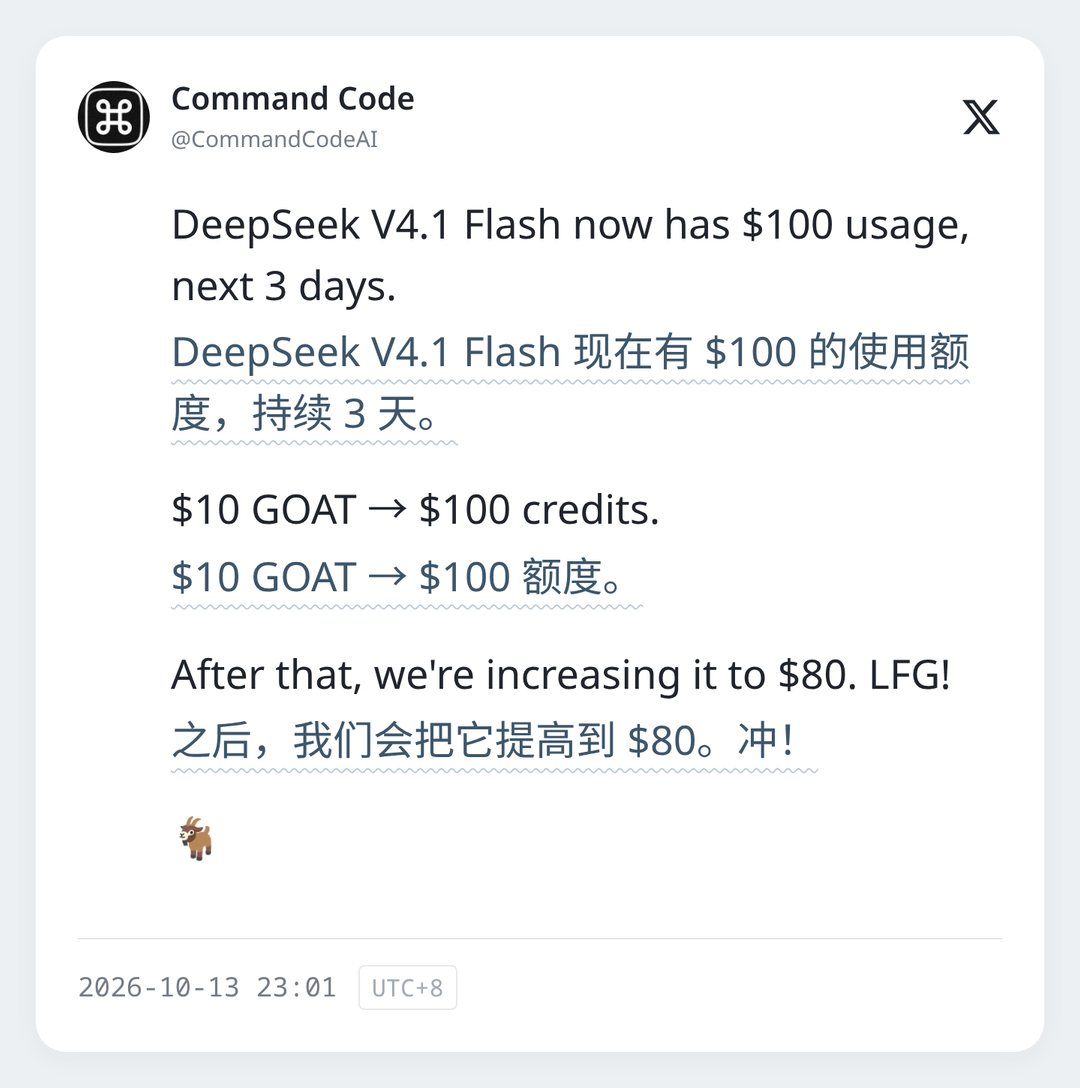
Command Code has added a limited-time bonus for DeepSeek V4.1 Flash on its GOAT plan: during a three-day promotion users get US$100 of credit for the model, which drops to US$80 afterwards. GOAT costs US$10 a month and gives access to more than 30 open and closed models, each with its own allowance.
Post: https://x.com/CommandCodeAI/status/2110023209416630626 Plan: https://commandcode.ai/docs/plans/goat
3. llama.cpp launches Llama Windows, a native desktop app for Windows
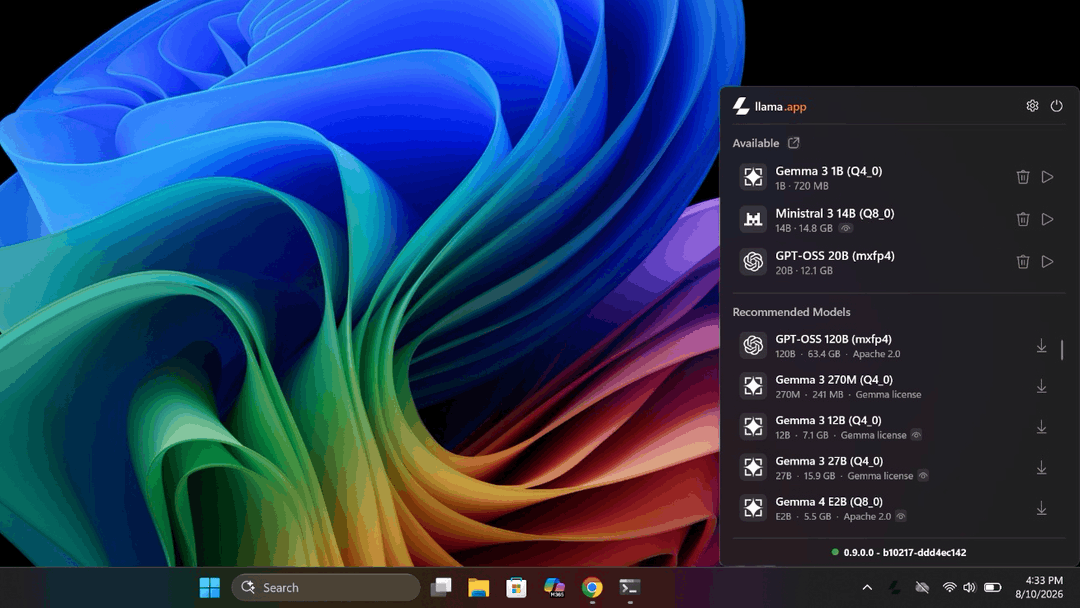
llama.cpp has launched Llama Windows, a native companion app for Windows 11 that lets users download and run large models locally without the command line. Users can browse and download recommended models from the Hugging Face Hub, open it quickly from the system tray, or bring up a chat window with Alt+Space. Installers are available for x64 and ARM64. Prompts and inference stay entirely on the machine, the app sends no telemetry, and it is specifically optimised for NVIDIA RTX Spark.
Blog: https://huggingface.co/blog/huggingface/llama-windows Repository: https://github.com/ggml-org/Llama-Windows
4. Arena launches Max, a model router for agents
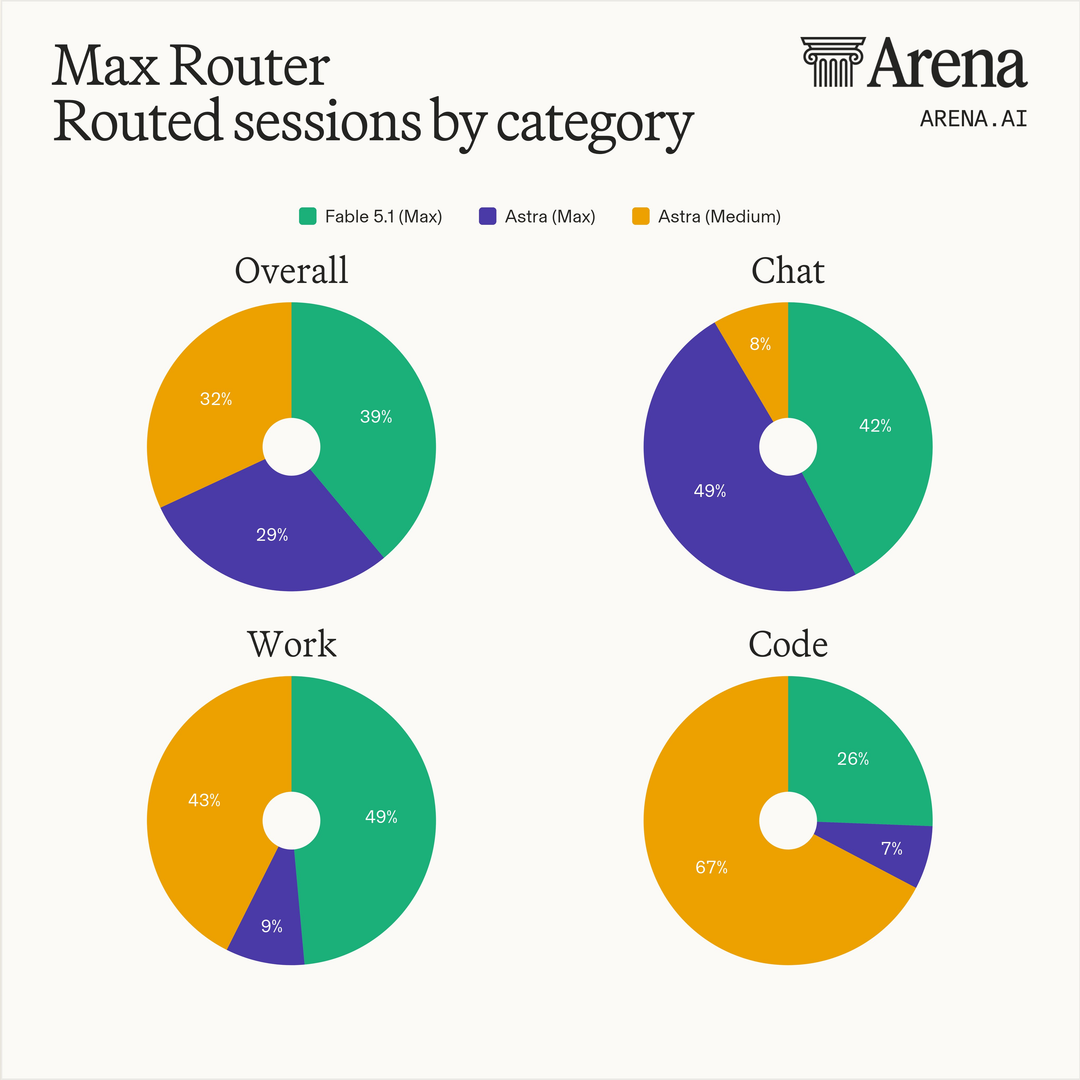
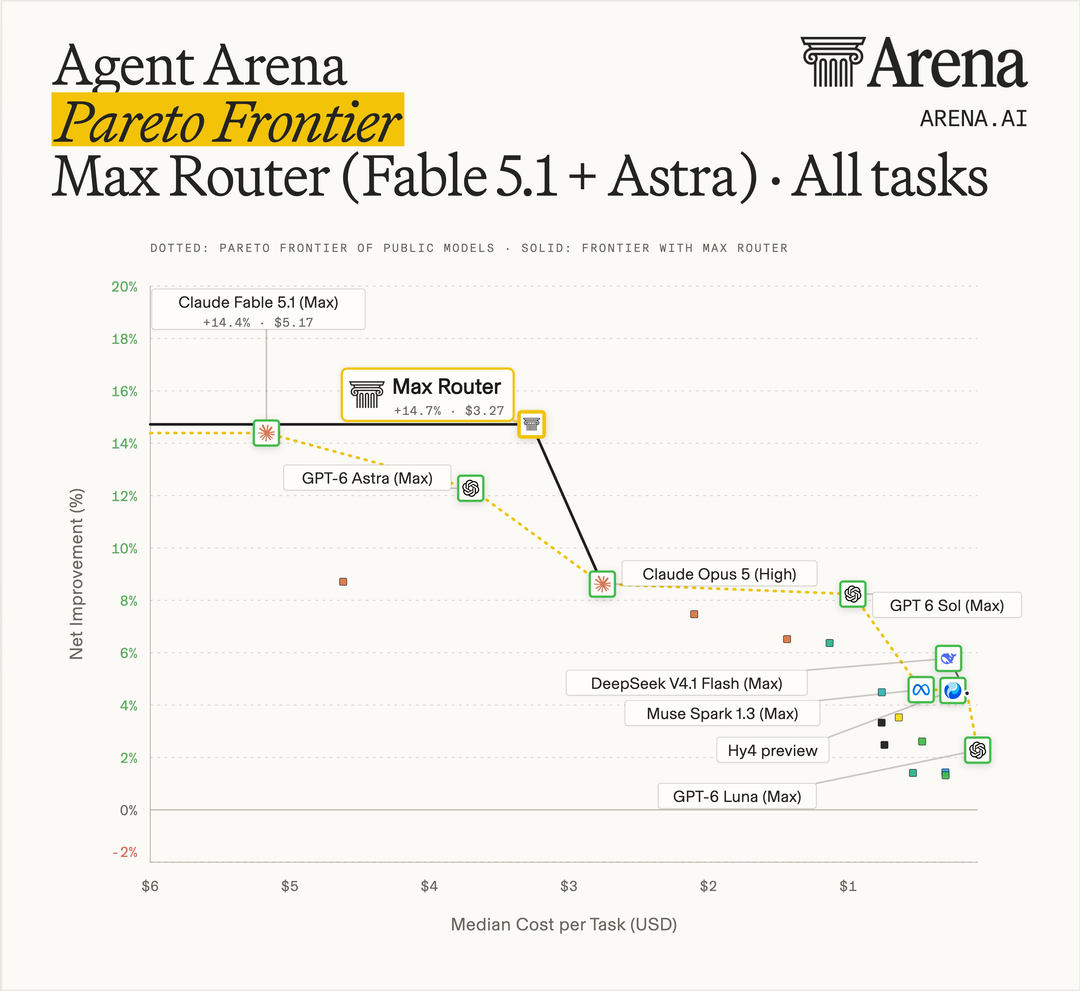
Arena has launched Max for agents, a model router trained on more than 250,000 real Agent Arena sessions that picks the best model for each task by type, complexity and cost, across chat, work and coding. In testing, Max ranks first overall on Agent Arena with a median cost of US$3.27 per task, scoring 0.3% higher than the previous leader, Fable 5.1 (Max), at 37.5% lower cost. A version combining Fable 5.1 and Astra is available to try for a limited time in Agent Mode; an API version is planned, with early access applications open.
Blogarena.ai/blog/max-router-tops-agent-arena
III. Products shipping
1. Manus and OPPO bring agent capabilities to ColorOS 17
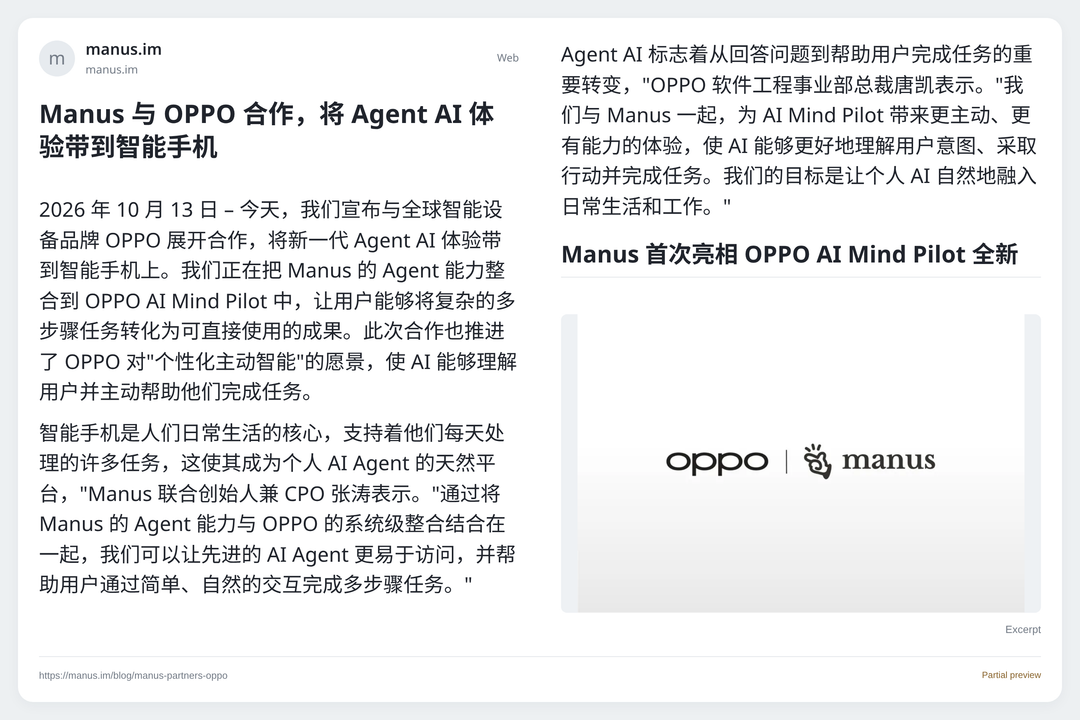
OPPO and Manus have partnered to bring a Manus-powered Agent Mode to AI Mind Pilot in ColorOS 17, debuting on the international version of the upcoming Find X10 series. Agent Mode understands the user's goal, breaks it into tasks and chooses tools automatically, gathers information across apps, and can work directly with files and photos on the phone. Local tasks such as finding, organising and renaming files and photos do not send the original content to third-party AI services; when outside processing is needed, the system asks for the user's explicit permission first. At launch it supports Manus and ChatGPT models, OPPO provides a free allowance that varies by country or region, and existing subscribers can link their own accounts.
OPPO: https://www.oppo.com/en/newsroom/press/oppo-manus/ Manus: https://manus.im/blog/manus-partners-oppo
IV. Technical insight and frontier research
1. Anthropic replaces Git with its own version control system, Scion
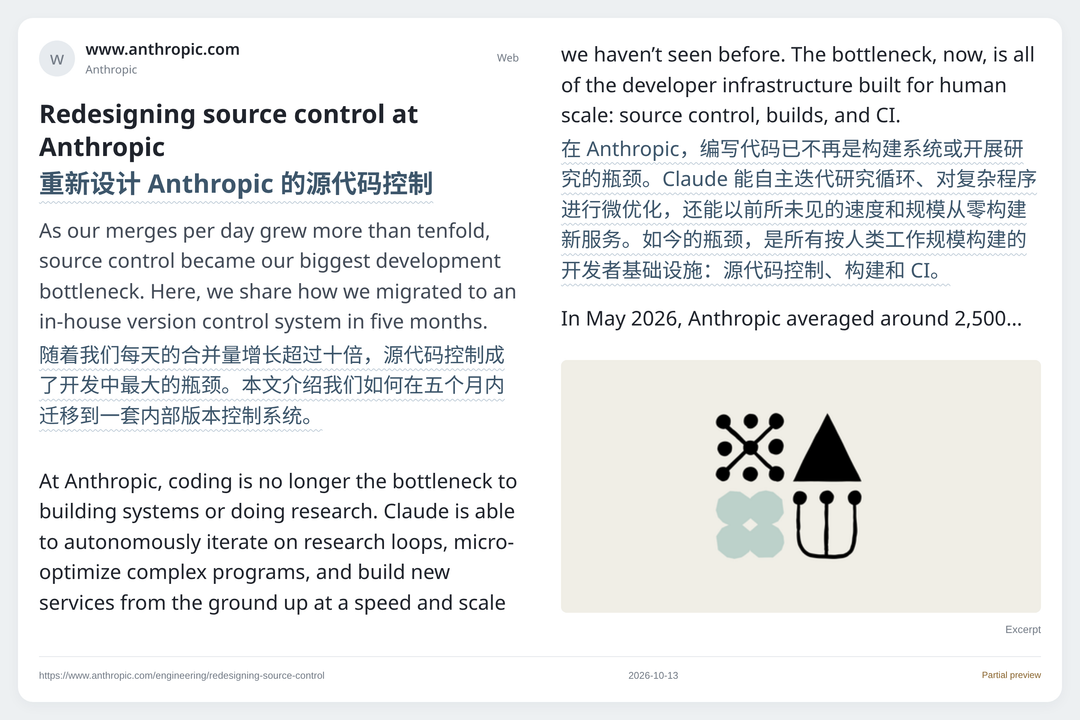
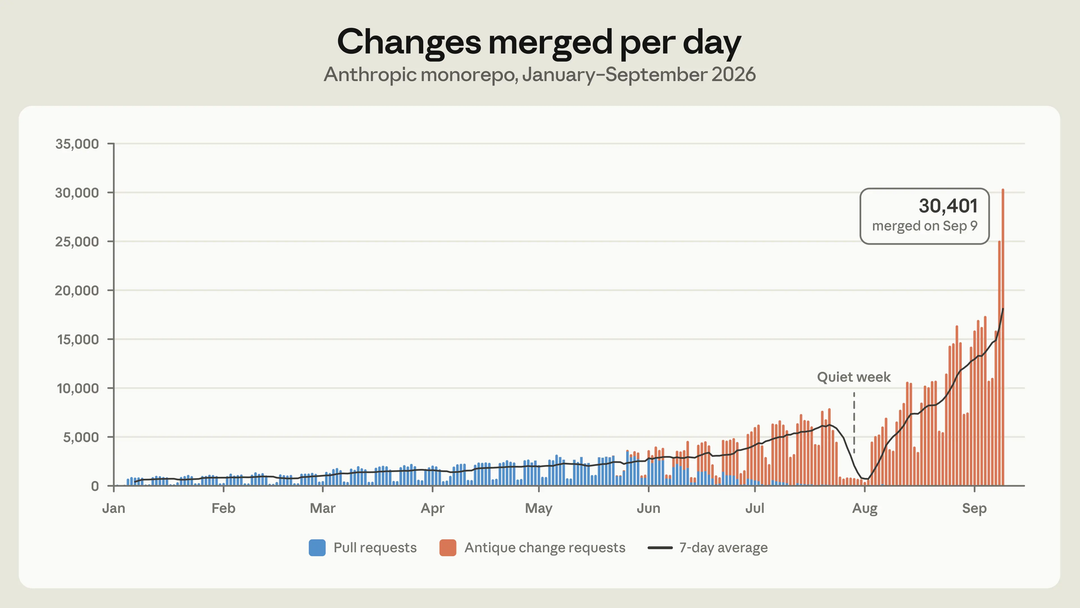
Anthropic says that because Claude generates code at such scale, its Git infrastructure, designed for human developers, had become a bottleneck. Over five months it built its own version control system, Scion, and has fully migrated its core monorepo off Git. Daily merged code changes grew from about 2,500 in May to more than 3,000 in September. Scion is designed on the assumption that clients are always online: commits, merges and history queries happen on the server, and clients fetch data on demand. Anthropic says the new system needs about 1/200 of the CPU and memory of its previous Git mirror infrastructure, and the time for CI and research jobs to fetch code has dropped from minutes to seconds. It stresses that the system is optimised for very large monorepos and is not meant as a general replacement for Git.
Blog: https://www.anthropic.com/engineering/redesigning-source-control Post: https://x.com/AnthropicAI/status/2110047081414987957
2. AISI releases Transect, an open-source tool for tracing agent activity end to end
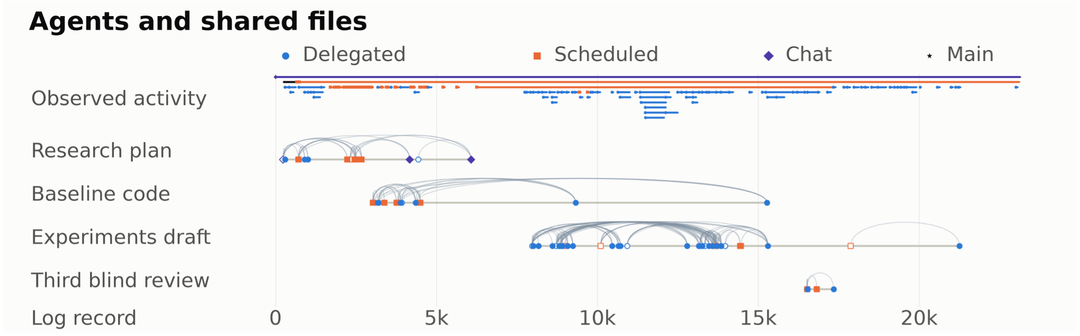
The UK AI Security Institute (AISI) has released Transect, an open-source Python evaluation tool that turns complex agent evaluation logs into interactive timeline reports. Reviewers can follow an agent's activity, resource use and collaboration along the timeline and jump to the raw logs to check them, rather than seeing only the final score. Built on Inspect Scout, it shows activity categories, token usage, human interventions and sub-agent activity on one timeline, with links to the corresponding raw records. Users can define their own activity categories or use an LLM to help classify them automatically, and every classification keeps its source and a reliability note. Built-in structured event extraction needs no model; model-based classification requires the relevant API credentials and incurs their costs.
Blog: https://www.aisi.gov.uk/blog/transect-making-large-scale-agentic-evaluations-easier-to-understand Repository: https://github.com/AI-Safety-Institute/transect
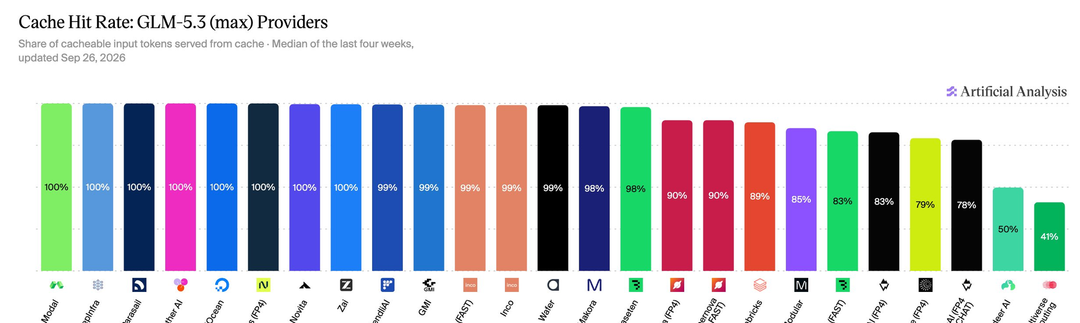
3. Artificial Analysis adds leaderboards for cache hit rates and task costs
Artificial Analysis has published cache hit rate data for every first- and third-party model endpoint it tracks, along with per-task costs for open-weight models broken down by provider. The same GLM-5.3 (max) model varies about ninefold in task cost across providers, driven mainly by differences in cache hit rate and token pricing. Its per-task cost ranges from US$0.92 on Makora to US$8.68 on Nebius, and its cache hit rate ranges from 41% to 100% across 25 endpoints at 21 providers. Even with similar cache hit rates, whether cached input is discounted makes a big difference to the final task cost.
Leaderboard: https://artificialanalysis.ai/models/glm-5-3/providers Post: https://x.com/ArtificialAnlys/status/2110087600480702881
V. Industry moves
1. Character.ai files for bankruptcy protection and plans to sell all its assets
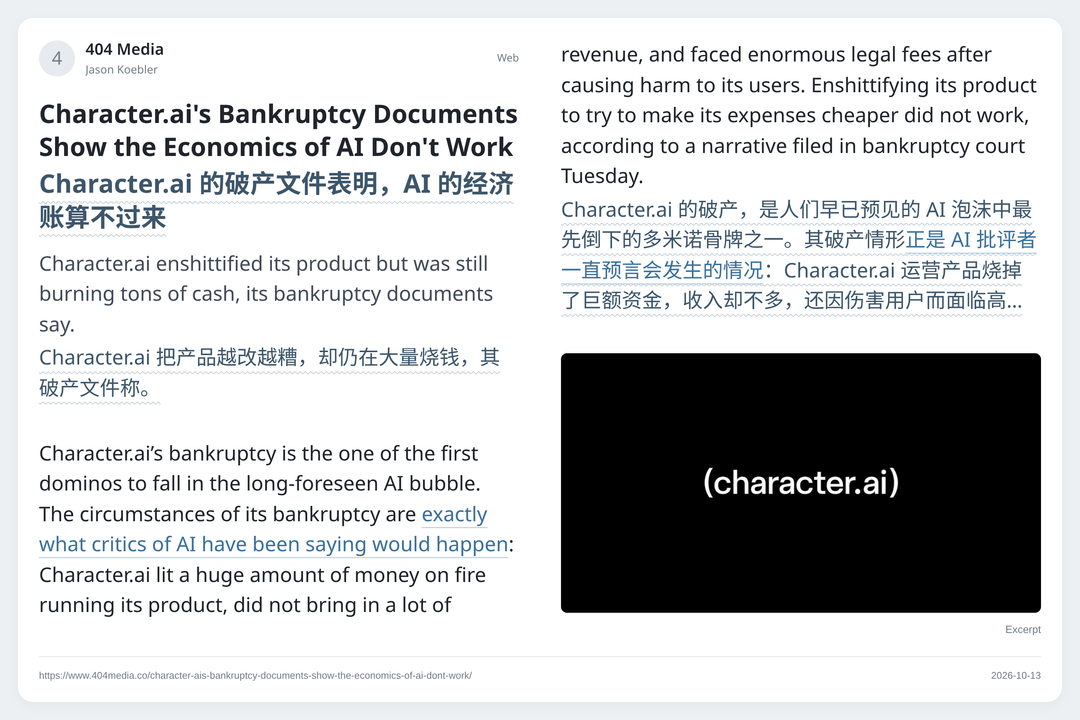
AI character chat platform Character.ai has filed for Chapter 11 bankruptcy protection in the US and plans to sell all or substantially all of its assets under court supervision. Court filings show it spent US$56.1 million on compute from January to August 2026 and was still losing about US$8–9 million a month as of August. Disney Worldwide Services has reached a preliminary agreement to pay US$2 million plus transition services for a non-exclusive perpetual licence to some intellectual property and certain claims; the deal remains open to higher or better offers. The company expects the sale to close in late November or early December. Service and subscription billing continue unchanged for now; if no buyer keeps the platform running, it will be wound down.
Announcement: https://blog.character.ai/an-update-on-character-ai/ Filing: https://cases.stretto.com/public/x936/14939/PLEADINGS/14939101226800000088.pdf Coverage: https://www.404media.co/character-ais-bankruptcy-documents-show-the-economics-of-ai-dont-work/
2. Exa's annualised revenue passes US$100 million
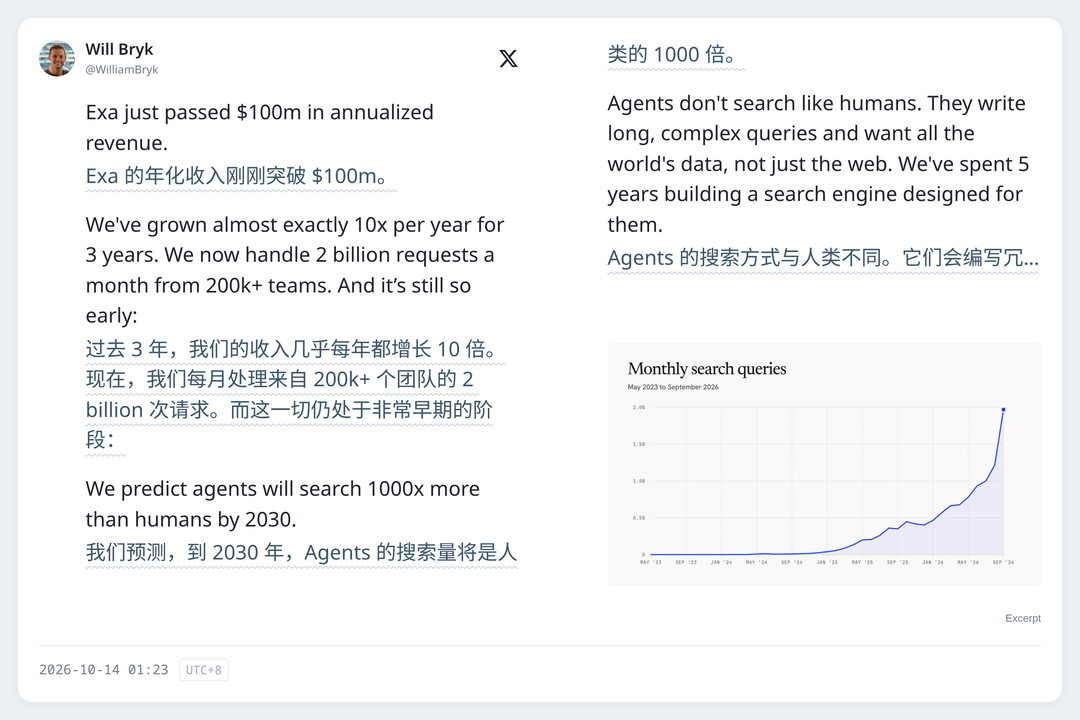
Exa CEO Will Bryk announced that the company's annualised revenue has passed US$100 million, growing nearly tenfold each year for the past three years. Exa now handles 2 billion requests a month for more than 200,000 teams, running a search engine built for AI agents that covers hundreds of billions of web documents and a large amount of proprietary data. Exa predicts that by 2030 agents will search 1,000 times as much as humans.
Postx.com/WilliamBryk/status/2110058915589464192
VI. Outlook and market rumours
No new verified market rumours in this 24-hour window.
VII. Claw roundup
1. Flagship models go fully commercial, spreading capability faster
Gemini 4 Argon's worldwide launch marks a new-generation flagship moving from limited gradual testing to full commercial availability for subscribers. Multimodal, deep reasoning and coding capabilities are reaching ordinary paying users quickly, while limited-time API pricing sharply lowers the barrier for developers. The rapid spread of flagship models will raise the capability baseline across the industry and speed up AI adoption in more use cases.
2. R&D infrastructure is rebuilt for a new AI development paradigm
Anthropic replacing Git with Scion, built specifically for large-scale AI-generated code and high-frequency commits, shows that traditional development infrastructure designed for humans no longer fits AI-assisted development. From code hosting and version control to CI/CD, the whole development stack is being rebuilt around AI, and AI in developer tools is extending from coding assistance to an upgrade of the underlying architecture across the full workflow.
VIII. Trending open source on GitHub
1. ggml-org/Llama-Windows
Momentum: a new popular desktop app for on-device AI. Summary: the official native Windows desktop app from llama.cpp that runs large models locally without the command line, with model downloads, system tray access and a chat shortcut. Everything runs locally with no telemetry and it is optimised for RTX Spark — a popular tool for on-device AI.
Repository: https://github.com/ggml-org/Llama-Windows
2. AI-Safety-Institute/transect
Momentum: a popular AI safety evaluation tool. Summary: the UK AISI's open-source visualisation tool for agent evaluations, turning complex evaluation logs into interactive timelines with activity classification, resource usage and checks on human intervention — a practical tool for agent safety evaluation.
Repository: https://github.com/AI-Safety-Institute/transect
3. fishaudio/fish-speech
Momentum: a popular open project in speech synthesis. Summary: Fish Audio's official open-source repository for the Drama 3 voice model, with natural-language control of vocal expression, many languages, complete technical documentation and an active community — a popular open option for high-quality TTS.
Repository: https://github.com/fishaudio/fish-speech
4. deepseek-ai/deepseek-harness
Momentum: a leading Chinese agent framework. Summary: DeepSeek's official open-source, fully plugin-based agent framework with multi-model support, tool calling and workflow orchestration. It is highly customisable for enterprise agent development and deployment and keeps adapting to new models and use cases.
Repository: https://github.com/deepseek-ai/deepseek-harness
5. anthropics/claude-quickstarts
Momentum: a benchmark project in the Claude developer ecosystem. Summary: Anthropic's official quickstart collection, with complete example code for the computer use and browser use toolsets across multiple SDK languages and driver environments — the authoritative reference for building Claude agents.
Repository: https://github.com/anthropics/claude-quickstarts