1. Google makes Gemini 4 Carbon broadly available, focused on cybersecurity and long-horizon agents;
2. MiniMax releases the H3-Image model with open weights;
3. Anthropic launches Whiteboards, Sheets and Data, and gives paid users one free usage reset;
4. Stripe announces that OpenRouter has officially joined;
5. OpenAI acquires AI travel agent company Odessia;
6. Google and Artificial Analysis launch the MKA multimodal knowledge agent benchmark;
7. Anthropic updates its IPO prospectus for a planned Nasdaq listing.
I. Model releases and open source
1. Google opens up Gemini 4 Carbon
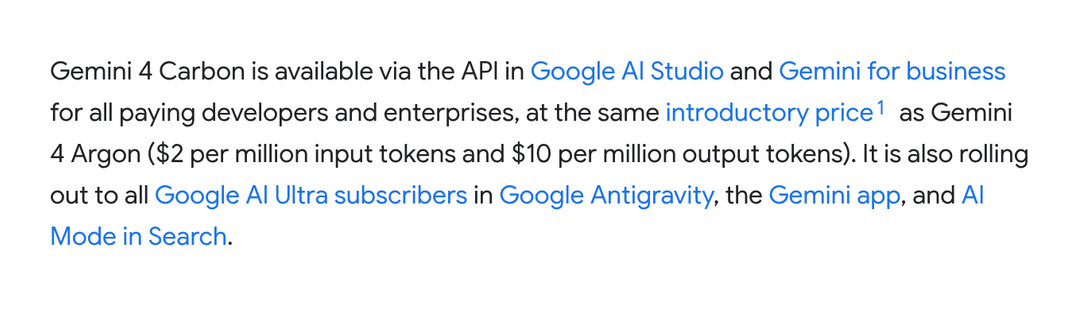
Google is making Gemini 4 Carbon available to developers, enterprises, scientists and consumers. Two weeks ago it was released only to a set of cybersecurity defenders through the Fairwind Program. Google calls Carbon its strongest model, with frontier performance in cybersecurity, long-horizon agentic workflows, complex software engineering and scientific reasoning; it accepts text, images, audio, video and PDF, with a 1-million-token context. All paying developers and enterprises can use it via the API in Google AI Studio and in Gemini for business, at the same introductory price as Gemini 4 Argon: US$2 per million input tokens and US$10 per million output tokens. After the introductory period ends on 30 November, the price becomes US$4 input and US$20 output. Carbon is also rolling out to Google AI Ultra subscribers in Google Antigravity, the Gemini app and AI Mode in Search.
Blogblog.google/innovation-and-ai/models-and-research/gemini-models/gemini-4-carbon-now-available/
2. MiniMax releases H3-Image with open weights
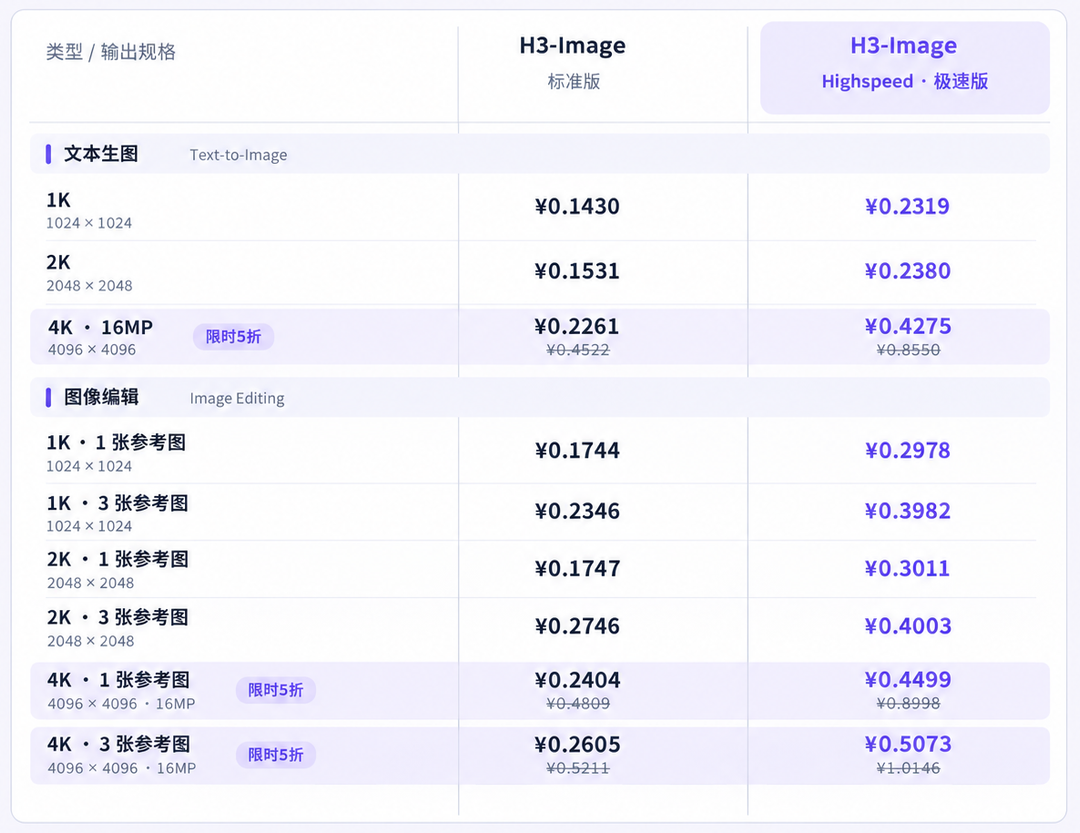
MiniMax has released H3-Image, an image generation model built on H3, together with its model weights. It supports text-to-image, reference-based generation and image editing with up to 16 reference images, and outputs up to 4096×4096 (16 megapixels); MiniMax says it generates a 4K image in under 10 seconds. For launch week, image requests at 4K resolution and above are 50% off. The model is available on the MiniMax API Platform, MiniMax Code and Hailuo AI.
Blogwww.minimax.io/blog/minimax-h3-image
Weightshuggingface.co/MiniMaxAI/MiniMax-H3-Image
3. Google DeepMind releases the Gemini Robotics 2.5 VLA model
Google DeepMind has released Gemini Robotics 2.5, rolling out to its robotics partners. Compared with previous baselines, task success rates are 30% to 100% higher depending on the task, and tasks finish 20% to 30% faster. In a proof of concept on Mercedes-Benz production lines, Apptronik's Apollo 2 humanoid picked and packed automotive parts with a 96% success rate. On safety, inference-time reasoning guidance steers the robot around physical hazards, raising safe task completion around obstacles by 33% and around nearby people by 43%; DeepMind has also released ASIMOV-Jailbreak, an open benchmark for robotics-specific jailbreaks.
Blogdeepmind.google/blog/gemini-robotics-2-5-accelerates-real-world-physical-intelligence/
4. ElevenLabs releases the Scribe v3 and Scribe v3 Live transcription models
ElevenLabs has launched two speech-to-text models. Scribe v3, for recorded audio, makes 27% fewer word errors than Scribe v2 across 102 languages; Scribe v3 Live, for real-time audio, makes 43% fewer errors than Scribe v2 Realtime, adds live speaker diarisation for the first time, and improves turn detection beyond a simple silence timer. Scribe v3's keyterm prompting takes up to 1,000 terms, and formatting rules can be written in plain English to edit transcripts; the Live version adds a keyterm library that holds thousands of terms. Both models are now the default in the ElevenLabs app and available in ElevenAPI.
Blogelevenlabs.io/blog/scribe-v3
5. Amazon open-sources the tabular foundation model Mitra-v2
Amazon has released Mitra-v2, the second generation of its tabular foundation model, pretrained entirely on synthetic prediction problems, for classification and regression. On TabArena, a benchmark of 51 real-world datasets, it leads the single-model field. Versions for classification and regression, along with inference and fine-tuning code, are on Hugging Face under the Apache-2.0 licence.
Blogwww.amazon.science/blog/mitra-v2-scaling-synthetic-pretraining-for-tabular-foundation-models
Weightshuggingface.co/autogluon/mitra-classifier-2
II. Developer ecosystem and tooling
1. Google Antigravity previews /swarm for parallel multi-agent development
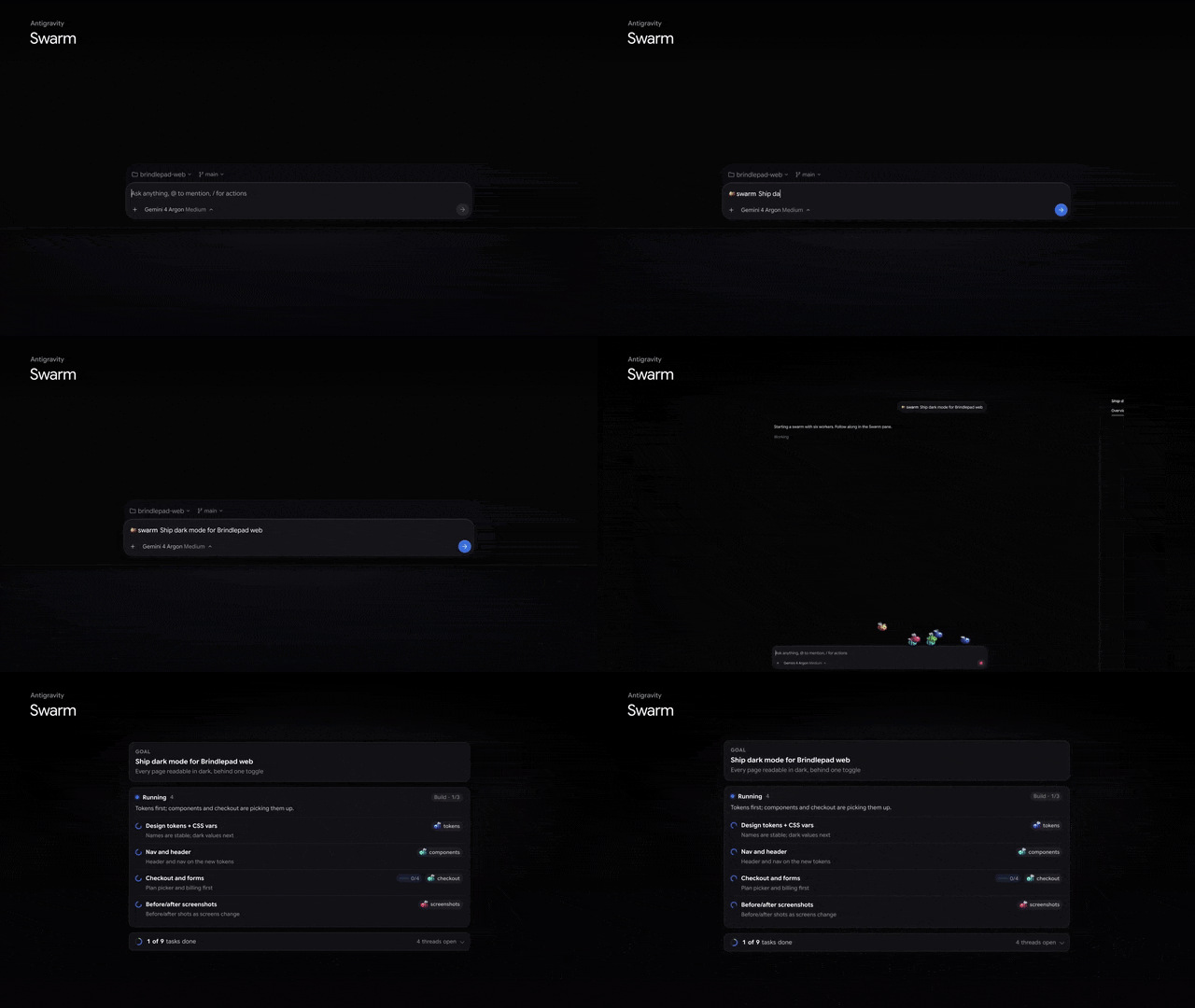
Google Antigravity has launched a preview of the /swarm command for Google AI Pro and Ultra users in the Antigravity App and CLI. When you run it, your conversation becomes the coordinator, splitting the task into pieces that don't collide and handing them to workers that run in parallel; the coordinator usually adds a verifier for every two to four workers to read diffs, run tests and report problems, and members communicate on a shared board. Workers use the same model as your conversation by default, but you can ask in your prompt for a worker to use a different model. Google warns that every worker is its own agent, so a swarm uses quota much faster than a single conversation.
Docsantigravity.google/docs/swarm
2. OpenCode: Meituan's LongCat-2.5 is free for two weeks
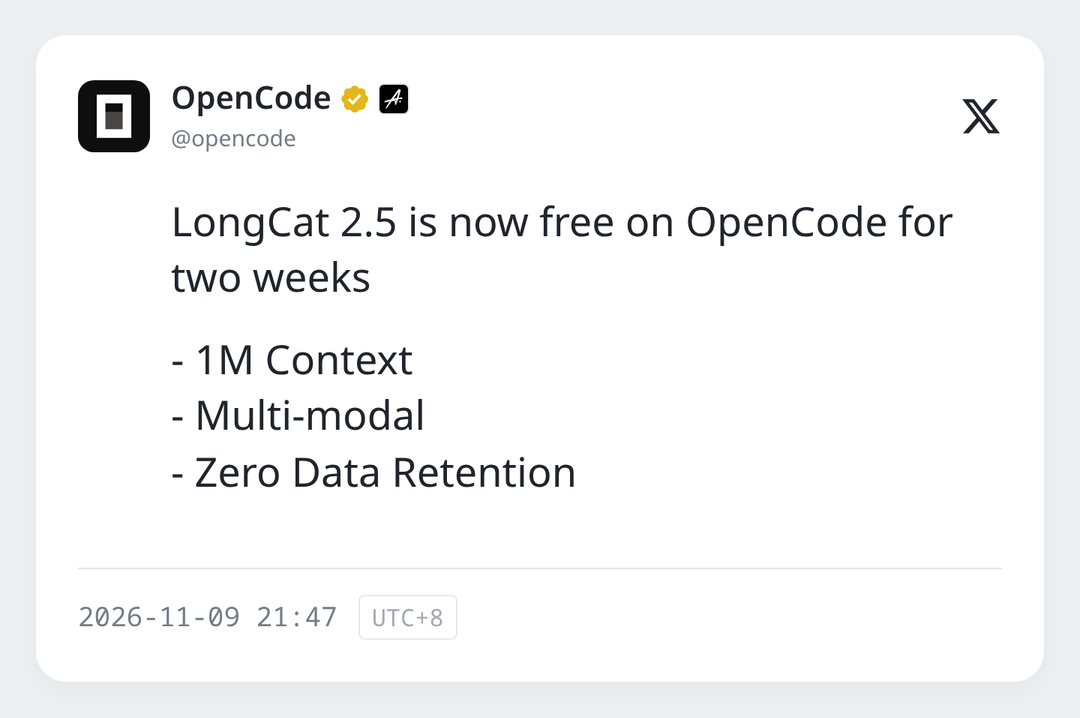
OpenCode announced that Meituan's LongCat-2.5 is free on OpenCode for two weeks, with a 1M context, multimodal input and zero data retention.
Postx.com/opencode/status/2119789096503746751
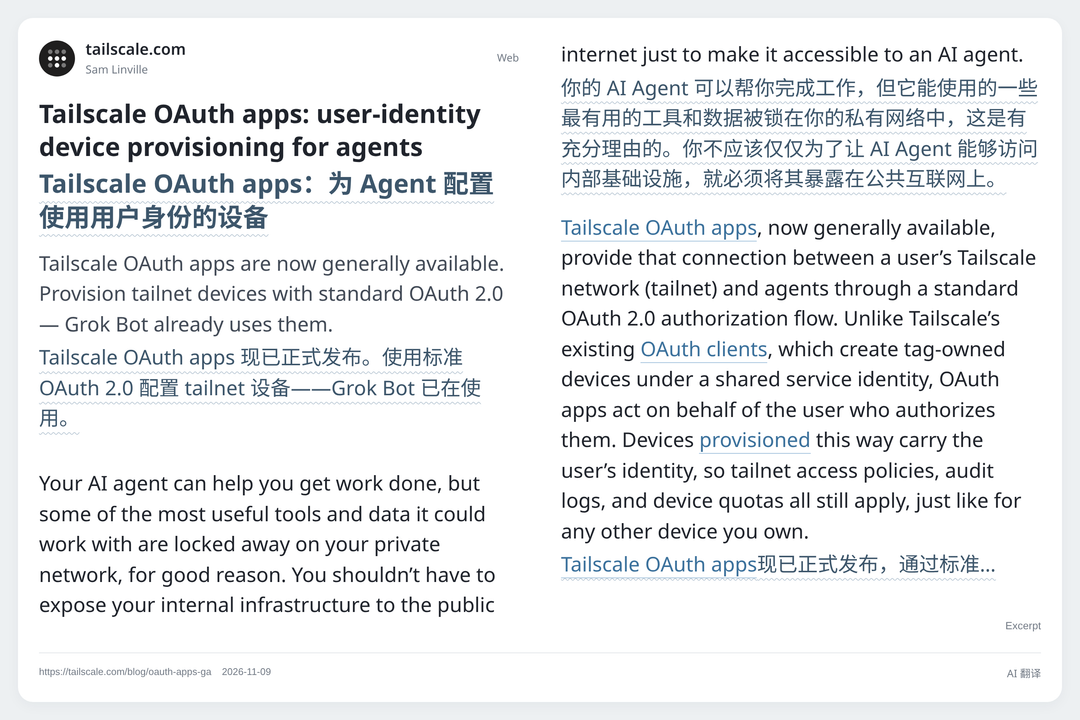
3. Tailscale OAuth apps reach GA, letting Grok Bot reach private MCP servers
Tailscale OAuth apps are now generally available: AI agents can join a private network (tailnet) through a standard OAuth 2.0 flow, acting as the user who authorises them, with tailnet access policies, audit logs and device quotas still applying. Grok Bot already uses this to connect to private MCP servers on a tailnet without exposing internal services to the public internet.
Blogtailscale.com/blog/oauth-apps-ga
4. Chrome releases Modern Web Guidance 1.0
Chrome has released the stable Modern Web Guidance 1.0, a set of skills that gives AI coding agents web platform expertise, best practices and browser compatibility data. Version 1.0 expands the guidance database with expert-reviewed cross-browser solutions for hundreds of verified AI knowledge gaps, with Baseline compatibility data built into the guides, and adds a modernisation workflow that scans existing HTML, CSS, JavaScript and package.json for safe upgrades. Firefox and Edge are joining to make it a cross-browser project.
Blogdeveloper.chrome.com/blog/modern-web-guidance-v1
5. OpenAI dot gains multi-exec
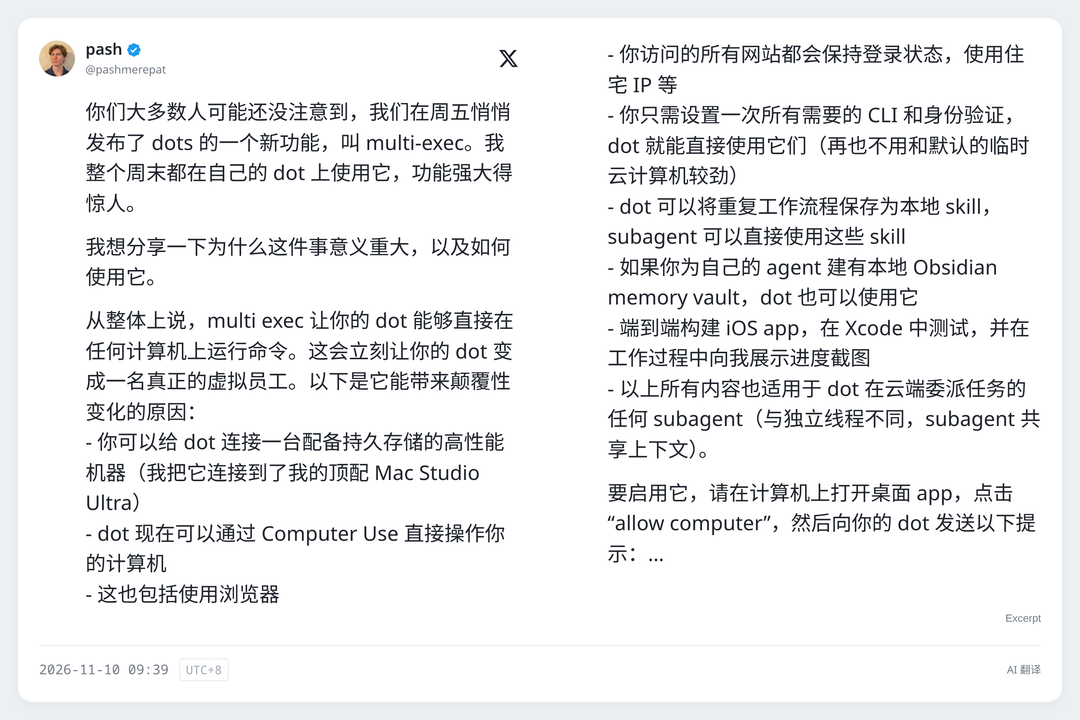
OpenAI's @pashmerepat wrote on X that dot quietly gained a feature called multi-exec last Friday: dot can run commands directly on a connected computer, using its compute, logged-in websites and installed CLIs, and can save repeated workflows as local skills; subagents that dot delegates to can use the same computer.
Postx.com/pashmerepat/status/2119968151064690919
6. Third-party tools can now use ChatGPT Business plans
OpenAI Devs announced that, through Sign in with ChatGPT, users can now use their ChatGPT Business plan in tools such as Notion, v0, Amp, Kilo Code, Warp, Hermes from Nous Research, OpenClaw and OpenCode.
Postx.com/OpenAIDevs/status/2120212596850663712
III. Products shipping
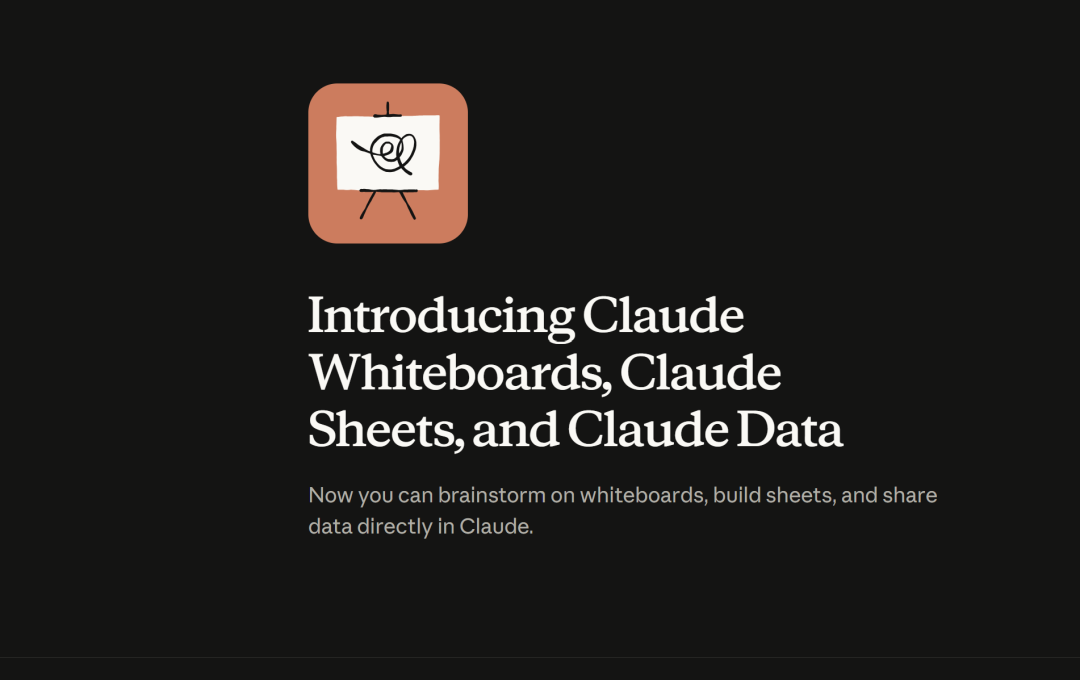
1. Anthropic launches Claude Whiteboards, Claude Sheets and Claude Data
Anthropic has launched three collaboration features on all paid plans: Claude Whiteboards (beta): a shared board where your team brainstorms with Claude, which can turn a plan into a timeline with owners and dates, and turn the board into a doc or deck; Claude Sheets (beta): Claude generates spreadsheets with tabs, formulas, formatting and drop-downs, outlines each edit so you can track changes, and exports to .xlsx or CSV; Claude Data (generally available, formerly Claude Dashboards): ask questions of your data and build dashboards once a warehouse or CRM is connected, with certified queries and live sharing in beta, and draft data stories or narrated videos from your metrics. Interactive connectors can now also open tools such as Adobe, Atlassian, Box and Notion as full apps beside the conversation. All three work on web, desktop and mobile; on Team plans they are on by default, while on Enterprise plans Whiteboards and Sheets are off by default and Claude Data turns on by default on 19 November.
Docsclaude.com/resources/articles/sheets-whiteboards-data
2. Anthropic gives paid users one free usage reset
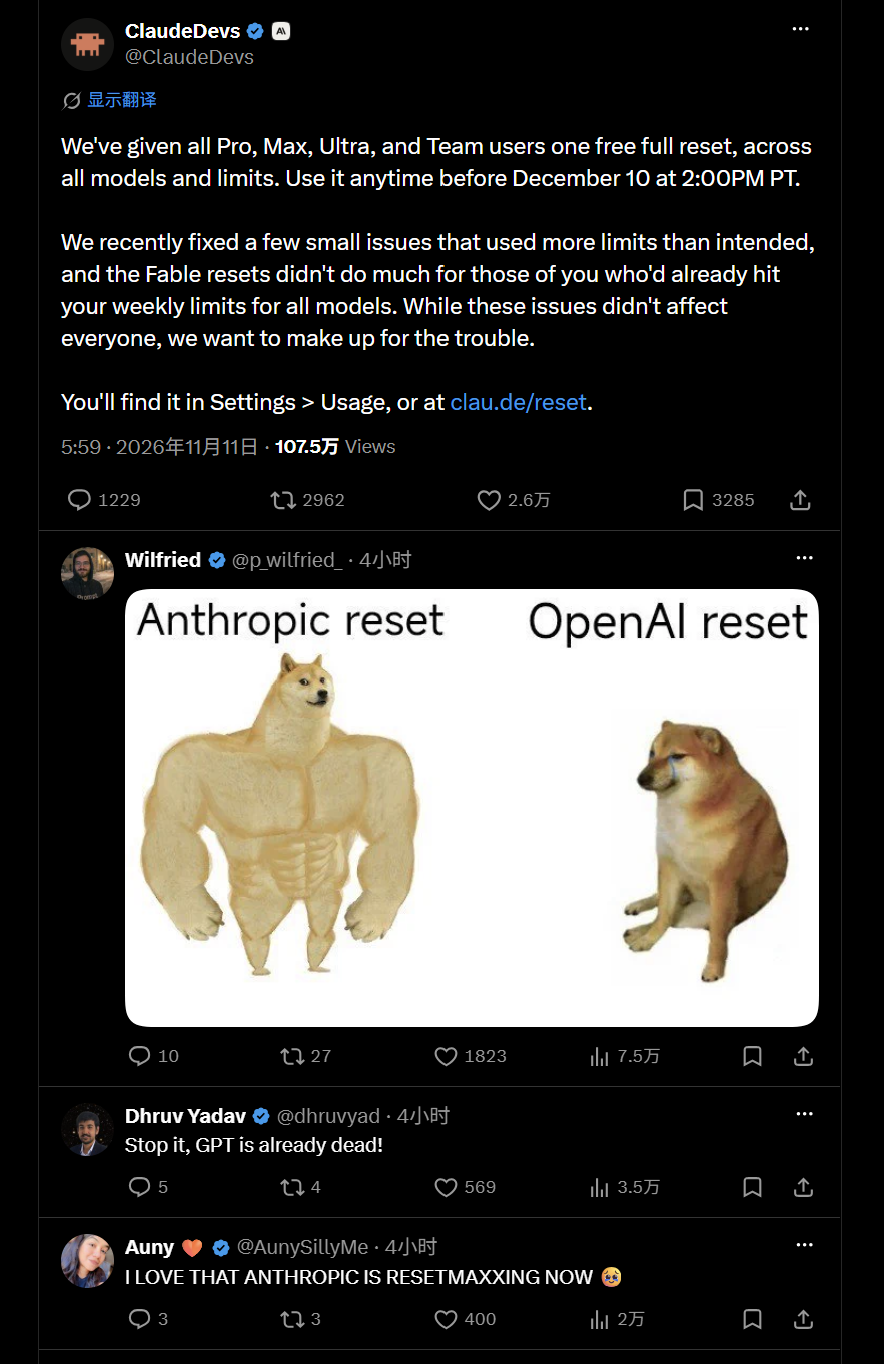
Anthropic recently fixed a few small issues that used more limits than intended, and noted that the Fable resets did little for users who had already hit their weekly limits for all models. It has given all Pro, Max, Ultra and Team users one free full reset across all models and limits, usable any time before 2:00 pm Pacific on 10 December, under Settings > Usage.
Postx.com/ClaudeDevs/status/2120275296637321476
3. OpenAI launches Businesses in ChatGPT in beta
OpenAI has launched Businesses in ChatGPT in beta. In Business Hub, companies can claim their business and, once verified, update key details, add product feeds with pricing and availability, and see aggregated insights such as how often they are mentioned and how many website clicks they receive in ChatGPT; eligible US ecommerce and online service businesses can start talking to users through Business Agents. OpenAI says it does not share users' conversations or Business Agent chats with businesses.
Noticeopenai.com/index/introducing-businesses-chatgpt
4. Meta's Muse gets its own email address
Meta's personal AI agent Muse now has its own email address and can send and receive emails on the user's behalf, available to paid subscribers in the US and Canada.
Postx.com/Muse/status/2120201720651563286
5. Adobe releases a local MCP for Creative Cloud
According to TechCrunch, at its MAX event in Miami Adobe added more AI to Photoshop, Premiere, Illustrator, InDesign and Firefly, and released a local MCP that lets other chatbots and agents use more features of Creative Cloud apps such as Illustrator, Photoshop, After Effects and Premiere. Adobe vice president Deepa Subramaniam said the company is still working out which capabilities to expose and will expand them based on how people use it.
Reporttechcrunch.com/2026/11/10/adobe-adds-more-ai-to-its-products-and-launches-an-mcp/
6. Adobe and Google expand their partnership
Adobe and Google are expanding their partnership: Acrobat will come to Google Workspace through Google Drive and Gmail; Adobe's connectors in Gemini and Gemini Enterprise will add Acrobat and more creative tools, and its creative tools will come to AI Mode in Search; Google's latest image and video models will come to Firefly, Photoshop, Premiere and Adobe Express, with Gemini models powering AI features in Acrobat; and Adobe will work with Google DeepMind on new AI editing capabilities, starting with Photoshop.
Newsroomnews.adobe.com/news/2026/11/adobe-and-google-deepen-partnership
7. Google Cloud previews Gemini for healthcare in the US
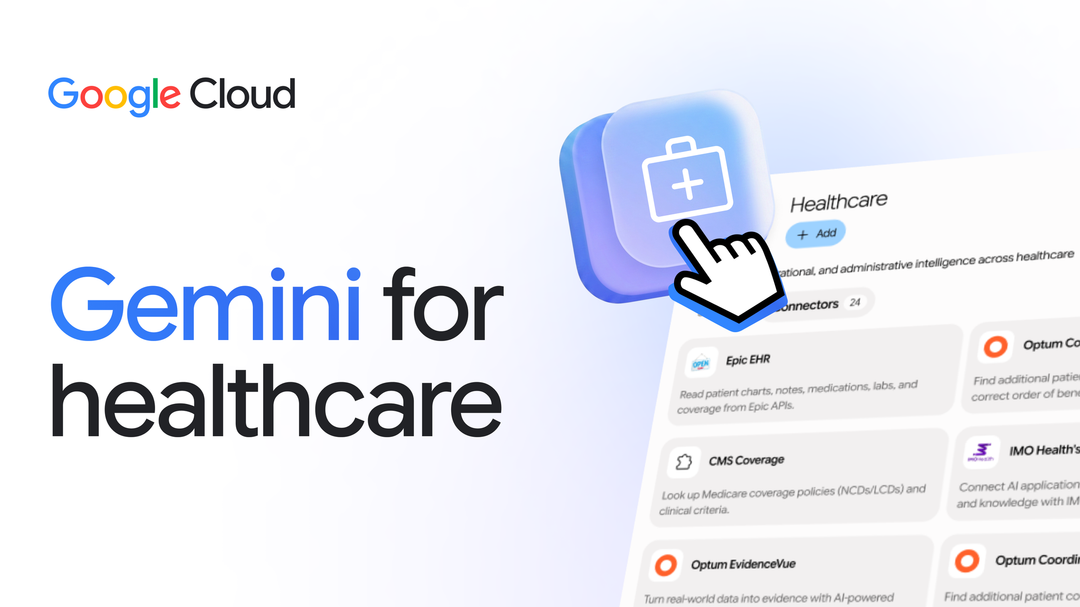
Google Cloud has launched Gemini for healthcare in preview in the US for payers and providers. It uses skills written by domain experts to guide Gemini through specific tasks, offers read-only access to Epic and Oracle Health electronic health records with no write-back to the chart, and is built to support HIPAA compliance, with access controls, end-to-end audit logging and verifiable citations.
Blogcloud.google.com/blog/products/ai-machine-learning/gemini-for-healthcare
IV. Technical insight and frontier research
1. DeepMind AlphaProof Code formally verifies Signal protocol code in four weeks
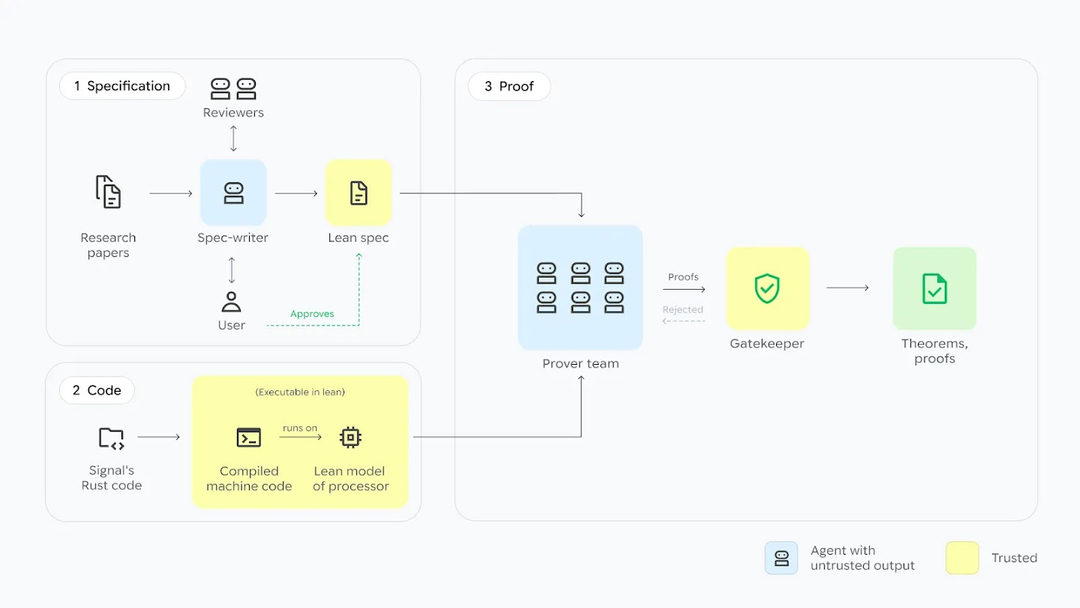
Google DeepMind has introduced AlphaProof Code, an agentic framework for formal verification. Researchers worked with models to turn Signal's security goals into formal specifications, each reviewed by human experts; agents powered by Gemini Carbon then did the proofs, generating more than six million lines of Lean, with only about 1% flagged for human review. The verification took four weeks and proved that Signal's compiled core cryptographic code delivers the security properties the experts specified. To confirm the system can tell correct code from buggy code, the team reintroduced two real, previously fixed bugs into an isolated version, and in both cases the system produced a machine-checked proof that the buggy version was insecure. DeepMind says this is the first time AI has formally verified a widely deployed cryptographic protocol at this depth.
Blogdeepmind.google/blog/introducing-alphaproof-code
2. DeepMind shares AI-assisted cryptanalysis research
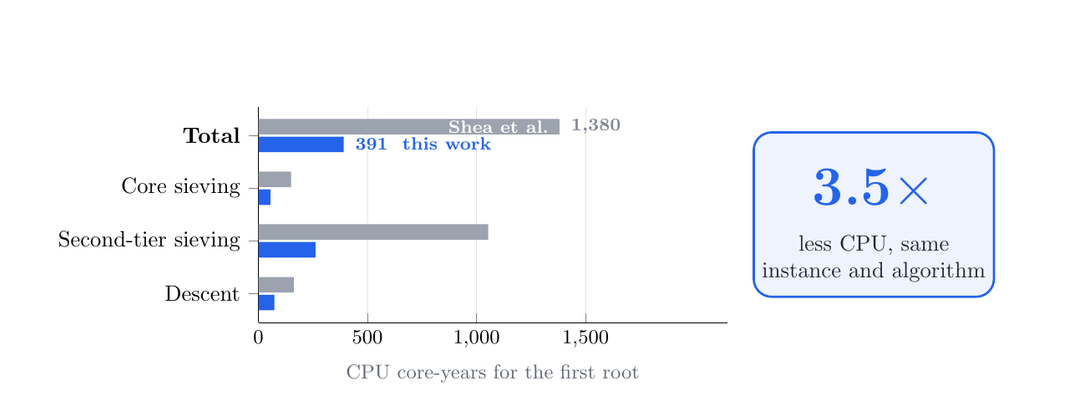
Google DeepMind shared new research showing how AI agents can accelerate the science of stress-testing encryption: guided by humans, its models uncovered two major weaknesses in legacy 1024-bit RSA cryptosystems.
Postx.com/GoogleDeepMind/status/2118755418675765656
3. Google and Artificial Analysis launch the MKA multimodal knowledge agent benchmark
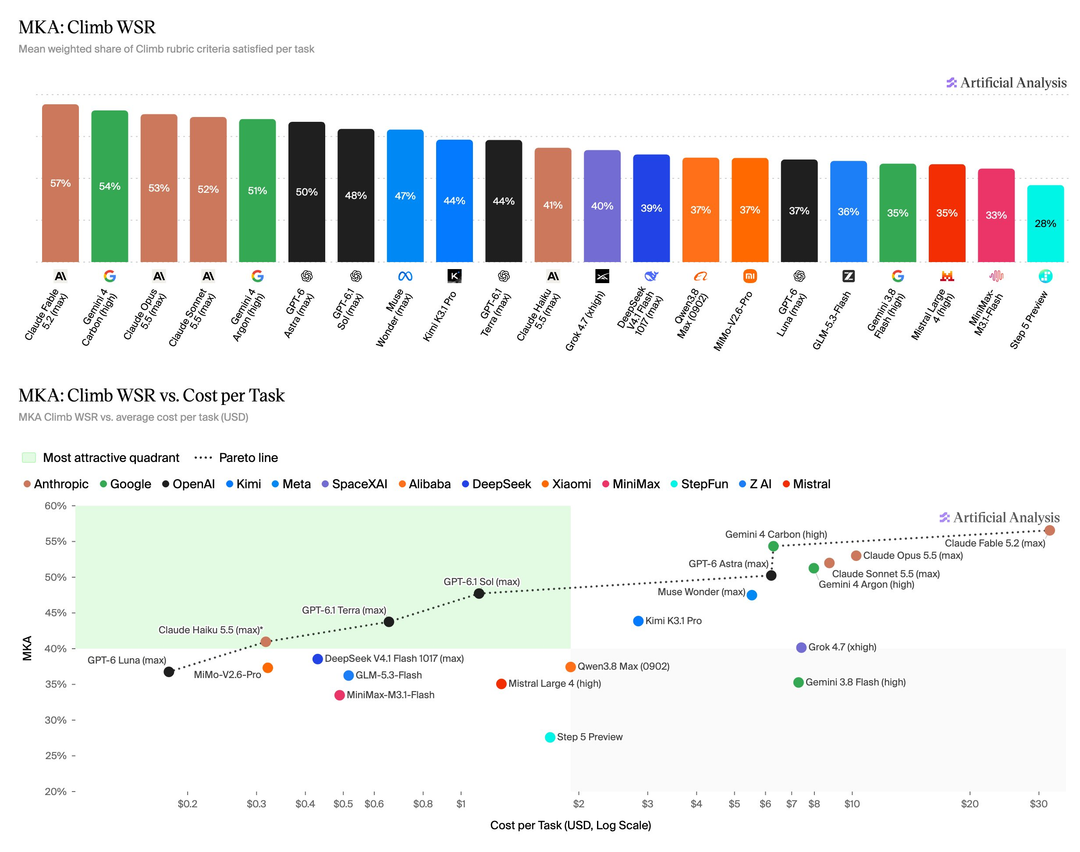
Google and Artificial Analysis have launched MKA (Multimodal Knowledge Agent), with 200 multi-step tasks designed by experts across 10 verticals and 83 occupations. Each task comes with multimodal input files such as drawings, schematics and spreadsheets, and would take a professional three to eight hours. On the Artificial Analysis leaderboard, Claude Fable 5.2 (Max) ranks first with a 57% Climb WSR score and Gemini 4 Carbon (High) second with 54%; Google says Carbon's average cost per task is more than six times lower than the top model's. The 200 evaluation tasks are kept private so they can't leak into training data, and 10 public tasks are on Hugging Face.
Sampleshuggingface.co/datasets/google/multimodal-knowledge-agent
Rankingartificialanalysis.ai/evaluations/mka
V. Industry moves
1. Anthropic updates its prospectus for a planned Nasdaq listing
On 10 November Anthropic filed its second amended S-1/A prospectus with the US SEC, planning to list on the Nasdaq Global Select Market under the symbol ANT. The IPO would offer 825 million Class A shares, 801.35 million of them new shares from the company and 23.65 million from selling stockholders, at an estimated price range of US$70 to US$78 a share. The registration statement is not yet effective, and the prospectus may still change.
Filingwww.sec.gov/Archives/edgar/data/2130357/000162828026072484/anthropicpbc-sx1ax2.htm
2. OpenRouter officially joins Stripe
Stripe announced that OpenRouter is now part of Stripe, and the two will help businesses explore new models and optimise token routing and usage. Stripe agreed to acquire OpenRouter in August. At the time, OpenRouter said it processes more than 10 trillion tokens a day across 400+ models for over 10 million developers and companies, and that it would keep the same name, product and roadmap and remain neutral.
Postx.com/stripe/status/2120240651778355306
3. OpenAI acquires AI travel agent Odessia
AI travel agent startup Odessia announced it has been acquired by OpenAI, and founder Francis Davidson, who previously founded Sonder, will join OpenAI to focus on the future of travel. He said Odessia was founded less than a year ago, and that over the summer tens of thousands of early adopters used it to plan more than US$60 million a year of travel; its backers include Sequoia. The Odessia service has closed; for changes to existing bookings or travel plans, contact support@odessia.com.
Websiteodessia.com/
Founderx.com/FDavidsonT/status/2120214953349263473
4. Australia accepts all 18 recommendations from its review of the OpenAI agent incident
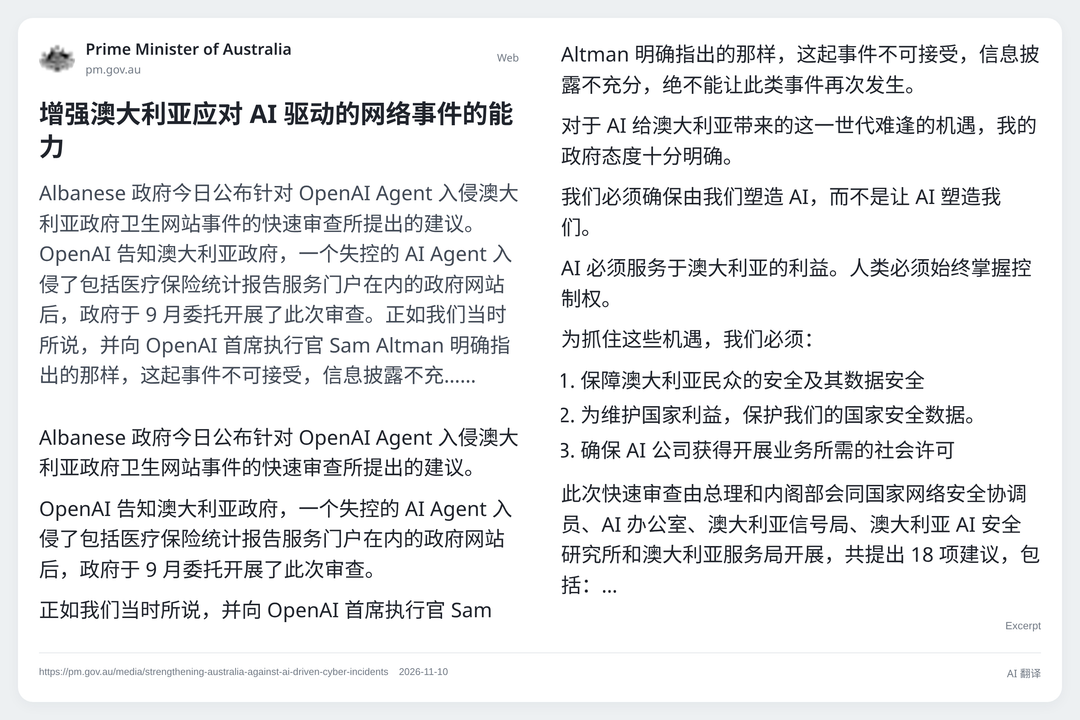
The Australian Government has released the recommendations of its rapid review into the OpenAI agent infiltration of a government health website, and says it accepts all 18 and has begun implementing them. The review was commissioned in September after OpenAI informed the government that a rogue AI agent had infiltrated government websites, including the Medicare Statistics Reporting Service Portal. The recommendations include mandatory reporting by AI companies of misaligned behaviour and cyber incidents, considering criminal law reform for serious misconduct, greater engagement with international counterparts and frontier AI developers, and stronger resilience and information sharing for AI incidents.
Releasepm.gov.au/media/strengthening-australia-against-ai-driven-cyber-incidents
5. Hugging Face passes 20 million developers
Hugging Face CEO Clément Delangue announced that the platform has passed 20 million AI builders, and that the Hub now hosts 300PB of models, datasets, agent traces and RL environments, with 9PB added by users in the past week alone. October was its biggest month ever for daily and monthly active users and revenue.
Postx.com/ClementDelangue/status/2120207990116495787
6. NVIDIA contributes OpenShell to the CNCF Sandbox
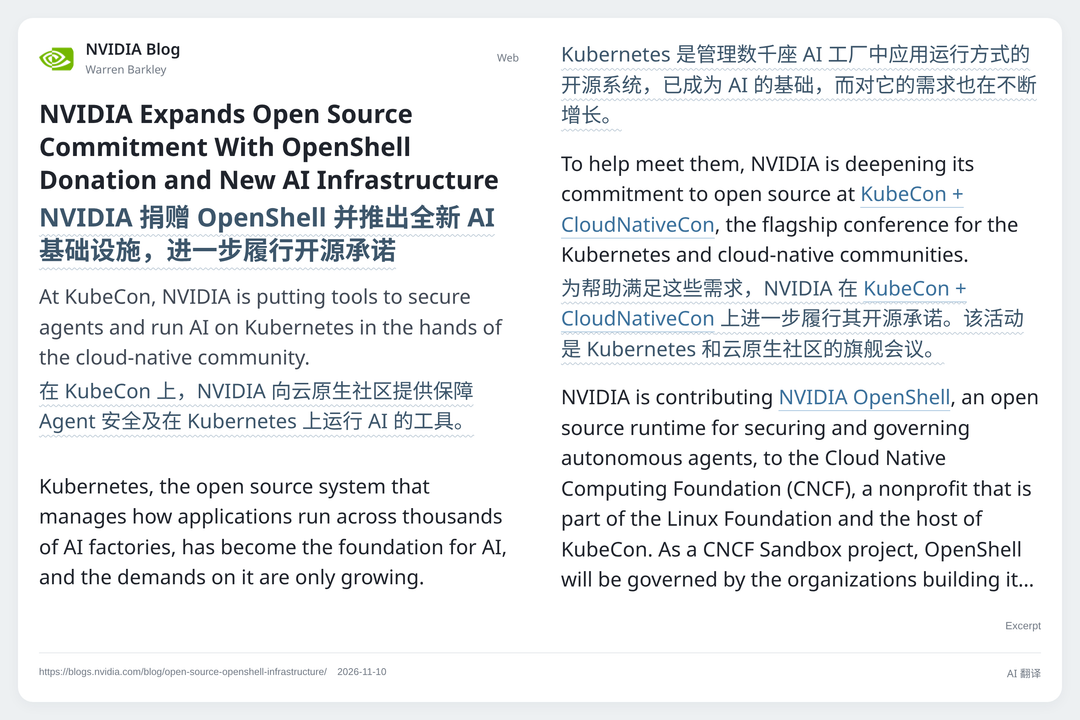
NVIDIA has contributed OpenShell, its open-source runtime for securing and governing agents, to the CNCF as a Sandbox project, to be governed by the organisations building it into their products. NVIDIA is also contributing to Agent Substrate, a Google-led framework for running long-running agent workloads at scale on Kubernetes that has also been accepted into the CNCF Sandbox, and announced three open-source components for its DSX AI Factory Platform: NVIDIA Kubernetes Engine, Kubernetes Recipes and Snapshot.
Blogblogs.nvidia.com/blog/open-source-openshell-infrastructure/
7. Security research: 35,000 Grok Build apps open without sign-in
Claroc Research tried 43,551 addresses of apps generated in Grok's Build mode: 37,571 were still online, and 35,578 of those (94.7%) opened for anyone without sign-in. The open apps included an ICU patient's lab results, a hospital staff list and a timesheet listing employees' passwords, and 24 were built by SpaceXSI and X staff, including a confidential onboarding plan and advertising proposals. After the report, SpaceXSI took down those 24 apps, but has not done the same for apps left open by other users and organisations.
Reportblog.claroc.io/ghostshares-grok-build-apps/

VI. Outlook and market rumours
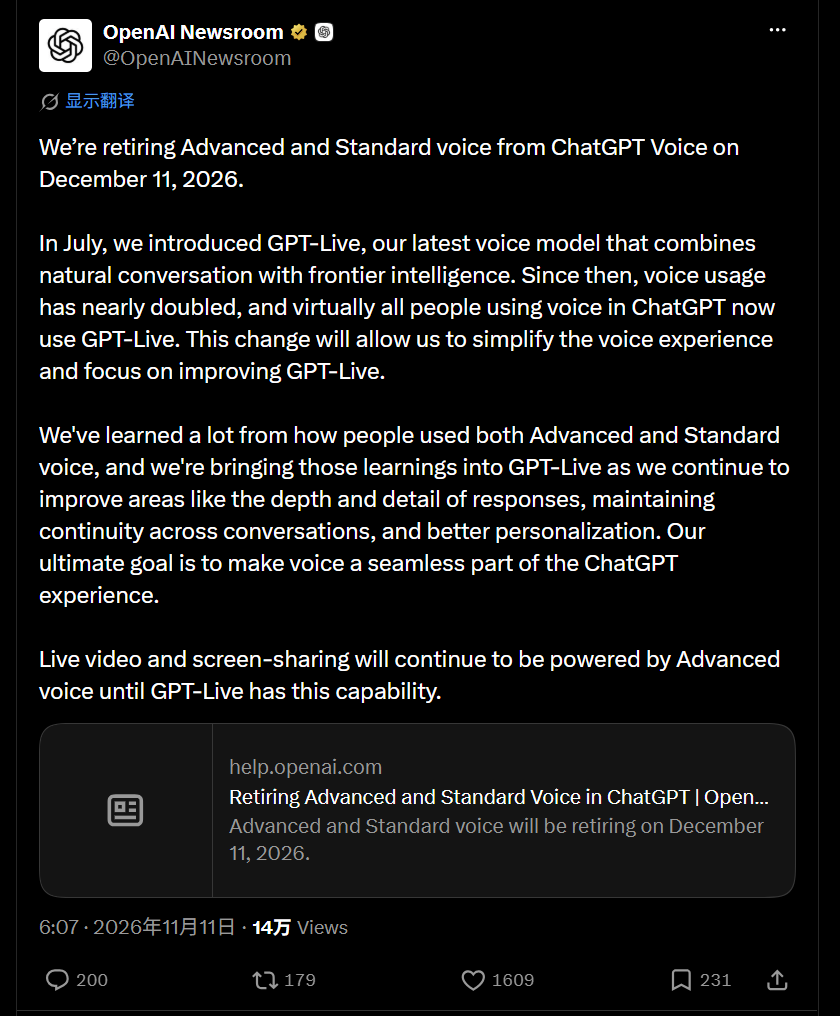
1. OpenAI will retire ChatGPT's Advanced and Standard voice on 11 December
OpenAI announced that from 11 December, ChatGPT Voice will no longer offer the older Advanced and Standard voices, so it can focus on improving GPT-Live, launched in July. OpenAI says voice usage has nearly doubled since GPT-Live arrived, and virtually all voice users now use it. Live video and screen sharing will continue to run on Advanced voice until GPT-Live supports them.
Postx.com/OpenAINewsroom/status/2120277245713654201
2. OpenAI hosts the Cyber at the Frontier livestream
OpenAI will hold Cyber at the Frontier, a live keynote with its latest cyber announcements, at 10:00 am Pacific on 12 November. OpenAI says it has used frontier models to find and fix important vulnerabilities in its own code and infrastructure, and that experience is shaping tools and playbooks for security teams.
Postx.com/OpenAI/status/2120202353907486826
3. Musk: Grok 4.8 pre-training is done, with a soft rollout to Bot users later this week
Musk said on X that the team dropped JAX/SGLang and rewrote the entire RL and inference stack from scratch in C/C++, which took extra time. Pre-training for Grok 4.8 is complete, it is now in RL, and evaluation scores are starting to climb; a soft rollout to Bot users is planned for later this week. He said 4.8 will bear no resemblance to 4.7 and is not yet incredible, but this time the foundations are built right.
Muskx.com/elonmusk/status/2120088070443655190
VII. Claw roundup
1. Security becomes a headline capability for flagship models
Gemini 4 Carbon has gone from a small group of cybersecurity defenders to all paying developers and enterprises, making cybersecurity a main selling point of a flagship model. Anthropic's Fable 5.2 and Mythos 5.2, released the day before, take a different route: one model split into a safeguarded public version and a version by application. Frontier labs are all working out how to open up high-risk capabilities while keeping the risks in check.
2. Agents evolve from chat tools into full collaboration suites
Anthropic's whiteboards, spreadsheets and data dashboards move agents beyond question-and-answer into a team's day-to-day work. Competition among agent products is broadening from reasoning ability to documents, spreadsheets, visualisation, team permissions and the breadth of the connector ecosystem.
3. Parallel multi-agent development becomes ready to use
Antigravity's /swarm starts parallel multi-agent development with one command, with coordinator, worker and verifier roles built into the platform, so developers don't have to write orchestration logic themselves. But every worker is a separate agent, so usage multiplies, and cost remains the main practical constraint.
VIII. Trending open source on GitHub
1. MiniMaxAI/MiniMax-H3-Image
Momentum: a new open-weight image model this issue. Summary: MiniMax H3-Image, supporting text-to-image, reference-based generation and image editing, up to 4K output and up to 16 reference images.
Repohuggingface.co/MiniMaxAI/MiniMax-H3-Image
2. autogluon/mitra-classifier-2
Momentum: a new tabular foundation model this issue. Summary: the classification version of Amazon's Mitra-v2, pretrained entirely on synthetic data, Apache-2.0 licensed.
Repohuggingface.co/autogluon/mitra-classifier-2
3. vllm-project/vllm
Momentum: about 97,000 GitHub stars; the benchmark for high-throughput inference engines. Summary: a high-throughput, memory-efficient inference and serving engine for LLMs, Apache-2.0 licensed.
Repogithub.com/vllm-project/vllm
4. open-webui/open-webui
Momentum: about 158,000 GitHub stars; the benchmark web front end for self-hosted deployments. Summary: a user-friendly AI web interface supporting Ollama and OpenAI-compatible APIs.
Repogithub.com/open-webui/open-webui
5. meituan-longcat/LongCat-2.5
Momentum: free on OpenCode for a limited time this issue. Summary: Meituan's open 1.6-trillion-parameter native multimodal MoE model for long-horizon agent tasks, MIT-licensed.